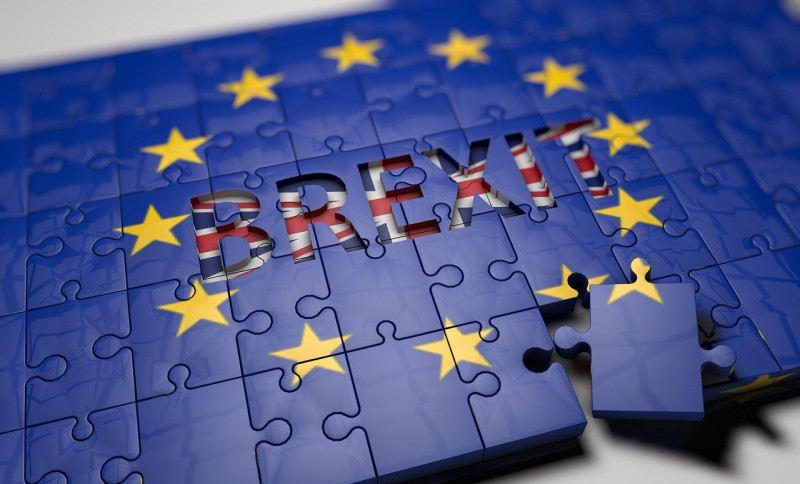
BRUSSELS – The European Parliament will today vote to ratify the European Union trade deal with Britain, turning the page on a difficult Brexit chapter, but with little hope of smoothing relations with London.
The 705-member Brussels chamber is expected to overwhelmingly back the bare-bones trade deal that was sealed last Christmas Eve after nine months of bad-tempered negotiations.
The zero-tariff, zero-quota arrangement has been provisionally applied since January 1, when an 11-month post-Brexit transition period ended.
But, members of the European Parliament (MEPs) demanded extra time to vet the pact, which also includes a deal on fishing that was especially difficult to clinch, with EU fishing crews losing much of their access to bountiful United Kingdom waters.
The European Parliament further delayed its vote in part to protest unilateral delays by London in implementing customs checks in Northern Ireland, one of the most contentious issues in the divorce.
Brussels has launched legal action against London over the Irish problem, while a major row over the supply of the UK-based AstraZeneca’s Covid-19 vaccine has also embittered cross-Channel relations.
Despite the acrimony, the European Commission, which handles ties with the UK for the Europeans, has asked MEPs to green-light the pact, arguing that it will better help keep Britain in check.
The UK, meanwhile, has made it clear that it will not approve further delays, exposing the risk of the whole deal being annulled if MEPs do not vote by April 30.
“I assume that the agreement will be ratified almost unanimously,” said German MEP Bernd Lange, who heads Parliament’s trade committee.
But, he added, “as in sailing, I assume that there will not be only good weather, but stormy times as well”.
The vote will take place this evening in Brussels after a five-hour plenary debate. The result, which is not in doubt, will be announced tomorrow morning.
‘Regrettable chapter’
Britain left the EU on January 30 last year, but its new life with Europe only really began after the transition period on December 31, when London was no longer bound by the bloc’s laws and rules.
Officially called a trade and cooperation agreement, the deal provides for zero tariffs and zero quotas on goods traded between the EU and the UK.
But, it is less ambitious than many Europeans had hoped for, with nothing on foreign policy and defence, nor any commitment to close alignment on environment, health and other regulations.
More harmonised rules would have removed the requirement for some customs checks and paperwork on goods moving between the EU and the UK, a new reality that has made doing business more burdensome, with many companies caught unprepared.
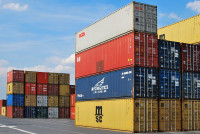
In consequence, cross-Channel trade volumes have plummeted, with EU imports from the UK down by nearly 50% and exports into Britain down 20% in the first two months of the deal’s application.
The deal also makes no provision for financial services, threatening the City of London’s pre-eminence as the European hub for capital markets, banking and investment.
Financial ties will be governed by a series of equivalence decisions that are made unilaterally by the EU and require renewal on a regular basis.
Despite ratification, analysts have warned that EU-UK relations will remain bumpy, with Prime Minister Boris Johnson eager to show Brexit as a success.
Brussels “clearly has a desire to close this regrettable chapter of European (dis)integration, and relegate the EU-UK relationship to a third-order issue,” said Fabian Zuleeg and Jannike Wachowiak of the European Policy Centre in Brussels.
“But recent disputes, be it on Covid-19 vaccine supply chains or the implementation of the Northern Ireland protocol, have demonstrated that both sides’ political engagement, and not just technical management, will be needed.” – AFP, April 27, 2021