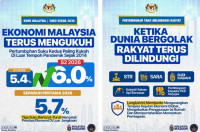
KUALA LUMPUR – The Asian Development Bank (ADB) projects Malaysia’s gross domestic product to rebound to 6.0% in 2021 and stabilise at 5.7% next year, supported by the Covid-19 vaccine roll-out.
The economic expansion will be aided by continued accommodative fiscal and monetary policies, said the bank in its flagship economic publication Asian Development Outlook for this year.
It said recovering consumer and capital spending is set to revive domestic activity, while a pick-up in global demand should boost exports and foreign investment.
Growth in private consumption will be underpinned by government stimulus packages and supported by an effective vaccination programme.
The country’s vaccination drive began in February, with the government planning to immunise at least 80% of the 32 million population in 12 months. As of mid-March, two million doses had been administered.
“Although the vaccine roll-out should help improve consumer confidence, spending will likely remain muted until labour market conditions show sustained improvement,” said ADB.
As for investment, recovery is likely to be modest as the resumption in construction activity will face near-term setbacks with the reintroduction of pandemic-related restrictions.
“Vaccine availability and firming foreign demand will boost business sentiment, in turn, supporting the recovery in private investment,” said ADB.
“The resumption of the construction of the East Coast Rail Link, Mass Rapid Transit Line 2 and Pan Borneo Highway is also expected to lift public investment in 2021.”
ADB believes Putrajaya’s Budget 2021 is expansionary, along with fiscal stimulus measures totalling RM322.5 billion, or about 20.6% of GDP.
“Monetary policy conditions are expected to remain accommodative to support a recovery in domestic demand,” it said, adding that inflation is expected to return over 2021 and 2022, and remain closely linked to commodity and oil price fluctuations, and domestic price-control measures.
Overall, inflation is forecast to edge up to 1.8% this year.
“A mild recovery in global energy and commodity prices, combined with the normalisation of economic activity, is expected to raise consumer prices by 2.0% in 2022,” said ADB.
On the current account balance, the bank said it is expected to remain in surplus in the near term, with the surplus equal to 4.4% of GDP this year and next.
It said the merchandise trade balance should remain positive, buoyed by rising crude and palm oil prices, sustained demand for electrical, electronic and medical products, and an improving outlook for the global economy.
“Malaysia’s exports to the US should benefit from the U$1.9 trillion (RM7.8 trillion) US stimulus package.
“The services account will remain in deficit, however, as international transport and insurance costs continue to form a large part of the services bill.
“The primary and secondary income accounts will also remain in deficit, reflecting the continued repatriation of profits by foreign firms with local operations, and outward remittances by foreign workers.”
However, it said, major risks to the outlook are renewed outbreaks of Covid-19, unexpected delays in the vaccine roll-out, and a lower-than-expected recovery in major advanced economies.
“While the positive news on vaccines is grounds for optimism, uncertainties remain over their distribution, both globally and domestically.
“A further concern is the likely impact of renewed restrictions on supply chains, as this could further delay the rebound in manufacturing activity.” – Bernama, April 28, 2021