KUALA LUMPUR – Malaysia’s trade deficit in services increased to RM47.4 billion last year, the highest ever recorded, owing to the unprecedented Covid-19 pandemic.
The Statistics Department, in a statement today, said total trade in services amounted to RM232.7 billion, contributing 16.1% of gross domestic product last year.
Exports of services declined to RM92.6 billion from RM170.2 billion in the preceding year following disruptions in key services components, namely travel and transport.
Imports similarly declined to RM140.1 billion from RM181.1 billion in 2019.
Chief Statistician Datuk Seri Mohd Uzir Mahidin said travel, the mainstay of Malaysia’s services trade, saw its highest deficit last year.
“This hardest-hit industry during the Covid-19 pandemic turned to a deficit of RM7.7 billion for the first time in 30 years, from a surplus of RM30.8 billion in 2019.”
He said exports of the travel component nosedived 84.7% to RM12.6 billion due to substantially lower tourist arrivals.
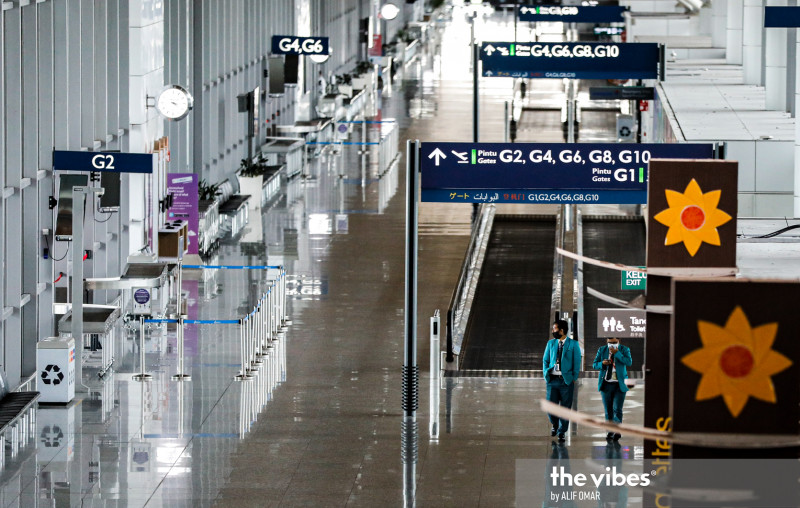
Malaysia recorded 4.3 million international arrivals in 2020, a decrease of 83.4% from the previous year, following border closures and travel restrictions imposed by countries across the world to contain the coronavirus.
The export value of the transport component slipped 37.1% to RM13.7 billion due to the drastic drop in air travel.
“Air transport, which heavily relies on passenger exports, plummeted 72.3% as a repercussion from global travel limitations to contain Covid-19,” said Uzir.
“Even so, exports of sea and other transport, particularly in the postal and courier services, surged to RM7.7 billion and RM2.4 billion, respectively.”
He said the upturns in sea freight, post and courier are in line with consumers’ online shopping behaviour since movement restrictions were first enforced last year.
“Nevertheless, services that underwent an accelerated digital transformation performed much better during the Covid-19 crisis.
“Telecommunications, and computer and information services saw a windfall opportunity throughout 2020 in the form of teleworking, video streaming, cloud computing, and other digital services.”
Exports of this component increased 7.9% to RM13.4 billion, while imports rose 14.8% to RM16.8 billion, due to the spike in streaming service subscriptions, especially for movies.
This can be seen in the substantial increase in Asian Netflix subscribers, numbering 25.5 million from the 16.2 million recorded the previous year.
“Personal, cultural and recreational services posted higher exports of RM2.4 billion, an increase of 3.1% from 2019,” said Uzir.
“This was steered by the fastest-growing gaming markets through digital platforms, as well as flourishing streaming entertainers like YouTubers and TikTokers.”
Other business services were also the catalyst for export services, at RM27.1 billion in 2020.
However, such exports decreased by 7.6% from the preceding year due to the lockdown measures in many nations.
Imports of this component decreased by 9.3% to RM29.8 billion, contributing a smaller deficit of RM2.8 billion.
On Malaysia’s trade in services with 193 countries, Uzir said the United States has overtaken Singapore as the top destination of such exports with a value of RM24.8 billion, mostly in manufacturing and other business services.
Singapore, which was the leading market for exports since 2010, became the second-top destination with RM18.9 billion, pulled by exports in travel, followed by the United Kingdom, Hong Kong and China, which collectively amounted to RM15.4 billion in 2020.
The top importing countries for the year were the US, Singapore, China, the UK and Japan, primarily in other business services and transport.
Uzir said based on the Economic Outlook 2021, Malaysia’s trade in services is projected to record a deficit of RM30.9 billion with the well-planned implementation of the movement control order. – Bernama, June 9, 2021