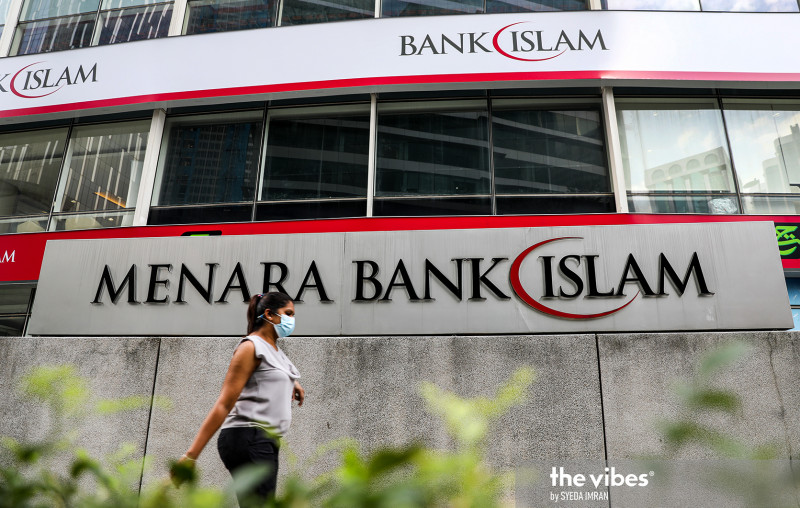
KUALA LUMPUR – While the government did not attach a specific stimulus amount to the loan moratorium scheme this time around, it is likely to form a significant portion of the RM150 billion Pemulih stimulus package, said OCBC Bank.
Its economist Wellian Wiranto said the blanket loan moratorium last year was said to be worth RM100 billion, a big chunk of the RM250 billion Prihatin stimulus package launched in March 2020.
He said that by September last year, the value was estimated at RM97.26 billion, with RM63.2 billion for individuals and the remainder by businesses.
This time around, given the focus on individuals and SMEs, the value might be closer to RM60 billion, Wiranto explained.
“The fact that the government had to roll out a blanket loan moratorium once again speaks to the degree of impact it is expecting from the ongoing social restriction measures amid the virus resurgence.
“Just earlier this month, Finance Minister Datuk Seri Tengku Zafrul Tengku Abdul Aziz penned an op-ed arguing that rather than a blanket loan moratorium, a targeted repayment assistance is more appropriate,” said the economist in a research note today.
Tengku Zafrul had also said that another blanket loan moratorium could limit the capacity of banks to give out new loans, potentially triggering a pullback in credit growth right when the economy needs it.
Hence, OCBC Bank surmised that any new set of economic growth forecasts would likely have to be revised downward significantly from the official forecast of between 6.0% and 7.5%.
Wiranto said with the Pemulih and the RM5 billion fiscal injection that accompanied the Pemerkasa Plus package, the combined uptick in extra fiscal outlays could amount to about 1.0% of gross domestic product (GDP).
The extra expenditure could potentially push up the deficit to 7.0% of GDP this year, surpassing the 6.7% of 2009, he said.
Meanwhile, UOB Malaysia maintained its full-year GDP estimate of 4.0% for 2021.
The forecast was based on the ongoing fiscal assistance and monetary support, as well as accelerated vaccination roll-out to allow the reopening of more economic and social sectors by the fourth quarter of this year.
Its senior economist Julia Goh said the bank expects the overnight policy rate to be kept at 1.75%, with the additional support from Pemulih.
“Despite renewed downside risks to growth, we think resuming rate cuts may be tough in an environment of higher inflation expectations.
“Other central banks have kept policy rates on hold, while some have signalled a readiness to normalise monetary policy,” she said in a research note today. – Bernama, June 29, 2021