DETROIT/SEOUL – Ford Motor Co and its Korean battery partner SK Innovation will invest US$11.4 billion (RM47.7 billion) to build an electric F-150 assembly plant and three battery factories in the United States, accelerating the American automaker’s push into electric vehicles (EVs).
Ford yesterday said it now expects to have 40% to 50% of its global vehicle volume to be all-electric by 2030, up from its prior forecast of 40%.
The companies intend to create nearly 11,000 jobs by opening assembly and battery plants in Stanton, Tennessee, and two additional battery factories in Glendale, Kentucky, as part of Ford’s previously announced plan to spend more than US$30 billion through 2030 on electrification, said the automaker.
Plants on both sites will open in 2025.
Yesterday’s announcement is the single largest manufacturing investment in Ford’s 118-year history.
The Tennessee assembly and battery complex will be about three times the size of Ford’s sprawling, century-old Rouge manufacturing plant in Dearborn, Michigan, North American chief operating officer Lisa Drake told Reuters in an interview.
She emphasised that there will be room to expand on that site.
“For us, this is a very transformative point, where we are putting our capital in place now in a very big way to lead the transition to EVs.”
The No. 2 US carmaker’s portion of the investment is US$7 billion, with SK covering the rest. The companies will invest US$5.8 billion in Kentucky, and US$5.6 billion in Tennessee.
The South Korean battery maker, which supplies EV batteries to Ford and Hyundai Motor Co, among others, has production sites in the US, Hungary, China and South Korea.
With its three additional battery factories and two plants in Georgia, SK is set to secure an annual capacity of about 150GWh of batteries in the US.
SK said it expects to exceed the goal of securing an annual global production capacity of 200GWh of batteries by 2025. Its current capacity stands at 40GWh.
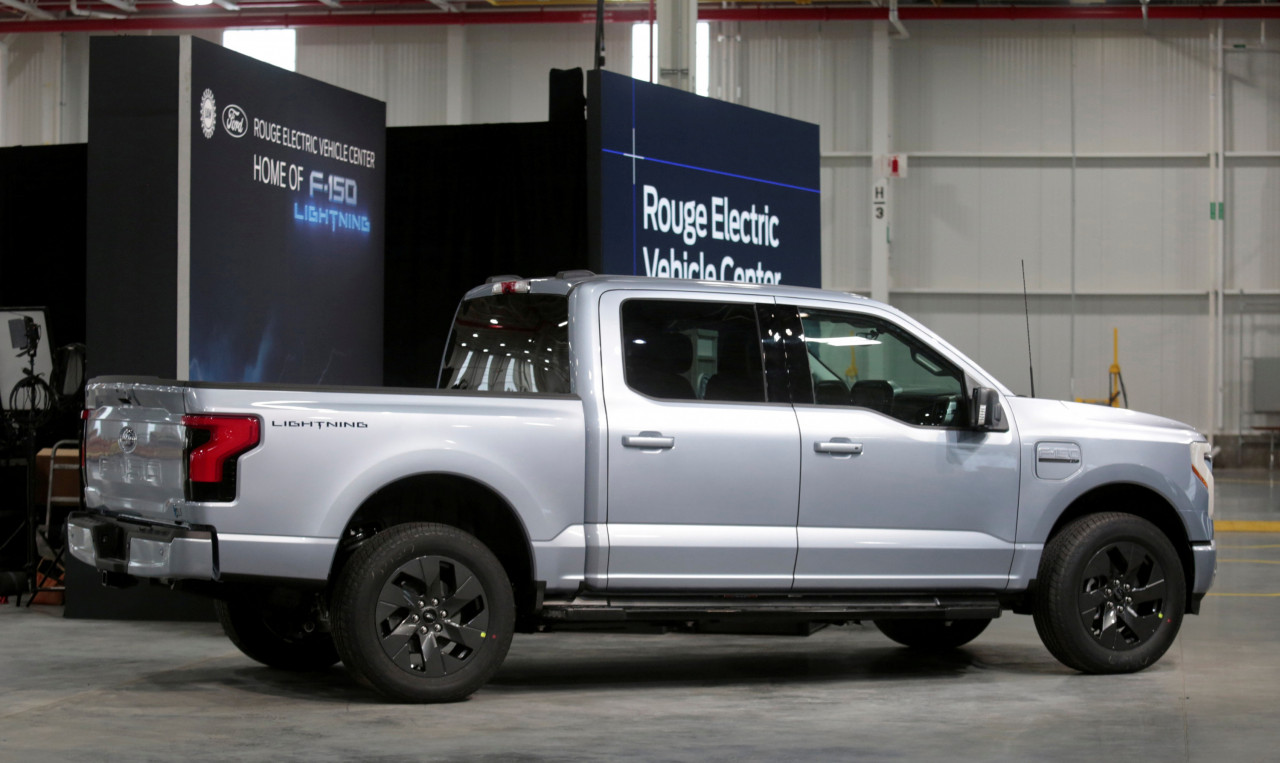
Ford, which plans to launch the electric F-150 Lightning pickup truck next spring, has moved more aggressively to roll out its EV strategy under Jim Farley, who took over as chief executive last October.
Earlier this month, the company doubled its planned production capacity in Dearborn for the F-150 Lightning to 80,000 annually due to strong pre-launch demand for the electric pickup.
Ford and other automakers are pushing hard to prepare for the roll-out of EVs as countries and regions, such as China and Europe, seek a greater reduction in vehicle emissions.
The planned lithium-ion battery plants build on a memorandum of understanding announced by Ford and SK in May.
The plants will be jointly owned with SK and have a combined annual capacity of 129GWh of batteries, which could power about 2.2 million EVs when fully operational, more than double the level outlined in May, said Drake.
The new capacity will be enough to power more than a million EVs.
Ford previously said its global EV plan calls for at least 240GWh of battery cell capacity by 2030, equal to about 10 facilities that will be placed in North America, Europe and China.
SK has said it aims to ramp up its annual global battery capacity to more than 200GWh in 2025.
Tennessee mega campus
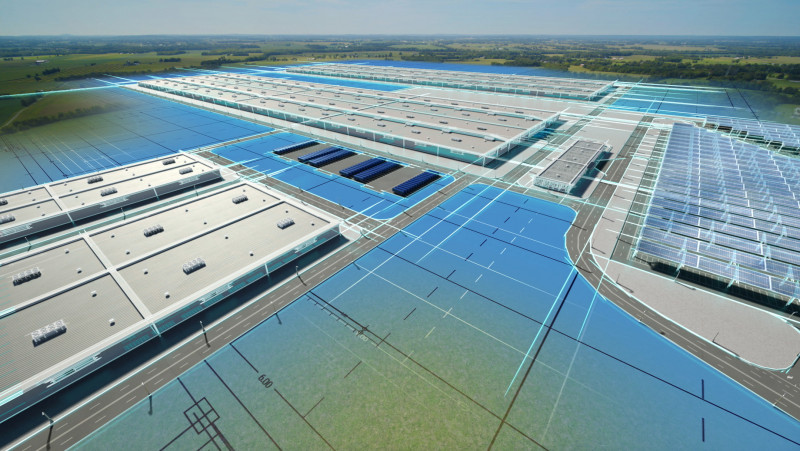
As part of yesterday’s announcement, Ford will build a 1,457ha “mega campus” in west Tennessee called Blue Oval City that will employ 5,800 people and include an assembly plant, lithium-ion battery production, and a supplier park, said Drake.
Blue Oval plays off Ford’s name for its corporate logo.
The new Tennessee complex will build the next generation of the Lightning using a dedicated EV platform following its launch next year, added Drake.
The initial model will be built on a platform heavily derived from the gasoline-powered F-150.
Drake did not disclose the planned production capacity for the Tennessee plant.
The site will also include zero-waste-to-landfill processes to capture materials and scrap.
In central Kentucky, Ford will build the BlueOvalSK Battery Park, employing 5,000 people. The site will consist of twin plants building lithium-ion batteries for Ford and Lincoln EVs starting 2025. The second factory will open the following year.
The companies will receive US$500 million in incentives from Tennessee, and almost US$300 million, as well as over 607ha of land, from Kentucky.
The United Auto Workers union, which represents Ford’s US hourly workers, has said the automaker has a “moral obligation” to make sure any battery plant jobs are good-paying union ones.
Drake said this will be determined by the workers, but added that Ford has emphasised to SK it must not be anti-union.
Yesterday’s announcement builds on Ford’s deal last week to partner with Redwood Materials to form a circular supply chain for EV batteries, from raw materials to recycling. Redwood will be located at Ford’s Tennessee site.
Ford said it will separately spend US$525 million over the next five years to fund job training and career readiness initiatives for US auto technicians to help prepare for the shift to EVs. The programme begins in Texas, where the firm is spending US$90 million. – Reuters, September 28, 2021