KUALA LUMPUR – Malaysia and China should capitalise on the New International Land-Sea Trade Corridor along with the Regional Comprehensive Economic Partnership (RCEP) to strengthen existing trade and investment ties, said the International Trade and Industry Ministry.
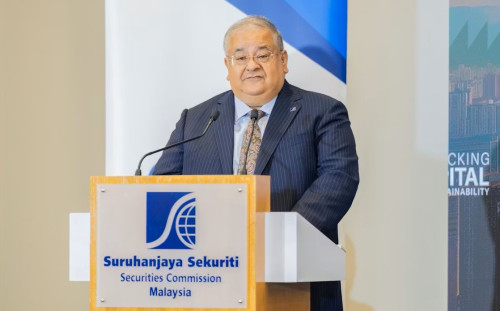
Deputy Trade Minister Datuk Lim Ban Hong said China is welcome to leverage Malaysia’s position as the ideal gateway for Chinese enterprises to penetrate the Asean market and boost trade activities through the RCEP, particularly in high-tech manufacturing projects and emerging industries.
“The inception and implementation of the RCEP will further unleash the potential for trade in goods between Malaysia and China, and help transform and upgrade regional industries as well as inject new vitality into regional economic development.
“As Malaysia is strategically located at the heart of Southeast Asia, we are well positioned to serve as a gateway to the Asean region. Companies from Malaysia and China must work closely as part of the RCEP supply chain. This is crucial in the time of global recession and supply chain disruptions,” he said.
In his speech at the Malaysia-China (Chongqing) Investment Forum 2022 themed “Explore RCEP Opportunities and Development in Strategic Sectors” today, Lim cited the Asian Development Bank’s study that the RCEP will increase the member economies’ incomes by 0.6% by 2030, adding US$245 billion (RM1.08 trillion) annually to regional income and 2.8 million jobs to regional employment.
Besides, the RCEP has also introduced unified e-commerce rules and trade facilitation provisions, which will further expand the scope of cooperation between Malaysia and China in areas such as cross-border e-commerce, digital transformation of traditional enterprises and digital infrastructure, he said.
He added that the Boston Consulting Group’s latest analysis found that battery-powered electric vehicles (EVs) will amount to 20% of global sales by 2025 and 59% in 2035.
As such, he welcomed EV companies from Chongqing to explore public-private partnerships to jointly develop EV charging infrastructures and manufacturing in Malaysia.
Meanwhile, Lim said Chongqing is one of the top three bases in China for automotive manufacturing, which has led to high demand for automotive parts, and Malaysia is well positioned to continue to serve as the sourcing partner to meet the demand as it has been the largest import source country of chassis fitted with engines for tractors and motor vehicles to China in 2020 and the second-largest import source in 2021.
He said the industry remains an important and strategic segment of Malaysia’s manufacturing sector, contributing 4% to Malaysia’s GDP and continues to be the third largest automotive market in Asean.
On the palm oil sector, the trade exchanges between Malaysia and China remained high as China is the second-largest importer of Malaysian palm oil, which recorded a total export value of Malaysian agri-commodity products to China of RM23.75 billion in 2021.
“Palm oil and palm oil products represent 57.4% or RM13.63 billion of the total exports of Malaysian agri-commodity products to China,” he said.
According to China’s statistics, China’s total trade with Malaysia stood at US$96.93 billion, an increase of 18.2% year-on-year for the first six months of 2022, Lim said.
He said China’s total trade with Malaysia achieved a record high of US$176.8 billion in 2021.
“Our strong partnership is exemplified by sustained trade and investment. Since 2009, China has been Malaysia’s largest trading partner and accounted for 18.9% of Malaysia’s total trade in 2021,” he said.
On the investment front, 43 manufacturing projects were approved from China in 2021, with investments worth US$3.98 billion, generating nearly 14,000 employment opportunities in Malaysia. – Bernama, August 12, 2022