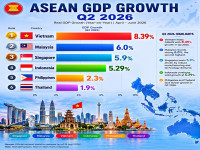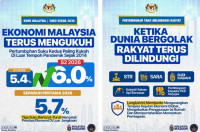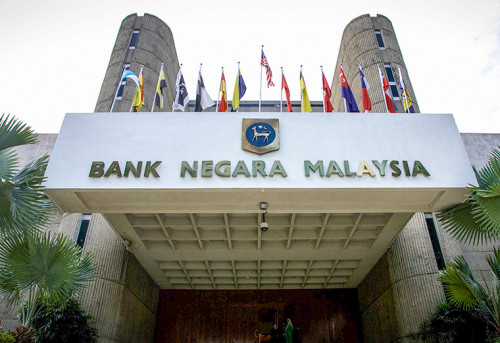
KUALA LUMPUR – Driven mainly by domestic demand, Bank Negara Malaysia (BNM) today said the Malaysian economy expanded by 5.6% in the first quarter of 2023.
In a statement, BNM said further improvements in the labour market, with strong growth in employment and continued expansion in wages have supported private consumption spending.
However, investment activity was underpinned by capacity expansion and continued implementation of multi-year projects.
“Inbound tourism continued to recover, while on the supply side, the services and manufacturing sectors continued to drive growth,” read the statement.
On a quarter-on-quarter seasonally-adjusted basis, the economy grew by 0.9%.
Headline inflation during the quarter trended lower to 3.6%, which was due mainly to the moderation in core inflation and lower RON97 price.
“The decline in core inflation was largely contributed by selected services.
“These include telephone and telefax services, food away from home, and personal transport repair and maintenance.”
Even as cost pressures, particularly global commodity prices, continued to ease, BNM said core inflation remained elevated during the quarter amid continued strength in demand.
Price pressures remained pervasive. The share of Consumer Price Index (CPI) items recording monthly price increases rose to 56% during the quarter.
Exchange rate developments
On exchange rate developments, BNM said domestic financial conditions remained broadly stable despite uncertainties surrounding the global economic outlook.
Against this backdrop, the ringgit continued to exhibit two-way movements with an overall marginal appreciation of 0.1% against the US dollar during the quarter.
Credit to the private non-financial sector expanded by 4.2%, while outstanding business loans grew by 2.4%, following slower growth in working capital loans.
Investment-related loans remained forthcoming, especially in the SME segment, while outstanding loan growth expanded by 5.2% for households.
This was supported by sustained growth in outstanding loans for the purchase of big-ticket items, with higher growth recorded particularly for car purchases.
Despite global headwinds, BNM said the Malaysian economy is projected to expand by 4 to 5% in 2023, driven by firm domestic demand.
“Risks to Malaysia’s growth outlook are relatively balanced. Upside risks stem mainly from domestic factors. These include stronger-than-expected tourism activity and implementation of projects including those from the re-tabled Budget 2023.
“Downside risks could emanate from lower exports due to weaker-than-expected global growth and more volatile global financial market conditions,” said governor Tan Sri Nor Shamsiah Mohd Yunus.
Existing price controls and fuel subsidies will continue to partly contain the extent of upward inflationary pressures. – The Vibes, May 12, 2023