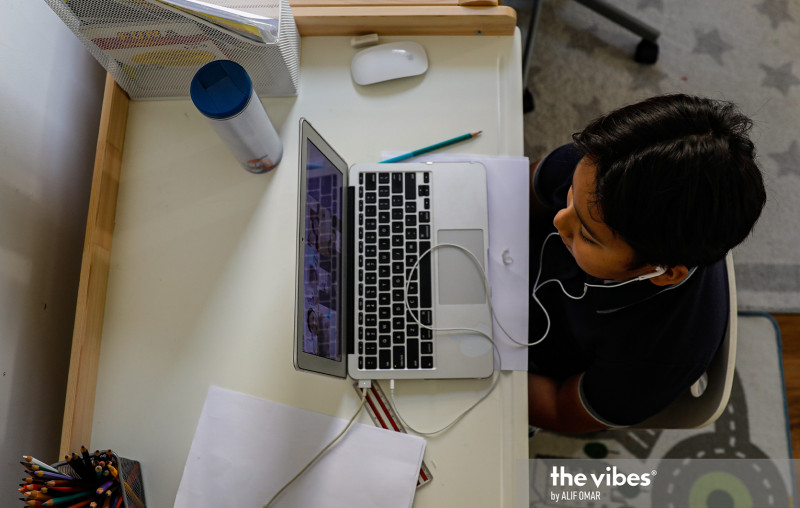
KUALA LUMPUR – The government’s knee-jerk move to announce home-based learning after Hari Raya Aidilfitri has given rise to a number of issues linked to the schooling system.
In a statement today, the Pakatan Harapan education committee said these concerns have been highlighted by worried parents and teachers on social media since the announcement was made about two weeks ago.
It said the decision could lead to more students falling behind in their studies, with no alternatives proposed by the Education Ministry to assist them.
By right, after a year (since the Covid-19 pandemic started), the ministry should be able to provide self-study materials. But clearly, they are taking the easy way out by just opening and closing schools.
“Additionally, parents don’t even know whether their children are truly learning and have mastered the topics taught (online).”
More worryingly is the situation involving Sijil Pelajaran Malaysia (SPM) candidates who will have to sit the examination later this year despite their education being gravely impacted by long spells of school closures, said the committee.
“Those taking their SPM later this year would have lost almost two years of study because of this home-based learning.”
It called on Putrajaya to reduce the number of topics being taught per subject, in line with students’ length of study.
The lack of access to electronic devices and the internet has aggravated students’ woes, particularly those living in rural areas, it added.
The committee said the government must find an alternative approach and take proactive, radical action to address the issue of students falling behind at school.
The statement was jointly signed by committee chairman Maszlee Malik, PKR’s Nik Nazmi Nik Ahmad, Teo Nie Ching (DAP) and Datuk Hasan Baharom (Amanah).
Education Minister Datuk Mohd Radzi Md Jidin on April 26 announced that classes will be conducted online for two weeks after the Raya school break.
The PH committee, however, said the blanket closure of schools nationwide, without basing the decision on the science and data used to identify Covid-19 hotspots, will only burden the education system.
For one, it said, teachers will have additional workload and little time to prepare for lessons, resulting in students losing focus during online classes.
“The government’s Hotspot Identification for Dynamic Engagement (HIDE) system should be able to assist in identifying which schools to open or close.
“In remote and rural areas, which are far away from infections and have no Covid-19 cases, the Education Ministry should allow schools there to remain open.” – The Vibes, May 9, 2021