
KUALA LUMPUR – Groups linked to special needs education are ruing being left out of Budget 2022, as the government proposed only a RM50 million allocation for the purchase of teaching aid and to improve certain school facilities.
Three civil society groups are lambasting the lack of allocation and grants to support the special needs community, even though the Education Ministry would be given the biggest piece of the budget pie with RM52.6 billion.
Malaysian Council for Rehabilitation (MCR) president Datin Paduka Khatijah Sulieman said non-governmental organisations like hers should not be left out in the national budget, given that vocational training is an important component for people with disabilities (PwDs).
“Why are there no recognition or grants given to NGOs in Budget 2022 as incentives so they continue vocational-based training for the future of PwDs?
“I hope the government will, for example, look into how it can provide incentives to winners of the Abilympics to encourage job creation and business opportunities. Such incentives are opportunities to reward Abilympians for their achievements at an international level.”

Annually, MCR sends participants to the Abilympics, in which vocational skills competitions are held, similar to the Olympics, but for abilities, where Malaysians have seen success. In 2011, Lim Anuar won gold in silk painting at the 8th International Abilympics, and in 2016, Malaysia won four gold medals.
She said although the Abilympics are not as well-known as the Paralympics, it is still important for ministries and government agencies to help fund NGOs so they can continue PwD enrichment programmes.
Her sentiments are shared by Chng Cheng Hui, executive secretary of Pertubuhan Keluarga Orang-orang Bermasalah Pembelajaran (PERKOBP).
“There is very little or no allocation for PwDs to transition from secondary schools to the job market as some of them lack certificates or paper qualifications. They need the vocational training to prepare them for the jobs they are transitioning to.
“There is a lack of training at secondary schools to prepare them for the transition and the government needs to allocate funding to improve that.”
He said many parents of PwDs have taken their own initiative to open centres to cater to young adults due to the lack of specialised government centres.
“Most of the money is allocated to government-centric organisations and does not filter down to parents and organisations, who need the funds to set up personalised training programmes for adult PwDs.”

PERKOBP’s programmes, which are supported by sponsors, help 28 PwDs in its premises in Bandar Kinrara, Puchong.
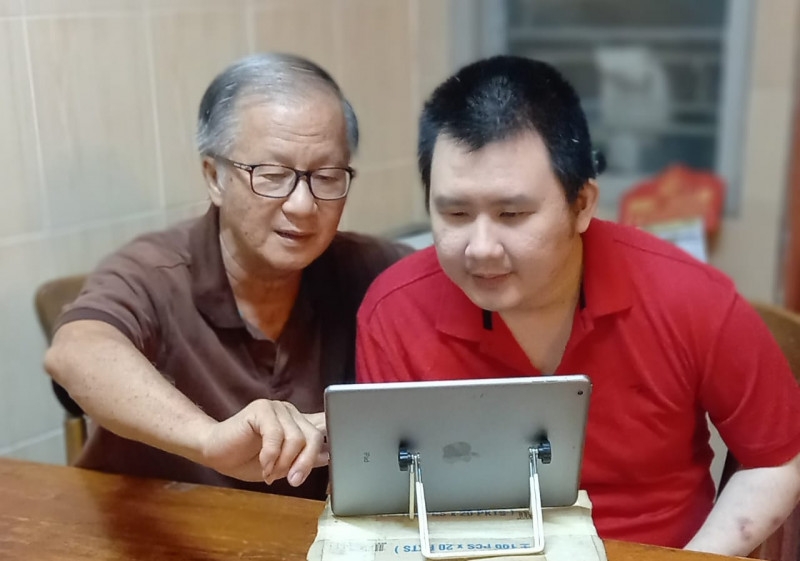
He said his own son, Chng Kuan Hua, has benefited from PERKOBP’s training and, at the age of 32 this year, transitioned successfully to work at the organisation.
Meanwhile, Che Ann Yuri, a member of parent support group Autism Resources Malaysia, said NGO funding has suffered since the pandemic began last year.
“While we welcome the budget initiative for special needs schools, NGOs such as National Autistic Society of Malaysia, Selangor and Federal Territory for the Mentally Handicapped and more are in need of financial support.
“The mentally challenged make up 8% of the disabled Malaysian community, including the deaf, blind, those with physical disabilities and the mentally challenged. They are represented by NGOs, which depend on public donations.
“NGOs need help from the government and the aid should be decentralised to help with facility upgrades, training programmes and workshops.” – The Vibes, November 3, 2021