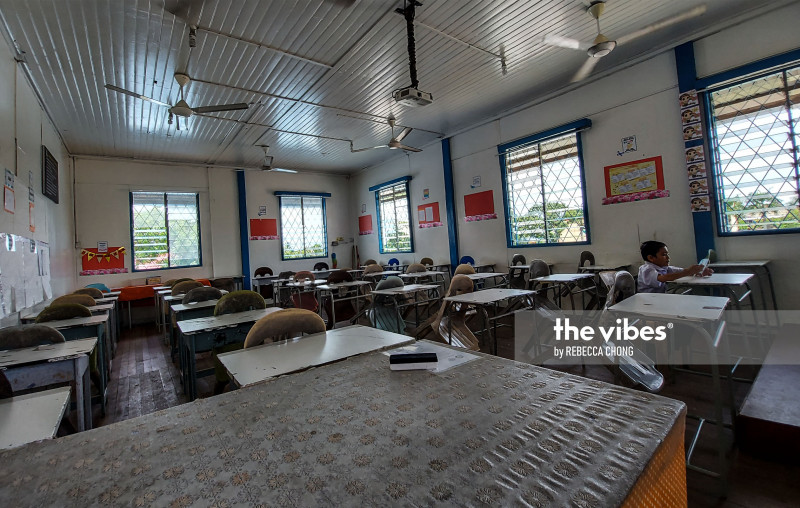
KUALA LUMPUR – The rise in the number of students having to forgo their higher studies mainly due to poverty is causing much concern among the authorities, compelling the government to consider introducing a programme to sponsor the education of students from poor families.
Experts say while the initiative may not be easy to implement owing to its financial implications, it is a workable solution as it has been successfully implemented in countries such as Germany, France and Finland and their models can be used as references by Malaysia.
“Any spending on education must be seen as a long-term profitable investment. It’s difficult to produce a knowledgeable and skilled generation if no proper allocation is made (for their higher education),” Associate Prof Che Hasniza Che Noh said, stressing that investing in education should be made a part of the government’s main agenda as it will post significant returns to the nation’s development in the long run.
The senior lecturer at the Centre for Foundation and Continuing Education, Universiti Malaysia Terengganu, said to ensure the agenda meets its target, the government needs to look at various aspects including determining the types of “profit” it can potentially reap from such an investment.
Deserving students
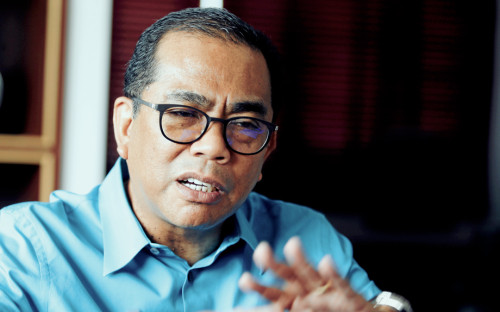
Earlier this year, Higher Education Ministry Datuk Seri Mohamed Khaled Nordin was quoted as saying that his ministry hopes to introduce a programme to sponsor the studies of first-generation students from poor families who gain admission into institutions of higher studies.
Describing the programme as a measure to end poverty through knowledge and skills, he said the matter will be presented to the cabinet for approval.
Commenting on the government’s proposal, Che Hasniza said only deserving students that meet the criteria must be considered for the programme.
“Those selected must prove that they have achieved the basic requirements…for example, they must achieve the required CGPA (in accordance with the conditions set under the sponsorship) in the first semester of their studies.
“Besides that, the government should only sponsor students pursuing programmes that have high marketability. This is because if the sponsored students are not able to get a job (after completing their studies) then the investment will seem unfruitful,” she said, adding that this will also ensure the nation’s ability to produce human capital to meet industry needs.
She added that the government must also not hesitate to withdraw the sponsorship of students who fail to attain the required cumulative grade point average (CGPA).
Government’s commitment
According to a study carried out by the Statistics Department in 2019, a shocking 390,000 or 72.1% of SPM (Sijil Pelajaran Malaysia) leavers did not want to continue their studies.
The study, which involved 560,000 SPM students, found that only 170,000 chose to continue their education while the rest wanted to enter the labour market.
Experts say the authorities cannot afford to overlook this issue, as Malaysia risks facing a shortage of professionals in another 10 years if many students continue to choose to forgo tertiary education in the near term.
Organisation of Graduates of Educational Institutions, Malaysia, deputy president Prof Solehuddin Shuib, meanwhile, said the government’s proposal to sponsor first-generation students from poor families is a “good start” before expanding the initiative to other groups.
“We can start with the first generation, followed by targeted subsequent generations before providing free education to the entire generation of students,” he said.
According to Solehuddin, the provision of free education reflects the seriousness of a nation towards the people’s relationship with knowledge.
He added that by using the right approach, children from every family in Malaysia can gain admission into a university and return to society equipped with the necessary qualifications and skills, thus enabling them to do their part to develop a civilisation, in line with Malaysia Madani.
Solehuddin said Malaysia is on the right track to offer free education, because it is among the nations that pay great importance to education, from primary school to tertiary level, and this is reflected in the allocations made under the five-year Malaysia Plans and annual budgets.
Under Budget 2023, for example, the Education Ministry received the highest allocation of RM55.2 billion. Last year, it received an allocation of RM52.6 billion.
Insurance scheme
Solehuddin also suggested that the government provide sufficient financial aid to B40 students and channel it to them using more effective methods and strategies, as poverty has been identified as the main reason students forgo higher studies.
“Besides that, access to education must be simplified and accelerated at all levels.
“Academic support in the form of extra classes, food aid and student motivation can be provided by government organisations through funds allocated by the government,” he added.
Che Hasniza, meanwhile, said among other alternatives the government can implement to help B40 students is the establishment of an insurance scheme to fund their higher studies, with the premium rates set in accordance with the financial capability of each family.
She believed that the effective implementation of initiatives to help poor students pursue tertiary education will not only have a positive impact on the students and their families but also uplift the socioeconomic status of this country’s B40 community.
“Poverty should not be an obstacle to students who want to continue their studies. All parties, including the government, non-governmental organisations, zakat institutions, corporations and society, play a role in ensuring that no student is deprived of education,” she added. – Bernama, April 21, 2023