THE shift to home-working triggered by the coronavirus pandemic looks set to endure long-term, making it vital to protect employees' rights and avoid blurred lines between on-the-clock hours and personal time, the United Nations said yesterday.
Issues facing home workers and their employers need greater attention, including better safeguards and more awareness of the rights and risks involved, the UN's International Labour Organization said in a report.
"When the world was brutally hit by the Covid-19 pandemic, wide swathes of the world's workers turned almost overnight to home work as a way of protecting both their jobs and their lives," the agency said.
"There is no doubt that home work is likely to take on greater importance in the years to come.
"It is thus time for governments... to ensure that all home workers – whether they are weaving rattan in Indonesia, making shea butter in Ghana, tagging photos in Egypt, sewing masks in Uruguay, or teleworking in France – move from invisibility to decent work."
260 mil home workers before pandemic
The ILO estimated that in 2019, there were about 260 million home-based workers around the world, representing 7.9% of global employment.
In the first months of the pandemic in 2020, that shot up to an estimated one in five workers, said the ILO.
In low- and middle-income countries, most home-based workers were own-account workers, but in high-income countries, employees were the largest group.
Most home-based workers are women. According to ILO estimates, 147 million women and 113 million men worked from home in 2019.
The 279-page report said the growth of working from home in 2020 has brought renewed urgency to the need to address issues facing home workers and their employers.
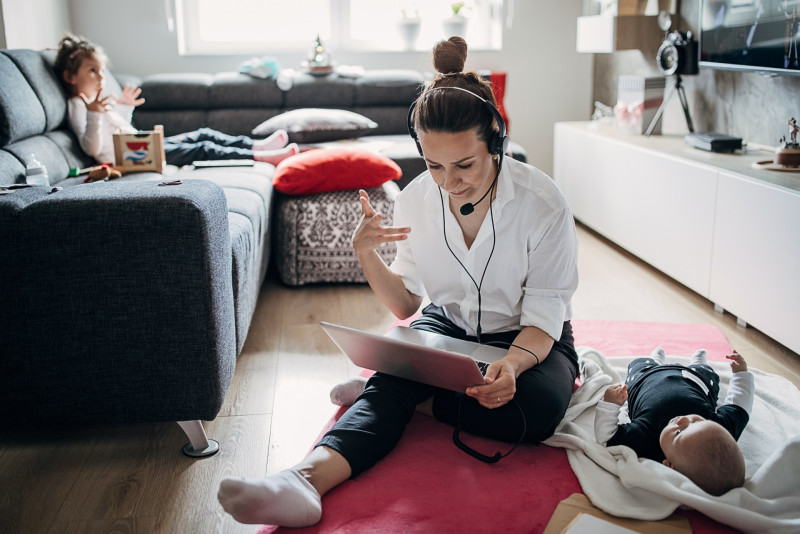
"For teleworkers, the main concern is the blurring between working time and personal and family time," the report said.
Equal treatment should be given to home workers and similar employees working on the company premises, it said.
"Given the potential risks of social isolation, it is necessary to develop specific actions that mitigate psychosocial risks," the report added.
"The introduction of a 'right to disconnect' is an important policy measure to limit working time and ensure respect for the boundaries between work life and private life."
Earnings penalty
The report said the greatest benefit in working from home was flexibility in hours, and though home workers' hours are more uncertain they do shorter days on average.
"The provision of quality childcare is important for all home workers, boosting their productivity and supporting the work-family balance, and, for industrial home workers, potentially helping to break the cycle of poverty," the ILO said.
However, the ILO said a "home work penalty" in earnings was evident in almost all countries, according to pre-pandemic figures.
For example, home workers made 13% less income than non-home workers in Britain, 22% less in the United States, 25% less in South Africa and about half as much in India, Mexico and Argentina.
Home workers enjoy less social protection, face greater health and safety risks and have less access to training, which can affect career prospects, said the report.
"Home working is often poorly regulated and compliance with existing laws remains a challenge."
The report included recommendations to make home working more visible and thus better protected.
"Ensuring effective freedom of association and the right to collective bargaining would be of great consequence for all home workers," it said. – AFP, January 14, 2021