TEHRAN – Iran's millions-strong legion of gamers revel in online worlds, but they have to fight daily real-life obstacles imposed by US sanctions in their quest to level up and keep playing.
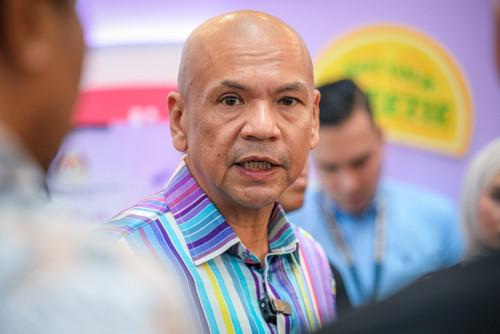
"It's a problem between governments and a pain for the consumer," said 24-year-old gamer and game journalist Amir Golkhani.
"We have no political demands. We just want to play," he told AFP.
Sanctions reimposed in 2018 by former US president Donald Trump do not directly target the gaming industry.
But the risk of punitive measures prevents companies from offering services to Iranians.
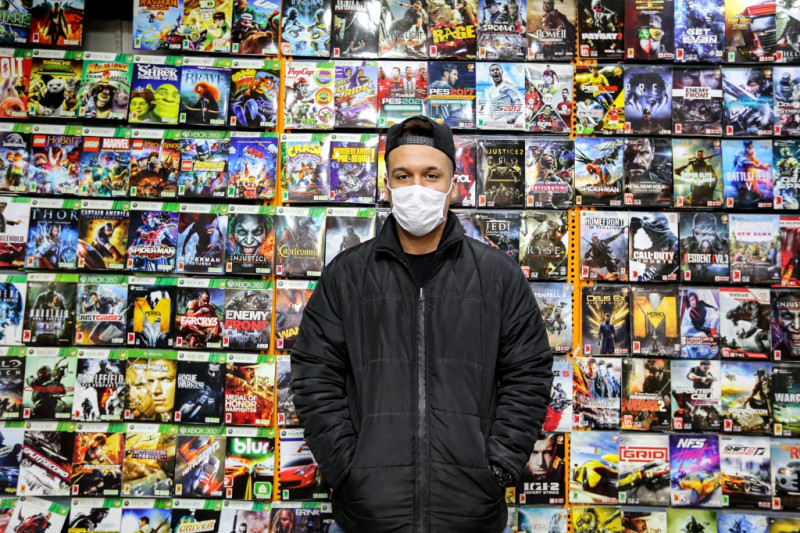
At shops near central Tehran's Imam Khomeini square, the situation appears normal – shelves are stocked with the latest games and consoles.
Surprisingly, both the Sony PlayStation 5 and Microsoft Xbox Series X can be found on sale, even though they are nearly impossible to acquire in many countries since the Covid-19 pandemic disrupted global supply chains.
But neither company is officially present in the Islamic republic due to Washington's punishing sanctions, and their products are imported or smuggled into Iran from countries nearby.
Iran's blacklisted banking system also means players, with no access to internationally recognised credit cards, need to use fake identities and addresses – and sometimes middlemen in other countries – to register accounts and make online purchases.
There are at least 32 million gamers among Iran's population of 80 million, according to a September report by the Iran Computer and Video Games Foundation.
It found that the most popular games in Iran were Pro Evolution Soccer, Clash of Clans, FIFA, Call of Duty and PUBG (PlayerUnknown's Battlegrounds).
"Gaming is one of the few things helping me escape life's realities," said Farshad Rezayi, a 32-year-old chef and avid gamer.
Sanctions have almost deprived him of that outlet too, he added.
'Same game but cheaper'
One way for Iranians to cheaply and easily access games is a local spin on the "gameshare" function found on most consoles and computer platforms.
Iranian shops use VPNs or other methods to mask their locations and create accounts seemingly from abroad.
They then purchase games for those accounts using overseas credit cards or gift cards, and sell the access to several gamers, who share what's locally known as a "capacity account", referring to usage – online, offline or both.
For the hugely popular PlayStation 4, for instance, shops sell access to single-game accounts for between 20 and 60% of the regular price, according to use.
The store makes a profit by peddling one account to several people, while the player avoids shelling out the full cost of owning the game – usually US$60 (RM242) or more in the unregulated Iranian market, according to the game, demand and level of hype.
That's in a country where the minimum monthly wage is 25 million rials – currently around US$100 at the unofficial exchange rate.
A quick search on Divar.ir – the Iranian response to Craigslist – shows hundreds of ads for "capacity accounts".
"It's too much to pay 18 million or 28 million rials for a new FIFA game. I'll just get the (shared) account," said 31-year-old Ashkan Rajabi, who owns a gaming shop in Tehran.
"Same game, same feeling, but cheaper."
Gamer Rezayi said he had used this method exclusively since 2018, and also expressed support for respecting game copyright.
Foreign products are not protected by Iran's limited copyright laws – Microsoft Windows copies are almost always pirated, Netflix shows are downloaded with a single click, and video games for PC are usually counterfeit versions.
Capacity accounts are the "moral" alternative to almost zero-cost game pirating, Rezayi said.
'Always looking for workarounds'
"I have to support the developer who is helping me have fun. They'd give up if everyone just pirated things," Rezayi added.
Omid Sedigh Imani, a Tehran-based video game critic and streamer, echoed such feelings saying he considered hacked accounts and pirating to be "theft".
Still other gamers have found ways to purchase games on their own accounts by using a go-between.
"We need middlemen in another country like Russia, Turkey," said Sadegh Kia, a 25-year-old aspiring professional gamer, fresh off a competitive match at a gaming centre in Tehran.
He said the go-between sold gift cards that allowed players to top up their accounts and make online purchases.
Iranian consumer culture is "always looking for workarounds", critic Imani said.
While endorsing shared accounts for gamers on a budget, Imani advocated using services like Xbox Game Pass – a subscription that offers hundreds of games for US$10 a month.
But to sign up, Iranians have to go through a middleman for payment, and fake their location and account details.
"I can't tell Xbox support that I'm an Iranian," game journalist Golkhani said, adding that Iranians pretended they were foreigners because Xbox servers reject users connecting from Iran, and accounts that are detected are likely to be banned.
"We're forced to use VPNs, to set different DNSs" to bypass the restrictions, he said, referring to different methods to mask users' locations.
But doing so often meant connection quality was poor, he said.
Critic Imani claimed some companies were "softer" on Iranians and "definitely know what is happening".
Industry giants including Microsoft, Epic Games and Riot Games have blocked Iranians from using their gaming services, often without explanation.
Coupled with Iran's broad internet censorship, it means gamers have few options.
"We haven't done anything wrong. It's just the same old story of being Iranian," Imani said.
"And politics is out of our hands." – AFP, February 17, 2021