
UNLESS you have been living under a rock, you will know that the past weeks’ discussions have centred on parents and activists challenging the existing classroom setting with the unravelling of events that sparked the #makeschoolsasaferspace movement.
Our educators, the teaching staff, including the ministry, is under pressure by those observing closely the lengths put in place to ensure the rights of students, especially among minors, are protected when speaking out against alleged abuse – in verbal, psychological and physical forms.
What has yet or equally crucial to be addressed is how we can ensure our children (the subject of the conversation) are also not affected or objectified by the – political – status quo that can conveniently take advantage of a particular case and lead it astray far from its intended mission.
It is important to note that the role of a teacher comes with the quality of virtue. In that context highlights the work (or art if you prefer) behind it truly unique, which should not be taken for granted.
For the practitioners, to what depths are you ensuring the moral purpose that keeps your work close to the needs of youth secured in hopes of a natural alliance for a better future?
For the system/enablers, how are you empowering the workforce to make explicit the goals and skills of change agentry in a continuous renewal of expectations that are constantly swirling as the nation progresses?
Whatever is being discussed, it is all for the advancement and putting education into motion.
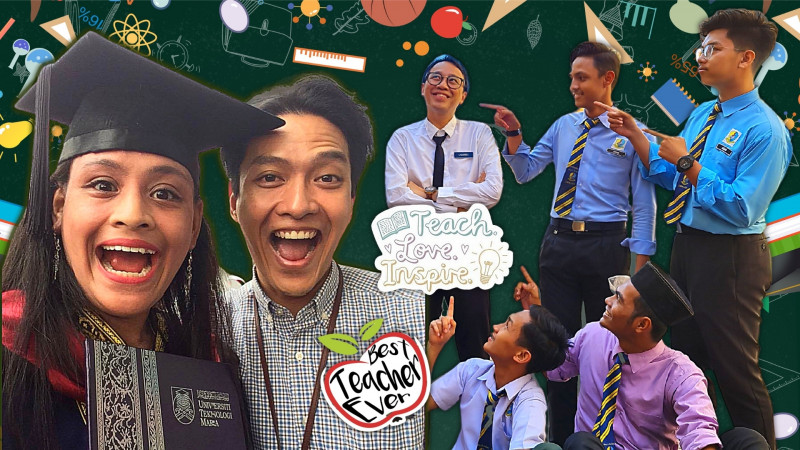
On this Teacher's Day celebration, The Vibes Culture & Lifestyle reached out to two individuals who have strived to push it in the right direction and have made teaching go beyond their ambitions, but a true dedication.
The importance of having a healthy teacher-student rapport rooted in respect and openness can indeed promote better exchanges in a learning environment.
What could the process be like?
Can we trust our teachers?
Researcher and university educator A. Hamid Saifuddin shares that he creates a safe space for his students "so that whatever is being said in class and whichever they (students) decide to express will be met with diplomatic judgement and caution.
“I don't mollycoddle them in my approach but rather paraphrase my choice of words in the exchange,” said the public relations lecturer.
“If I do not agree, or challenge the idea presented, I seldom use the word ‘wrong’ but ‘off tangent’ instead and it works dramatically.
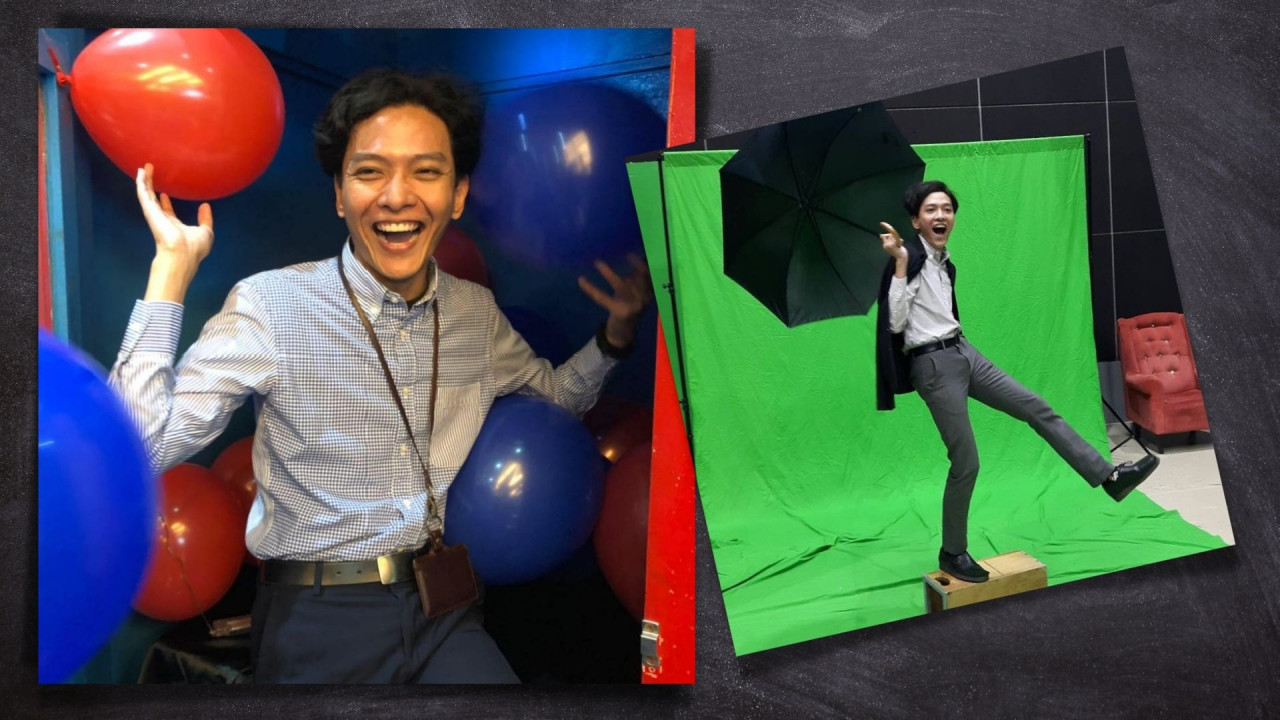
“Playing advocate in class and manoeuvring between them is akin to holding court for a political battle,” shares Hamid.
“Some of my students are very opinionated, while others within the classroom setting might find them crass and attention-seeking. That said, the remaining who are quiet still have strong opinions on a matter."
Detailing how it takes effort to encourage students to actively engage in dialogues – “trust me when I say I sound like a broken record telling them every week in class that no questions are or will be deemed stupid.
“All their lives they have been told that their ideas were sidelined or dismissed because of their age and experiences,” he explained.
Hamid says that the switch from good cop to bad cop does occur "whenever trust is violated.” But he also notes that it does not stop him from thinking of playful ways to maintain the class's attention by carrying around a bucket of candies. “Because whenever they are bored, they can palate their boredom away while still being present”.
“Bottom line is, we need to treat them like adults (seeing that my class consists of university students) with respect by coaxing them into knowing and believing that they matter in any given situation and trust that their ideas somehow fit into a narration or the matter being discussed.
“Of course, when the need arises for one where things fall out of line, remind them of the rank (position in the hierarchy) to uphold accountability,” he stressed.
“Many of us teachers, we will hold no grudges and would usually have the intense moment passed by us like water under the bridge each time,” he added.
On what makes a ‘good day’ at work, the lecturer teases, “seeing a class full-house in attendance and poking fun to those who came in late.
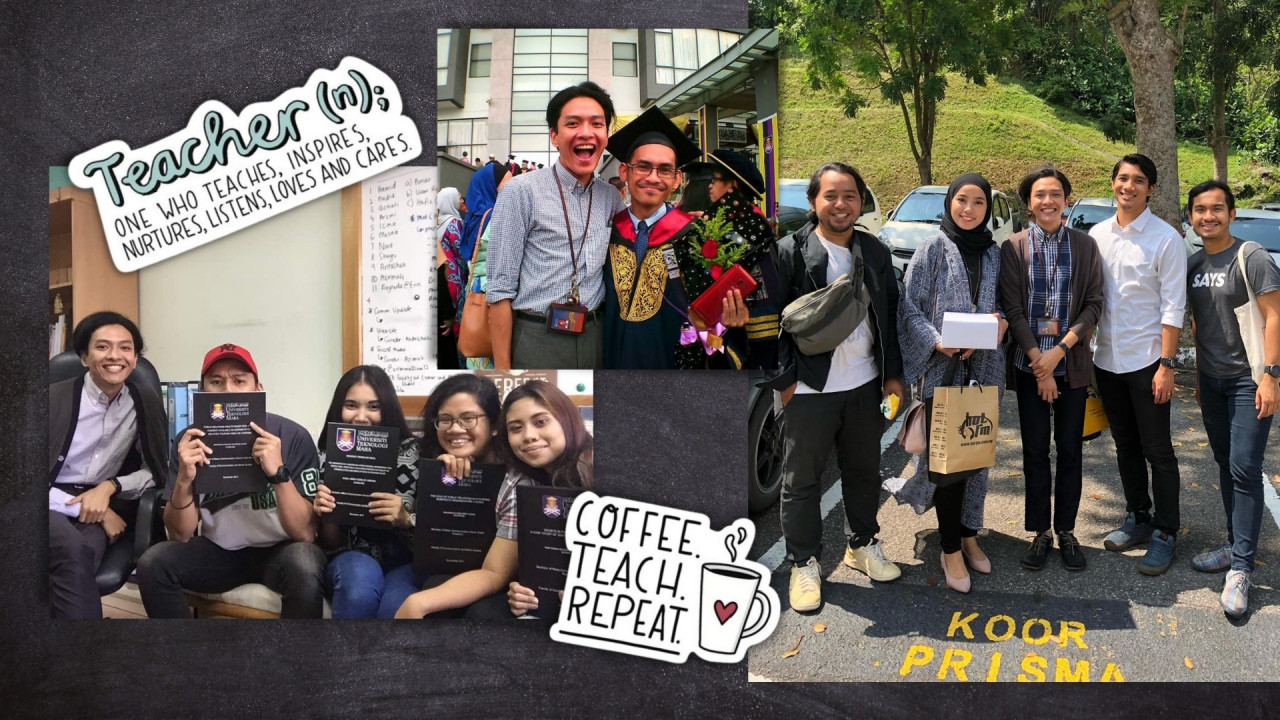
“But to be honest, a good day should be summed up this way – students engaging in class discussion, so heated in it that the time flew by and all of us were exhausted at the end of it.
“I recall having these moments several times that I decided my students should not be given any homework because they have all contributed in some way or another,” said Hamid.
On his classroom activities: “Every year before the pandemic, whenever I was given an evening writing class, I would dress up for Halloween and surprise them with candies or at times, an unplanned pizza party."
He learned that food has always been a good bridge to connect to people from his late father.
“Pushing students to write or engage in class discussion after 6pm was quite a gargantuan feat. So I have to switch my bonnet from a teacher to a class clown to keep them up and alive until 9pm.
“It is a crying shame that I can't do that now due to the lockdown”.
How does he work to promote the ‘school spirit'?
“In my mind, I have always posited myself as a ‘cheerleader’ of sorts. I will always try my level best to celebrate university or faculty functions by attending and supporting student activities,” said Hamid.
“Students would cheer up whenever we dropped by their booth or be present at their events because they truly wanted to show us that they have bloomed and taken into practice what we have taught them in class.
Shared vision in mastery
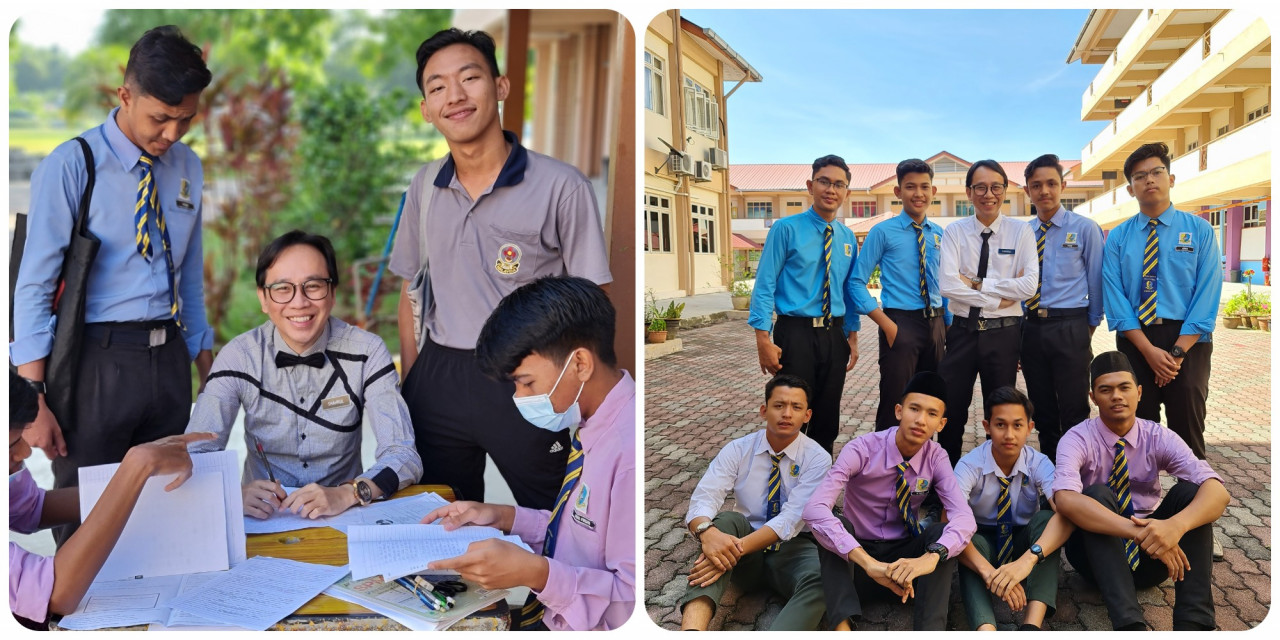
Secondary school English teacher Ahmad Shahrul Azhan Ibrahim agrees that "being supportive in all activities in school is a great way of displaying the school spirit.
“I would also help students in programmes or events that they participated in by giving advice, support and aid them financially if needed,” said Shahrul, or better known in the social media space via his TikTok handle @sir_asai.
We had interviewed him in February for making English fun for students in Kelantan. He admits adapting Internet technology in the teaching methods “will be difficult at first because teachers need to learn a lot to manage and use the technology”.
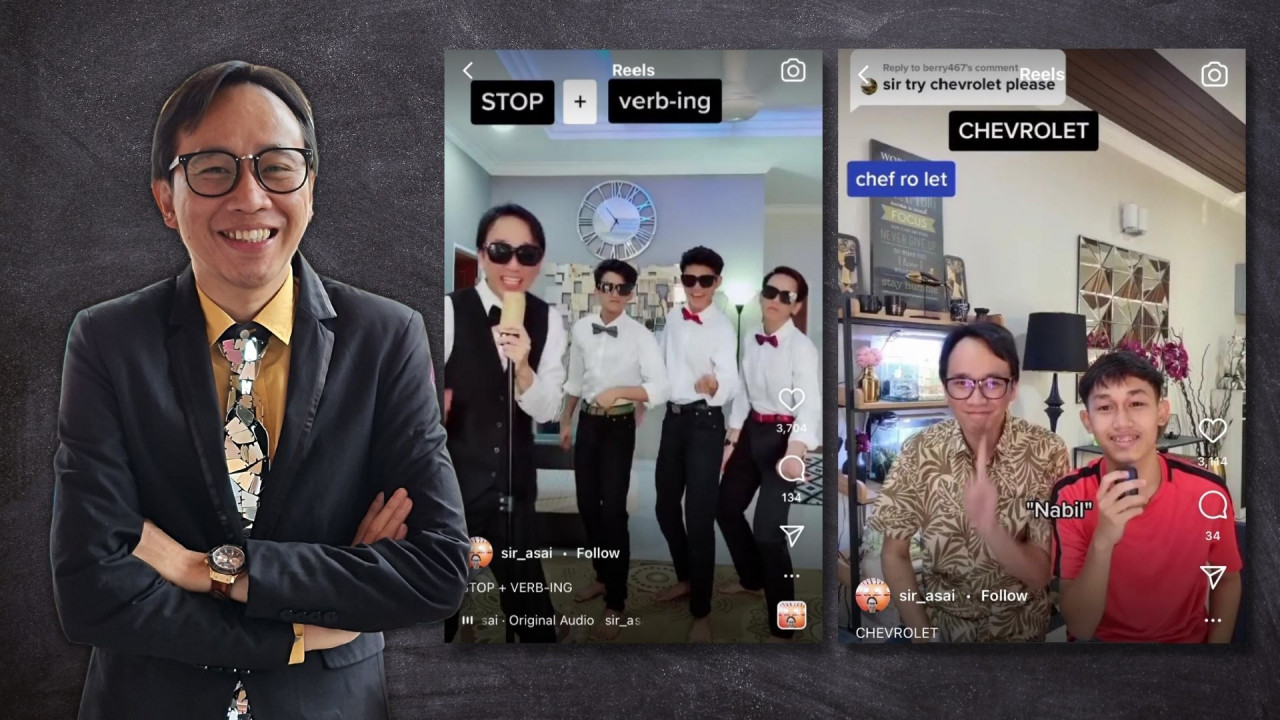
“Some of us were not trained on the ‘Internet of things’ but once we have absorbed the skill and knowledge, it is fun and easy. It opens us to all kinds of opportunities and creativity for us and the students.
For him, a ‘good day’ at school is “when you have a lesson in which the students participated actively and understood what was taught to them.
“My memorable moment is when I taught my students about making rules and punishments. They came up with all kinds of ideas and it was fun,” said the English teacher.
He has an infectious bond with his class that students across the country find fun. On how important it is for him to keep interactions creative – “It is important because you need to create a connection that allows them to maintain their interest to learn by loving and trusting the teachers.
“When my TikTok became known, a lot of my ex-students shared their stories about me on Facebook and Instagram, detailing how I have taught them a lot and inspired them. Having seen that, I felt proud being a teacher,” said Shahrul.
“I am most inspired when I see creative people, and never give up making things better for their life and profession. They motivate me to persevere,” he added.
Navigating the new normal
Similarly sharing his thoughts on how technology has made teaching both simple as well as difficult given the uncertainty of the pandemic, Hamid noted: “It is a double-edged sword moment that was tough for all of us at the faculty”.
“We were engineered to command a class by moving and be authoritative within the lecture hours. Having this being taken away from us is somewhat like swimming in uncharted waters not knowing where the shore is.
“We struggled to keep the momentum, but simplicity and organisation became a surprise bounty for us lecturers. We now became eager to upload our video contents and keep our slides current. This is because a year has passed and it felt natural and easier as the semesters went by,” he said.
“The downside to it is we tend to overwork way past our office hours. And it seems that this setting will not stop any time soon,” admitted the communications and media lecturer.
He added that there will be some small bouts of anxiety, “needing to reciprocate students’ willingness to want to do better at their craft with grading requests, but only to be met by me not grading them fast enough”.
That said, Hamid does single out one form of accomplishment, which is seeing his students flourish.
“As simple as hearing that they are polite to everyone that they meet, knowing that they can accomplish assignments during their internships and celebrating their successes.
“Whenever I grade a paper, if I see the leap from not knowing how to write to now having good content structure and having minor mistakes here and there – I know that we have accomplished something here,” he said.
“As I entered my ninth year of teaching, the best comfort you could give yourself is that you cannot whip your pupils up into shape for only 14 weeks' worth.
“It should be a continuous process from end-to-end in hopes of building a solid foundation that they could latch onto and get something out of. The rest of their course as a successful individual is up to them,” he added. – The Vibes, May 16, 2021