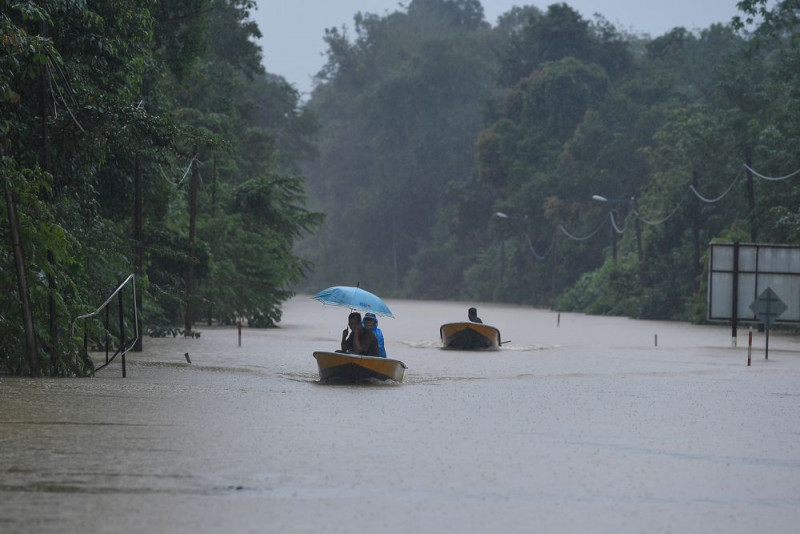
TOO much rain recently? Flash flood phobia? APU students have responded swiftly with an early warning system for flood mitigation.
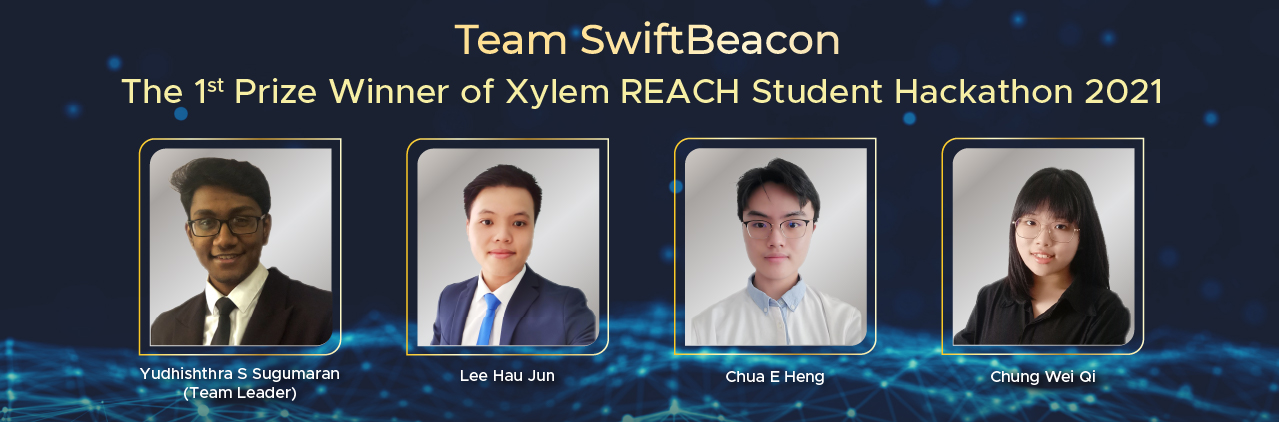
Team SwiftBeacon, comprising four software engineering students from diploma and bachelor degree programmes defeated hundreds of hackers from around the world and walked away with a US$4,000 (RM16,598) cash prize in the Xylem Reach Student Hackathon 2021 competition.
Team leader Yudhishthra S Sugumaran, Lee Hau Jun, Chua E Heng, and Chung Wei Qi, created a one-stop software platform that bridged the gap between flood mitigation awareness and swift mitigation procedures.
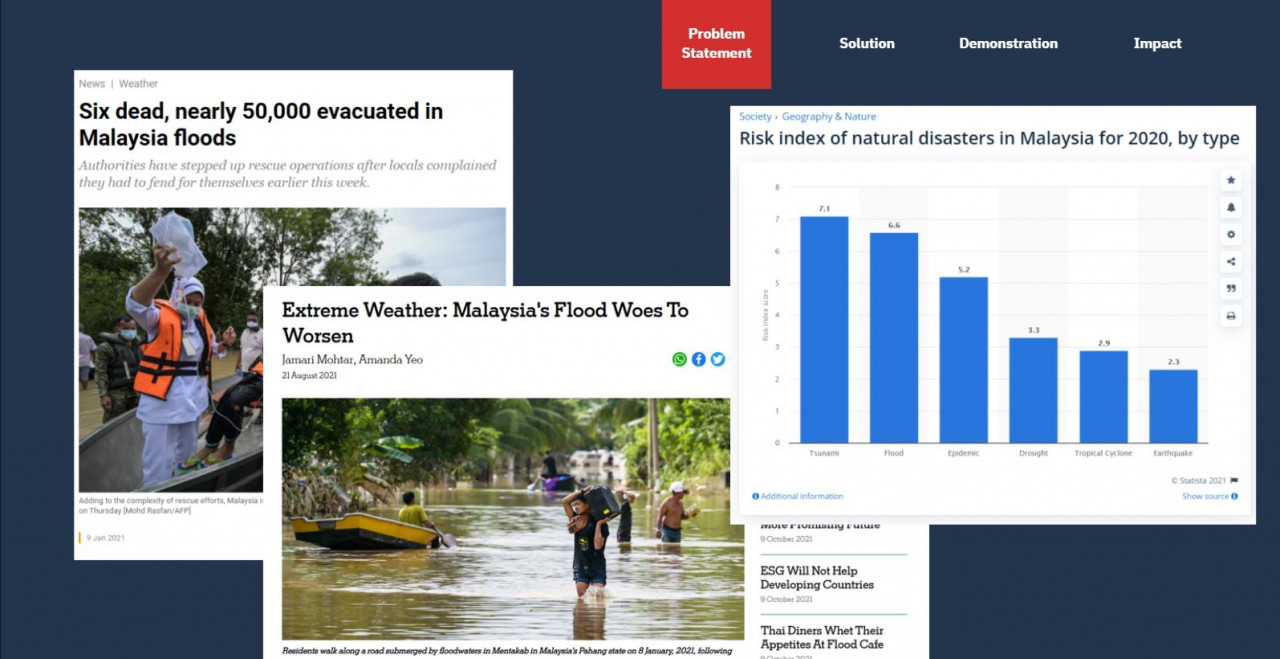
This solution is close to us Malaysians, as we face seasonal floods nuisance posed by the Northeast Monsoon lasting from October to March. This is on top of flash floods and tidal floods that occur unexpectedly in urban cities and residential areas.
According to a study, the annual flood disasters in this country causes losses of about US$274 million.
“We created SwiftBeacon. The idea behind the name came with the fact that we wanted our product to be proactive in finding and predicting help requests – ‘beacons’ from flood-prone residents. It was an interactive website prototype that was designed using Figma,” said Yudhishthra.
They were mentored by Abbhirami Sivarajan, a lecturer in the School of Business and advisor of the Integrated Sustainability & Urban Creativity Centre (ISUC) Student Chapter at Asia Pacific University of Technology and Innovation (APU).
Organised by Xylem Inc, a large American water technology provider, Reach Student Hackathon 2021 was held from October 6 to 10. Participants or teams had to “hack” together software-based projects to solve global water and sustainability challenges.
Team SwiftBeacon managed to impress the panel of judges with a six-minute video pitch, setting themselves apart from participants from around the world, and emerged as the first prize winner.
About the Sustainability Project
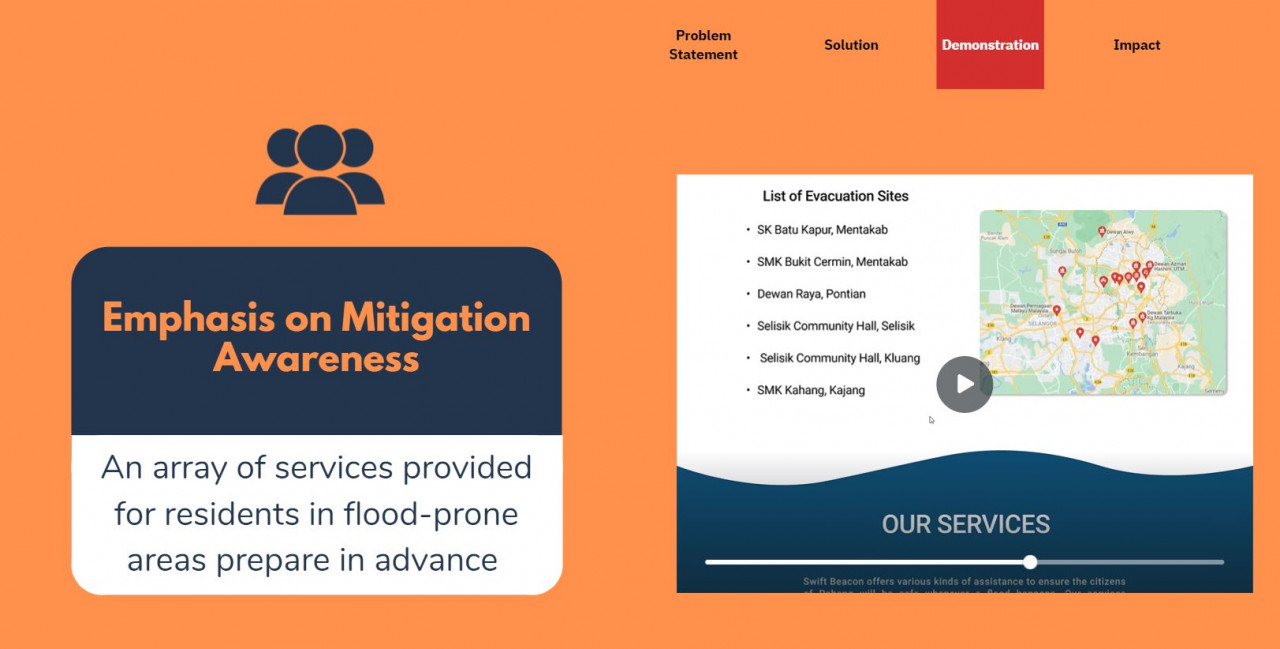
The main concern among residents in flood-prone areas is insufficient time to prepare for evacuation or sometimes help arrives too late. Hence, Team SwiftBeacon focused on building features that solved these problems.
By including an augmented reality (AR) model, the first goal of creating this interactive website was to inform the at-risk residents of potential flood hotspots and provide a list of evacuation sites that they could go to take shelter.
With artificial intelligence (AI) system, the second goal was to provide curated information blocks to residents who knew that their area was at risk of being in a flood; the third goal was to enable the response agencies to have a broad overview of all the at-risk residents and the corresponding risk levels.
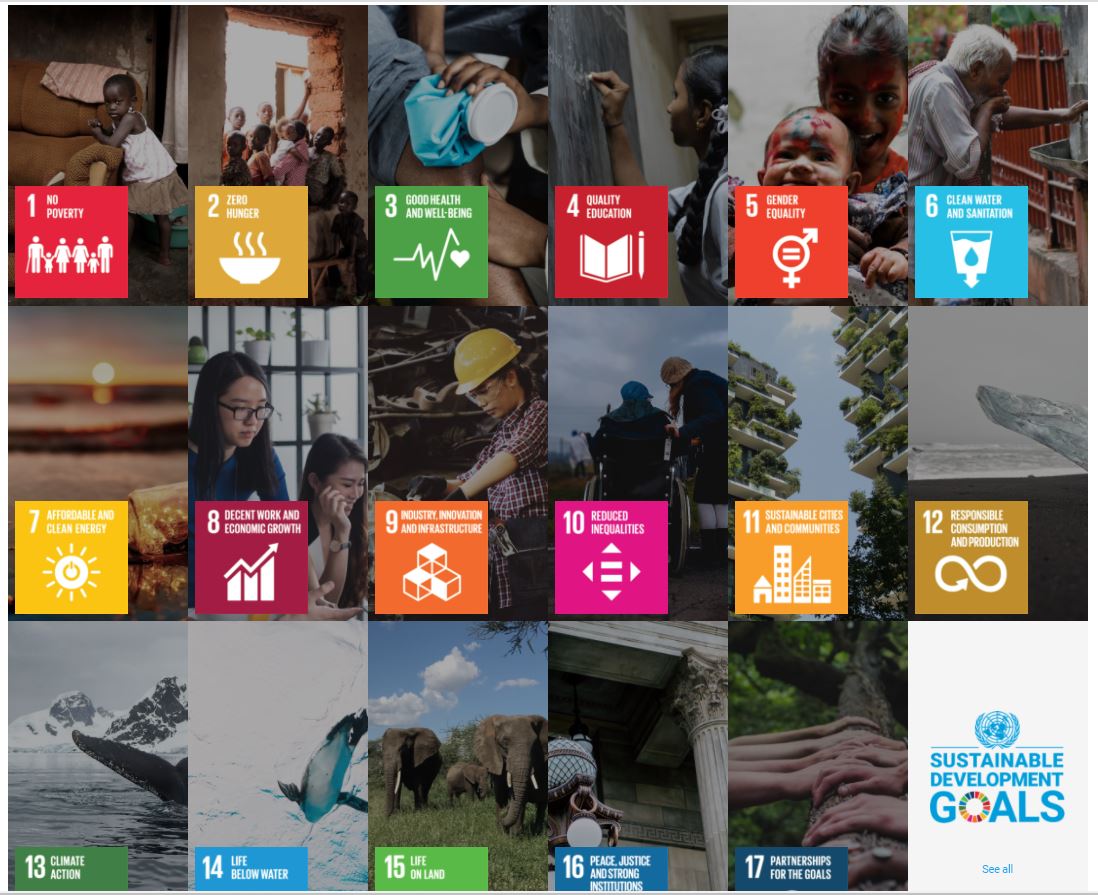
During the hackathon, the team constantly aligned the impact of their solutions with the United Nation’s 17 Sustainable Development Goals. The team achieved three targets, namely 11.5 – reducing the number of people affected by water-related disasters; 13.1 – strengthening resilience to climate-related hazards and natural disasters; and 13.3 – build knowledge and capacity to meet climate change, making this platform a practical and implementable solution whilst addressing real-world problems.
Check out SwiftBeacon by watching the video below:
About Team SwiftBeacon
The team leader, Yudhishthra S Sugumaran, 19, is from Bangsar and a product of Methodist Boys’ Secondary School Kuala Lumpur. He explained the inception of SwiftBeacon: “We used Figma to create a prototype of this website, mainly to showcase to users the journey of our product. And we specifically focused on building features that can solve some of the problems during flood incidents.”
Yudhishthra is studying for the diploma programme in information and communication technology (with a specialism in software engineering) at APU.
On their winning factors, the team leader, with five-time hackathon experience, leveraged the expertise of each of his teammates. Yudhishthra’s coursemates, Lee Hau Jun and Chua E Heng, both 19, have good expertise in prototyping and research.
Hence, they were tasked to figure out what was lacking in the existing flood mitigation systems and come out with a prototype.
“I was involved with the user interface (UI) design for three-and-a-half days and finally completed the prototyping on the fourth day. During day four of the hackathon, I spent most of my time on designing UI,” recalled Lee, whose hometown is in Ipoh, Perak, but went to SMK Pusat Bandar Puchong (1).
“Given that we only had two days to come up with a prototype, it was a nerve-wracking process,” said Chua, who is from Klang and an alumnus of SMK Bukit Tinggi.
Chung Wei Qi, 19, a BSc (Hons) in software engineering student from Ipoh, Perak, completed her secondary school studies at Poi Lam High School. As she is skillful in designing, she was mainly tasked with the creation of the pitch deck for project submission.
As for Yudhishthra, his previous experience in hackathons helped to guide the team to do the right research, validate the problem statements, incorporate user intent, and ensure the designs reflected in their solution. – The Vibes, November 10, 2021