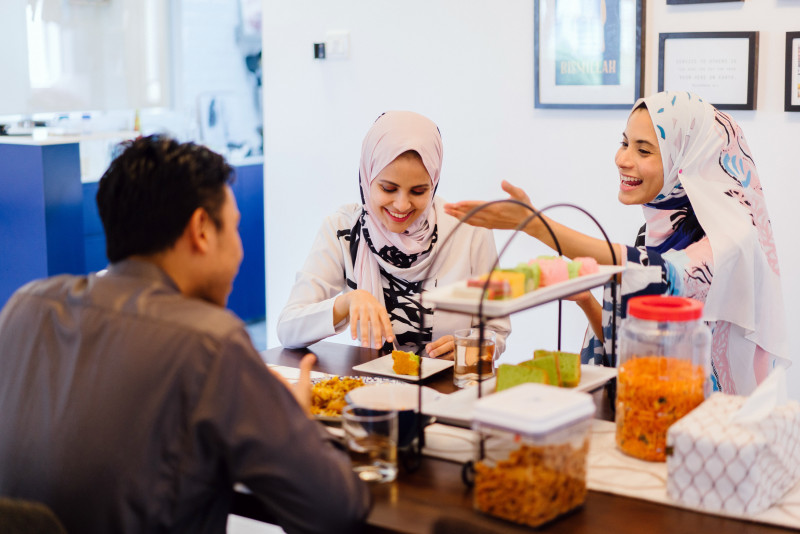

AIDILFITRI is a time to rejoice and strengthen family ties among Muslims. It is a common practice to extend the Raya festivities past the first two days of Hari Raya Aidilfitri for an entire month, where we visit relatives and friends and indulge in gastronomical delights at each other’s open houses.
Those who observe the Islamic obligation of fasting during Ramadan, followed by the celebratory and food traditions of Hari Raya Aidilfitri, actually require their digestive system to make quite a transition during those few weeks.
Firstly, your entire eating and food schedule is completely inverted from the day to the night. Then, after a month, you not only switch back to eating during the day but also are faced with an endless array of dishes and delicacies to feast upon – some of which you may only consume during special festive seasons.
Aidilfitri is also a special food fiesta especially for traditional dishes such as rendang, lontong, ketupat and lemang. Indeed, food plays a significant role in the festive atmosphere of Hari Raya celebrations.
Unfortunately, most of the delicacies are rich in fat, salt and sugar. Overeating may result in weight gain and may also affect other medical conditions such as diabetes, high blood pressure, and cholesterol levels in addition to other conditions such as high uric acid, gastritis, reflux, indigestion and other ailments.
So, practising eating in moderation and a balanced diet and incorporating suitable types of exercise regularly will ensure that you enjoy the festive seasons without affecting your health. Making smart choices on healthy foods is vital to avoid overindulgence in high calorie/sugar foods.
The three rules of healthy eating habits of eating in moderation, selecting a variety of food and eating a balanced diet should be practised throughout our life.
Hence, to control food intake, especially in the high-calorie category during Hari Raya, using smaller plates and taking small portions of each food type are highly recommended.
Hari Raya is not the time to eat and drink with a vengeance after a month of fasting. Uncontrolled eating during the festive season may increase the risks of developing non-communicable diseases.
Try eating, tasting and chewing slowly while chatting with others and stop when the stomach is almost full to prevent overeating. Hence, let us be in control of our appetite before it controls us.
Another tip is to eat some fresh fruits and drink water at home first before visiting friends and relatives. This may help you feel full and less likely to take too much food.
Avoid going back for second helpings and pause before you continue eating. It is important to recognise when you are no longer hungry and to leave the dining table once you are done with your meal.
The aim should always be to reach the point of ‘no-longer-hungry’ as opposed to feeling full. As practised by Prophet Muhammad, continue to eat in moderation during Eid and avoid only stopping once you are full.
Exercise portion control, which is another sunnah according to the Prophet Muhammad. And a good way to avoid overeating and wastage is by exercising portion control. An easy way to practise portion control is by simply measuring out a meal using your hands.
Each meal should include protein such as chicken, fish or beef or seafood: a palm-sized portion. Carbohydrates such as rice or noodles or ketupat/lemang/nasi impit: a cupped hand portion. Vegetables: as much as you can and fruits: 1 cup per serving. You can also practise mindful healthy eating by using small dinnerware and consciously choosing to sit closer to healthier options around the table to avoid the inclination to overindulge.
The calories of typical Hari Raya delicacies (MOH):
- Ketupat palas (1 piece) and meat rendang (2 pieces): 230+130= 360 calories
- Lontong and lodeh gravy (1 bowl): 260 calories
- Kuah kacang : 130 calories
- Lemang (1 piece): 100 calories
- Chicken satay (5 sticks) with Ketupat (5 cubes) and peanut sauce (1 ladle): 200+220+130= 550 calories
- Roti jala + chicken curry gravy : 150 calories
- Cookies – pineapple tart (1 piece) + dodol (1 piece) + fruit cake (1 slice): 20+70+130= 220 calories
- Chicken soto (1 bowl): 510 calories
Healthy tips when preparing Hari Raya meals:
- Remove excess oil in curry, sambal tumis and goreng berlada dishes;
- Use chicken without skin and fat-trimmed meat;
- Use half coconut milk and half low-fat milk/yoghurt for curry, rendang, lontong/lodeh dishes;
- Reduce sugar, oil and fat in recipes by cutting down half of the suggested portion. Add more natural ingredients such as onions, garlic, ginger, lemongrass, turmeric, meat stocks, lemon/lime, chillies, vinegar;
- Add high fibre ingredients e.g. wholemeal flour, oats, muesli, fried/fresh fruits or vegetables when making cookies or cakes/desserts;
- Use healthier cooking methods such as roasting, braising, oven-baking, boiling;
- Avoid artificial colouring in cookies/cakes/puddings. Try natural colourings such as pandan leaf extract/juice or beetroot.
- Separate the sugar/creamer/milk when serving hot beverages such as tea/coffee;
- Serve fresh fruits and vegetables (ulam/salads/acar/kerabu) at all times;
- Avoid carbonated or sweetened cordial drinks. Serve plain water.
Other eating healthy tips:
- Use small plates/bowls to eat smaller portions and reduce serving size;
- Select fresh/dried fruits as snacks or dessert;
- Reduce intake of salty foods such as chips (kerepek/keropok) and processed foods (asam, jeruk, sweets);
- Drink plain water instead of carbonated drinks or sweetened cordial drinks;
- Plan your open houses to accommodate your meal time e.g. if you are going to an open house at 11am, you consume food as to your lunch requirements/portions. At the second open house, you consume tea food choices/requirements. So, the third open house will be during dinner time. If you have other invitations in between, eat or drink minimally to meet light snack requirements/food choices.
- Choose dishes with less oil, fat, coconut milk or sugar – take less gravy/sauces, choose soup-based noodles such as soto, and porridge. – The Vibes, May 10, 2022
Rozanna M Rosly is the head of the Dietetic Services Department (clinical dietitian) at the UM Specialist Centre












.jpeg)