THE recent explosion of monkeypox cases in countries where the infection had not previously spread, coupled with the Covid-19 pandemic, has underscored the rising threat of emerging viruses in the 21st century.
An infectious disease is described as emerging when it is new on the global scene, when its infection agent has changed to become more transmissible or more dangerous or when it is rapidly spreading through new regions.
Covid-19
Covid is caused by a new coronavirus, SARS-CoV-2, which emerged in late 2019 in China before spreading across the globe, killing more than 6.2 million people according to a tally to the end of May by the US Johns Hopkins University.
The pandemic led to a worldwide mobilisation which brought the swift provision of several largely effective vaccines. But even so, the World Health Organization says there have been 14.9 million total global excess deaths associated directly or indirectly with Covid.
The WHO said on Thursday that it is still investigating Covid's origins, but the "strongest evidence is still around zoonotic transmission" – which is when a virus jumps from animals to humans.
MERS
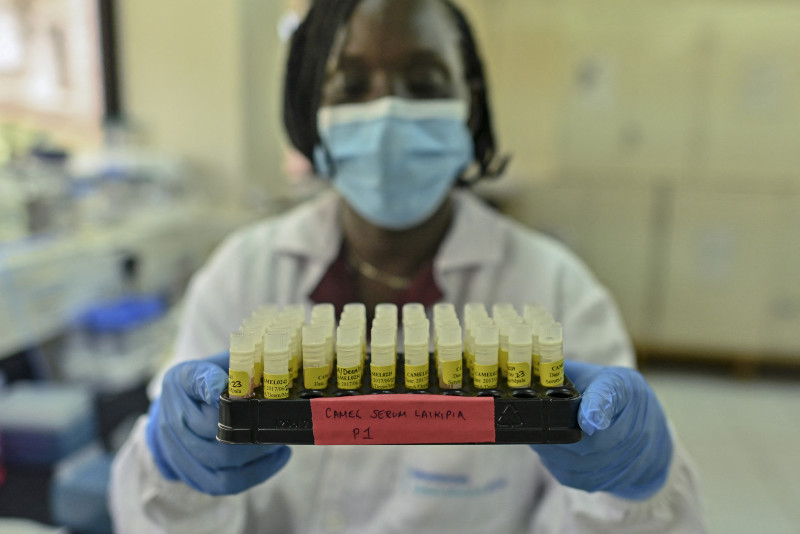
Middle East Respiratory Syndrome (MERS) was detected for the first time in 2012 in Saudi Arabia. It is a viral respiratory disease caused by a new coronavirus transmitted via camels.
Although it has a low transmission rate between humans, it causes death in a third of cases. The WHO's last official count published in September 2019 said that more than 850 people have died from MERS.
SARS
Severe acute respiratory syndrome (SARS), also a coronavirus, emerged in southern China in late 2002. It is believed to have been transmitted from bats to humans via a civet – a mammal whose meat is sold in Chinese markets.
SARS causes acute forms of pneumonia and has a mortality rate of 9.5%. The outbreak two decades ago spread to around 30 countries, killing 774 people, the bulk of them in China.
Ebola
First identified in 1976 in the Democratic Republic of Congo (then Zaire) the virus, whose natural host is the bat, has since set off series of epidemics in Africa, killing around 15,000 people.
The worst epidemic in West Africa between 2013 and 2016 killed more than 11,300 alone. DR Congo has had more than a dozen epidemics, the deadliest killing 2,280 people in 2020.
Marburg
First identified in 1967 in Germany and the former Yugoslavia after research on imported African green monkeys, the Marburg virus is from the same family as Ebola and leads to the death of around one in two of those infected. The worst outbreak killed 329 people in Angola in 2005.
Zika, chikungunya, dengue
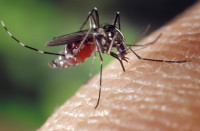
These three viruses produce similar, flu-like symptoms and are transmitted through mosquito bites. Cases exploded in the early 2000s in parallel with a spike in the population of tiger mosquitos.
The zika virus, first discovered in 1947 in a monkey in Uganda, caused its first epidemic in Micronesia in 2007 before exploding in Latin America in 2015, notably in Brazil.
A large danger of the virus is serious deformities in the babies of mothers infected during pregnancy.
Chikungunya spread in Africa from 2004 and reached the Indian Ocean as well as Asia before reaching the Caribbean from 2013 prior to a 2015 outbreak in Latin America. It causes fever and joint pain which generally subside after a few days or sometimes weeks.
Dengue, which primarily occurs in tropical and sub-tropical regions, is often mild, but can be fatal in rare cases.
Cases notified to the WHO rose tenfold between 2000 and 2020 and the disease has become endemic in more than 100 countries in Africa, Latin America, the Eastern Mediterranean, Southeast Asia and the Pacific. – AFP, June 13, 2022