Food

Natural sweetener made from truffles promises new sugar alternative

Product could be landing at right time, after the WHO highlighted the dangers of aspartame

Updated 3 years ago · Published on 19 Jul 2023 3:00PM

Natural sweetener made from truffles promises new sugar alternative
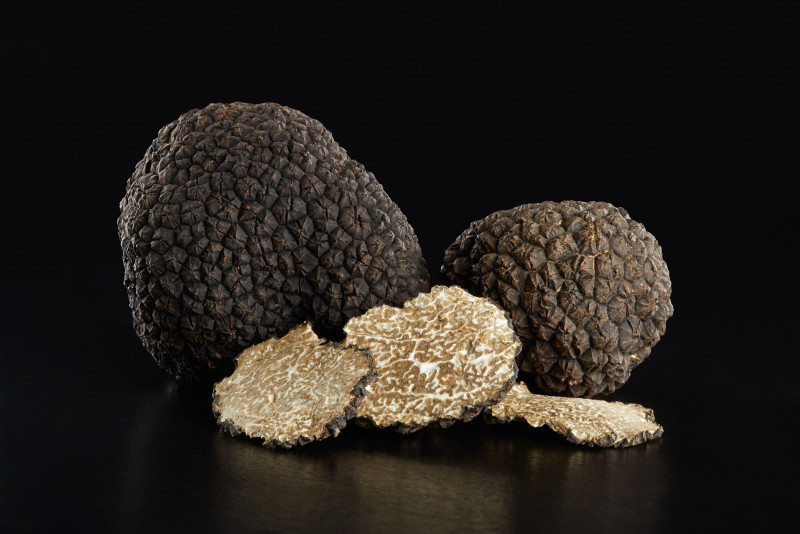
In the United States, a natural sweetener based on honey truffles has been developed. – ETX Daily Up pic, July 19, 2023

AFTER the World Health Organisation decided to maintain aspartame in the category of artificial sweeteners that are potentially carcinogenic when consumed in high quantities, a brand-new sugar alternative has been developed.

As well as being natural in origin, it's above all the taste of this truffle-based product that could seal its success!

Truffles are often associated with pasta dishes or omelettes. But what if you could add them to yogurt or coffee too? It may seem like a far-fetched idea, but it's one that's being explored in the United States with the aim of developing a natural sweetener based on a type of truffle. More precisely, the process involves extracting a protein that supposedly delivers a sweet taste.

This research has been carried out by an American start-up, which highlights the truffle-based product's absence of aftertaste, unlike other sweeteners.

But not just any variety of truffle can be used. This may prove disappointing to fans of the intense flavour of the Périgord black truffle, but here, the breakthrough relates to a variety of truffle cultivated mainly in Hungary, known as the honey truffle.

This discovery was made by MycoTechnology, a company already spotlighted for its research into various varieties of mushroom. At its plant in Colorado, the start-up is developing plant-based alternatives to products containing common allergens such as soy, nuts and milk, using fermented mushrooms as a starting point.

Beyond the appealing taste of this new truffle-based sugar alternative, the product could be landing at just the right time, since the dangers of aspartame have once again been under discussion.

The World Health Organisation recently maintained its decision to classify the famous artificial sweetener as potentially carcinogenic when consumed in high doses. The WHO considers an intake of up to 40 mg per kilogram of body weight per day to be acceptable. As an example, an adult weighing 70kg would have to consume between 9 and 14 cans of diet soda to exceed this threshold. – ETX Daily Up, July 19, 2023


Related News

Events / 2w

Penang CM leads investment, trade mission to the US

Malaysia / 2w

Intelligence agencies, AI, and the new battlefield for public opinion

Opinion / 1mth

Foreign influence, covert activities within Malaysian politics and society

Opinion / 1mth

“I’m not a war criminal, I’m a patriot”: Shavendra Silva’s amnesia tour meets the receipts

Malaysia / 1mth

MP calls on US to take legal action against Hadi over ‘plot to topple government’ statement

Business / 1mth

10 per cent tariff by US not a safe ceiling, must act now – industry expert

Spotlight

Malaysia

Man kidnapped, tortured, and killed following misunderstanding

Malaysia

'I will never forget taxi drivers who backed me in my hardest times' - PM Anwar

Malaysia

Najib fails to secure stay of 15-year jail term, RM11.38b fine in 1MDB case

Malaysia

Ivana Smit’s mother considers Federal Court appeal after RM1.1m award overturned

Education

Schools in Negeri Sembilan, Melaka to reopen tomorrow as haze conditions improve

Malaysia

Zara Qairina inquest: Investigating officer says final findings showed no suspicious circumstances

Malaysia

Man jailed 8½ years for abusing three-year-old boy, forcing the child to eat faeces

World

Pope Leo XIV diagnosed with lung cancer after successful surgery

Malaysia

More than 3,000 Myanmar refugees set for repatriation after Malaysia secures breakthrough

You may be interested

Places

MBPP: No choice but to fell dangerous, rotting trees

By Ian McIntyre

Community

Burst pipe affects 130,790 consumers in Penang

By Ian McIntyre

Our Planet

Pacific El Niño waters hit record 29.7°C, raising risk of 2026 becoming hottest year

Community

Penang urged to plant new trees before felling those deemed rotten

By Ian McIntyre