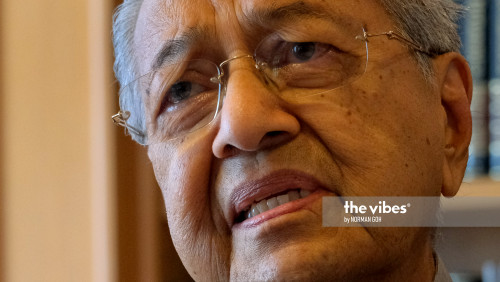
WARISAN president Datuk Seri Mohd Shafie Apdal has reminded federal minister Datuk Armizan Mohd Ali that many of the constitutional and resource reforms now credited to Gabungan Rakyat Sabah (GRS) were already initiated under his government between 2018 and 2019.
The former chief minister said GRS was benefiting from decisions made during Warisan’s administration, particularly in areas tied to the Malaysia Agreement 1963 (MA63) and Sabah’s revenue rights.
“He doesn’t know what we defended. Don’t talk like him, its like penyakit tiga serangkai (legacy issues).
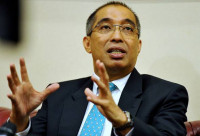
“Don’t slander us. Listen carefully to what we say, analyse it,” Shafie said, referring to Armizan, the Papar MP and Minister of Domestic Trade and Cost of Living.
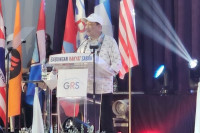
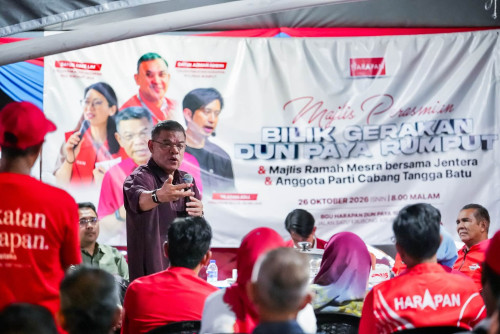
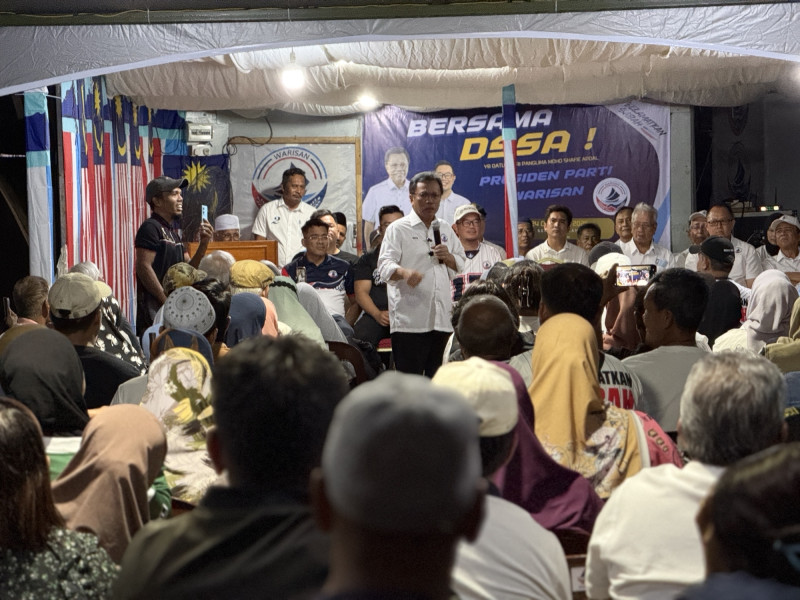
Shafie was met after his Bersama DSSA session in Sembulan on Friday night.
‘Records don’t lie’
Shafie was responding to two online videos by Armizan titled “Retorik vs Track Record” and “Menjawab Auta Warisan berhubung Pindaan Akta LHDN”, in which the GRS deputy secretary-general accused Warisan of exaggerating its record on state rights.
Armizan claimed the Inland Revenue Board (LHDN) amendment and later MA63 measures were only achieved after 2020 under the Special Council on MA63, while alleging that Shafie’s administration failed to act on issues such as the Territorial Sea Act 2012.
But Shafie said both state and federal documents show otherwise.
“The land enactment is there. Ask him to read. Ask him to investigate the (Federal) Cabinet 2019 memorandum,” he said.
He was referring to the 2018 amendment to the Sabah Land Ordinance, which extended the state’s definition of land to include rivers, lakes, and seabed areas stretching more than 320 kilometres offshore, effectively asserting Sabah’s jurisdiction over its continental shelf and marine resources.
The move was based on the North Borneo (Alteration of Boundaries) Order 1954 and MA63 and was unanimously passed in the State Assembly that year.
Shafie also cited a federal Cabinet memorandum dated November 18, 2019, which he said showed that the then Pakatan Harapan administration had already agreed in principle to 17 of 21 MA63-related demands raised by Sabah and Sarawak.
Those included the return of regulatory powers over electricity and gas, a review of special grants and revenue entitlements, and the appointment of representatives from both Bornean states to the Inland Revenue Board.
“Check the Cabinet minutes, it’s November 18, 2019,” Shafie said, adding that the federal Cabinet had decided then to replace the negotiation committee with an implementation committee to execute the reforms.
Shafie said the official records would confirm that several items were carried out or followed through by subsequent administrations, including Sabah’s control over gas and electricity, the return of administrative authority over Sipadan and Ligitan, and recognition of the state’s Public Works and Irrigation Departments (JKR and JPS) as federal technical agencies.
Equal partner status revived
Shafie said Warisan also supported the 2019 constitutional amendment to restore Sabah and Sarawak’s status as equal partners with Malaya, an effort that initially failed when Gabungan Parti Sarawak (GPS) abstained from voting.
The proposal was later revived under the Ismail Sabri Yaakob administration, culminating in a unanimous constitutional amendment in December 2021 that enshrined MA63 in the Federal Constitution and formally recognised Sabah and Sarawak as regions of Malaysia.
That same reform wave also paved the way for amendments to the Income Tax Act 1995, enabling Bornean representation on the Inland Revenue Board, and for further administrative actions to restore state control over deep-sea fishing and native land management. — October 25, 2025