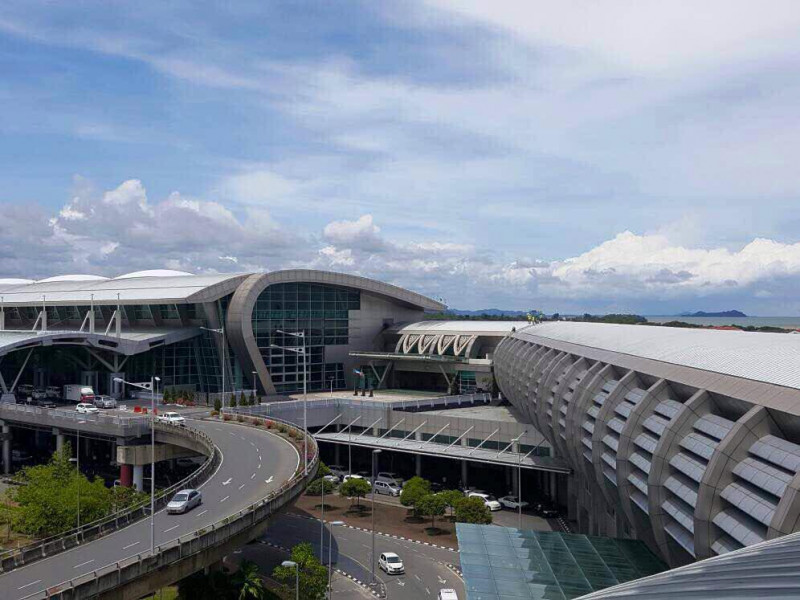
KOTA Kinabalu International Airport (KKIA) continues to serve as Sabah’s primary gateway, not only for international tourists but also for the state’s business, trade and services sectors, according to Sabah Assistant Minister for Tourism, Culture and Environment, Datuk Joniston Bangkuai.
KKIA is now recognised as Malaysia’s second-busiest airport, handling 14 international destinations with 126 weekly flights and a capacity of over 22,000 seats.
In addition, 472 domestic flights connect Sabah to major Malaysian cities, making Kota Kinabalu a key air transport hub in Borneo.
“KKIA is not merely an entry point, but a critical arrival hub for the state’s economy. Upgrading the airport, which is projected to accommodate 12 million passengers annually by 2028, is vital to support the growth of service-based sectors and visitors,” Joniston said.
Joniston, who also chairs the Sabah Tourism Board, said the rise in flights reflects airlines’ confidence in Sabah’s growing market.
Visitor arrivals between January and September 2025 reached 2.83 million, comprising 1.66 million domestic and 1.16 million international tourists.
He predicted the figure would rise to 3.5 million by year-end, generating state revenue of RM6.58 billion.
The airport’s success has also spurred new tourism products, such as the KK Hop-On Hop-Off service, which offers flexible city tours with 17 key stops.
Its chairman, Datuk Tan Kok Liang, said the initiative enhances visitor experiences, allowing tourists to explore the city, waterfront and local landmarks at an affordable rate.
“This service provides a fresh alternative for visitors. Its popularity would not have been possible without the surge in arrivals at KKIA,” he said.
KKIA also facilitates Sabah’s meetings, incentives, conferences and exhibitions (MICE) and regional trade sector. Datuk Dr Rosmawati Lasuki, Chief Executive Officer of the Sabah International Convention Centre (SICC), highlighted that this year’s trade expos attracted participants from 13 countries and 80,000 visitors over three days.
“The increase in direct flights is crucial to ensure international participation without transit delays, speeding up logistics and positioning Sabah as a preferred destination for major events,” she said.
The combined effect of airport development, new tourism products and international events signals a comprehensive transformation of Sabah’s ecosystem.
The state government now views KKIA not only as an airport but as a catalyst for economic, trade and tourism networks that strengthen Sabah’s role as a strategic hub in East Asia.
Ongoing expansion and terminal upgrades, along with additional direct flights, are expected to attract investment, enhance regional connectivity and establish Sabah as a new economic gateway. - November 12, 2025