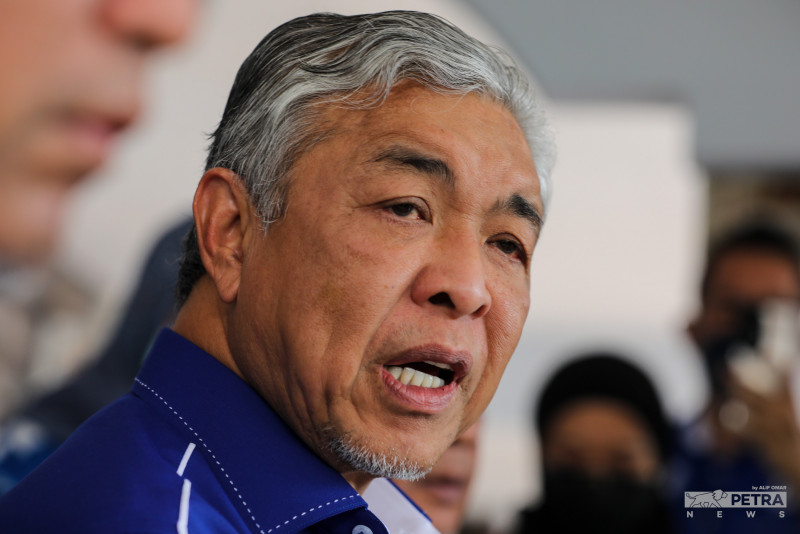
MALAYSIA’S political landscape has stabilised significantly over the past three years under the Madani administration, according to Deputy Prime Minister Datuk Seri Dr Ahmad Zahid Hamidi, who says this foundation has enabled the government to refocus national development priorities and rebuild public confidence.
Zahid said the government had been formed at a moment of deep political uncertainty and economic fragility, when restoring national stability was an urgent imperative.
As Minister of Rural and Regional Development, he stressed that rural Malaysia had been placed at the centre of the administration’s development agenda.
“KKDW (Ministry of Rural and Regional Development) has restructured the rural development ecosystem with a more strategic, integrated and high-impact approach.
“This effort is reflected in the implementation of basic infrastructure, including roads, water, electricity, social facilities and rural amenities,” he said in a Facebook statement on Wednesday.
He said more than RM7.7 billion had been channelled into rural development initiatives over three years, helping to narrow the urban–rural divide and ensure that rural communities enjoyed modern infrastructure on par with urban areas.
The Deputy Prime Minister also highlighted major improvements in technical and vocational education. Graduate employability from TVET institutions, he said, had risen to 95.1 per cent compared with 9.45 per cent the previous year, with student enrolment increasing to 212,022.
He noted that the KEMAS Pre-Tahfiz Programme had produced 52,000 young huffaz, while MARA’s TVET programmes and the TVET Teknopreneur track had trained more than 800,000 skilled individuals. In what he called a historic milestone, 420 Orang Asli students had now made it to university.
“The rural economy has also shown remarkable growth. MARA, the Rubber Industry Smallholders Development Authority (RISDA) and the Federal Land Consolidation and Rehabilitation Authority (FELCRA) have succeeded in producing 7,000 new entrepreneurs, creating 15,000 job opportunities and recording sales exceeding RM1.77 billion,” he said.
He added that Malaysia’s standing in the global halal sector had been bolstered through MIHAS@Shanghai 2025, which featured 200 booths, 250 companies and recorded transactions exceeding RM3.2 billion, aligning with the Halal Industry Master Plan 2030.
Touching on national disaster preparedness, Ahmad Zahid said the Department of Irrigation and Drainage now ran 1,798 hydrological telemetry stations, 197 monitoring cameras and 36 flood-prediction models as part of the Flood Forecasting and Warning Programme. A total of 614 early-warning flood sirens had also been installed in high-risk locations.
The government was committed to strengthening the National Disaster Risk Reduction Policy 2030, developed by NADMA last year, through a forthcoming National Action Plan, and urged state governments to create their own state-level disaster-risk strategies he said, adding, the government’s progress to date underscored one central truth: political stability was indispensable to national development, particularly in advancing rural growth and elevating TVET as a driver of economic competitiveness
“I express my utmost appreciation to all staff, civil servants and Malaysians for their continued confidence in the Unity Government.
“God willing, we will continue to shoulder this trust with full responsibility so that Malaysia continues moving forward as a stable, prosperous and respected nation,” he said. - December 4, 2025