THE 1Malaysia Development Bhd (1MDB) scandal unfolded as a far-reaching corruption saga that alleged the systematic looting of a Malaysian state investment fund by senior officials and their associates, with misappropriated money spent on luxury homes, rare artworks, private jets and even a major Hollywood film.
The controversy centred on 1MDB, a state-owned investment vehicle established in 2009 by Datuk Seri Najib Razak shortly after he assumed office as prime minister.
AFP cited today that the fund was promoted as a catalyst for national development, with investments spanning power generation, energy projects and property ventures in Malaysia and the Middle East, operating under Najib’s close oversight.
Questions about the fund’s governance intensified as whistleblowers alleged that Low Taek Jho, better known as Jho Low, a politically connected Malaysian financier with no formal position in 1MDB, played a decisive role in its creation and financial dealings. By 2014, alarm bells were ringing as the fund’s debt reportedly surged to about US$11 billion, while large sums of money could not be accounted for.
Public scrutiny escalated after investigative reporting by the Sarawak Report, followed by a series of articles by The Wall Street Journal in 2015, which published documents showing that Najib had received at least US$681 million in payments into his personal bank accounts.
The scale of the alleged misappropriation was later laid bare by investigations conducted by the United States Department of Justice.
Prosecutors alleged that more than US$4.5 billion was diverted from 1MDB between 2009 and 2015, with the funds laundered through the US financial system and used to finance an extravagant lifestyle across multiple continents.
Among the most striking disclosures was the revelation that tens of millions of dollars were used in 2012 by Najib’s stepson, Riza Aziz, to help finance The Wolf of Wall Street, the Hollywood film starring Leonardo DiCaprio.
Investigators also traced hundreds of millions of dollars to luxury real estate purchases in Beverly Hills, New York and London. Other assets allegedly acquired with stolen funds included a US$35 million Monet painting, a US$5.5 million Van Gogh, a US$35 million Bombardier jet, a US$100 million stake in EMI Music Publishing and a US$250 million superyacht.
The scandal widened further with the involvement of Goldman Sachs, which arranged bond sales that raised US$6.5 billion for 1MDB.
Malaysian prosecutors accused the global investment bank and several of its current and former employees of facilitating the diversion of funds, bribing officials to secure lucrative mandates and misleading investors about the true nature of the transactions.
Two former Goldman bankers were later convicted in the United States.
Tim Leissner, the bank’s former Southeast Asia chairman, pleaded guilty to bribery and money-laundering charges, accepted a lifetime ban from the securities industry and was sentenced to two years in prison after cooperating with investigators.
Another banker, Ng Chong Hwa, also known as Roger Ng, a former managing director, received a 10-year prison sentence.
In July 2020, Goldman Sachs reached a US$3.9 billion settlement with Malaysia, bringing criminal proceedings over its role in the 1MDB bond deals to an end.
The agreement included a US$2.5 billion cash payment and a commitment to help Malaysia recover at least US$1.4 billion in misappropriated assets.
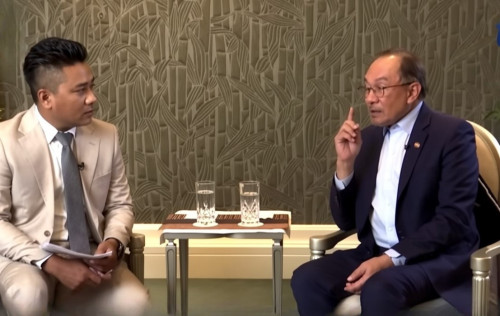
The settlement, however, did not end controversy. In 2023, Prime Minister Datuk Seri Anwar Ibrahim said Malaysia sought to renegotiate the deal, declaring that the country “cannot be taken for a ride”. Goldman subsequently initiated legal action against the Malaysian government as disagreements over the settlement persisted.
Despite the disputes, asset recovery efforts have surpassed initial expectations. The US Department of Justice said in June 2024 that it had recovered and returned about US$1.4 billion to Malaysia, followed by a further US$20 million in January 2025. In August 2025, JPMorgan Chase agreed to pay US$330 million to resolve all matters linked to 1MDB.
More recently, the Malaysian Anti-Corruption Commission said negotiations with US authorities would result in the return of 12 high-value paintings, including works by Pablo Picasso, Henri Matisse and Joan Miró, collectively valued at more than US$30 million.
Beyond the billions recovered, the 1MDB scandal left an enduring imprint on Malaysia’s political history. Public outrage over the affair played a decisive role in the 2018 general election, which saw the long-ruling coalition voted out of power for the first time since independence in 1957, cementing 1MDB as a watershed moment in the nation’s fight against corruption. - December 26, 2025