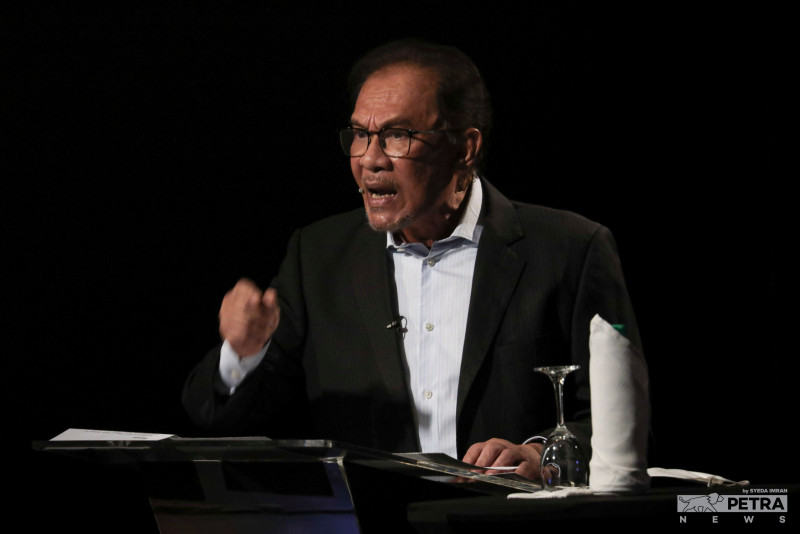
PRIME MINISTER Datuk Seri Anwar Ibrahim has strongly criticised the seizure of Venezuela’s leader and his wife during a United States military operation, describing the action as a serious breach of international law and an unlawful use of force against a sovereign nation.
In a statement, Anwar said he had been closely following developments in Venezuela with deep concern, stressing that the scale and nature of the operation raised troubling legal and moral questions.
“I have followed developments in Venezuela with grave concern. The leader of Venezuela and his wife were seized in a United States military operation of unusual scope and nature. Such actions constitute a clear violation of international law and amount to an unlawful use of force against a sovereign state.”
Anwar, in a Fecebook post on Sunday, called for the immediate and unconditional release of the Venezuelan leader and his wife, warning that forcibly removing a sitting head of government through external intervention undermines the foundations of international order.
“President Maduro and his wife must be released without any undue delay. Whatever may be the reasons, the forcible removal of a sitting head of government through external action sets a dangerous precedent. It erodes fundamental restraints on the use of power between states and weakens the legal framework that underpins international order.”
He emphasised that Venezuela’s political future must be determined by its own people, cautioning that externally imposed leadership changes have historically resulted in greater instability and suffering.
“It is for the people of Venezuela to determine their own political future. As history has shown, abrupt changes in leadership brought about through external force will bring more harm than good, what more in a country already grappling with prolonged economic hardship and deep social strain.”
Reaffirming Malaysia’s long-standing foreign policy principles, Anwar underscored the importance of sovereignty and adherence to international law as cornerstones of peaceful relations between states.
“Malaysia regards respect for international law and sovereignty as paramount to peaceful relations between states. Constructive engagement, dialogue and de-escalation remain the most credible path towards an outcome that protects civilians and allows Venezuelans to pursue their legitimate aspirations without further harm.”
In the latest development. Reuters cited that the Venezuelan President was being held at a detention facility in New York on Sunday following a sweeping United States military operation ordered by President Donald Trump that resulted in the capture of the South American leader and his wife, and signalled Washington’s intention to assume temporary control of Venezuela and its vast oil resources.
The highly coordinated raid was carried out early Saturday and involved U.S. Special Forces operations inside Venezuela that reportedly disrupted electricity supplies in parts of Caracas and targeted several military installations.
Maduro, 63, and his wife, Cilia Flores, were seized during the operation and airlifted by helicopter to a U.S. Navy vessel positioned offshore before being flown to the United States.
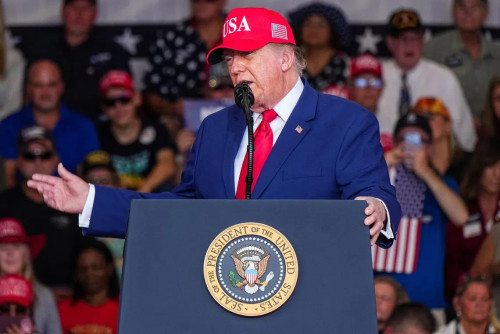
Speaking hours after the operation, Trump said Washington would step in to manage Venezuela during what he described as a transitional period.
“We will run the country until such time as we can do a safe, proper and judicious transition,” he told a press conference at his Mar-a-Lago resort in Florida.
For months, the Trump administration had intensified pressure on Maduro, accusing him of involvement in drug trafficking into the United States.
That campaign included a significant military build-up in the Caribbean and a series of missile strikes on vessels Washington alleged were linked to narcotics smuggling.
The dramatic intervention has raised the prospect of a power vacuum in Venezuela, a country already mired in prolonged political and economic turmoil. While many Western governments have refused to recognise Maduro’s 2024 re-election, arguing that the vote was fraudulent, Trump’s public assertions about controlling Venezuela and exploiting its oil reserves have revived painful memories of past U.S. interventions in Latin America, as well as in Iraq and Afghanistan.
Legal experts in the United States and abroad have questioned the legality of the operation, noting that the seizure of a sitting head of state could violate international law.
Some Democratic lawmakers also expressed concern, saying they had been misled during recent congressional briefings and demanding clarity on the administration’s longer-term plan for Venezuela.
Trump said the takeover would pave the way for major U.S. oil companies to re-enter Venezuela and rehabilitate its deteriorating energy infrastructure.
Analysts, however, cautioned that restoring production in the country, which holds the world’s largest proven oil reserves, could take years given the scale of underinvestment and damage to facilities.
As Maduro remains in U.S. custody, uncertainty continues to surround Venezuela’s political future, with questions mounting over governance, legality and the broader regional implications of Washington’s most assertive foreign intervention in decades. - January 4, 2025