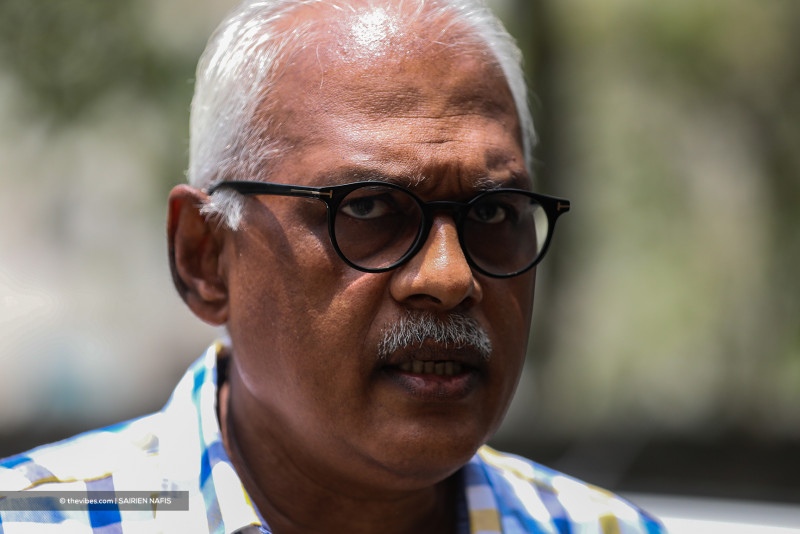
THE controversy surrounding the Foreign Worker Centralised Management System (FWCMS) has deepened, with Charles Santiago calling for urgent answers over the role of security agencies and whether the government properly verified key claims before signing off on the concession.
In the second part of his three-part series, Santiago sharpened his critique of the deal involving Bestinet, arguing that the latest disclosures point to troubling gaps in governance and oversight.
Special Branch’s alleged role questioned
A central issue raised is Bestinet’s claim that its system had been “recommended” by Malaysia’s Special Branch — the police’s intelligence and counter-terrorism unit.
Santiago said such an assertion, if true, would be highly irregular.
“Special Branch is tasked with safeguarding national security, not evaluating commercial proposals or endorsing private vendors,” he said, warning that invoking the agency in a procurement context risks blurring institutional boundaries.
He posed a series of questions: when such a recommendation was made, who requested it, and under what authority.
He also asked whether any such recommendation was formally documented and included in procurement records.
According to Santiago, the use of the Special Branch’s name in this context could signal either a serious breach of institutional norms or an attempt to deter scrutiny by implying national security sensitivities.
“Either way, the public deserves a full explanation,” he added.
Verification of international claims under scrutiny
Santiago also turned his attention to the government’s role in validating claims made by Bestinet before formalising the 2024 concession agreement tied to the FWCMS.
He noted that the company had repeatedly cited endorsement or recognition from international bodies such as the International Labour Organisation (ILO) and the United Nations to bolster its credibility — claims that have since been disputed.
Addressing Human Resources Minister Datuk Seri R. Ramanan directly, Santiago asked whether any ministry or agency had independently verified these assertions before agreeing.
“If these claims were not verified, it would represent a catastrophic failure of due diligence involving billions of ringgit in commitments,” he said.
He added that the implications would be even more serious if officials had verified the claims and proceeded despite knowing they were overstated.
Mounting pressure for accountability
The latest remarks build on earlier concerns over transparency and accountability in the FWCMS project, which has come under increasing scrutiny in recent days.
Santiago said the issues raised go beyond a single contract, pointing instead to systemic weaknesses in procurement processes and institutional safeguards.
The final part of his series, due tomorrow, is expected to examine who ultimately benefits from the FWCMS arrangement — and who bears the cost. – May 12, 2026




.jpeg)