CALLS are growing for the Selangor government to revoke its newly approved planning guidelines for non-Muslim houses of worship after concerns emerged that the regulations could restrict the development and accessibility of religious institutions serving minority faith communities.
Civil society movement Bersama has expressed support for Petaling Jaya Member of Parliament Lee Chean Chung, who recently raised concerns over the guidelines, saying the issue has yet to receive adequate attention from political leaders and multi-ethnic parties despite its potential impact on thousands of worshippers across the state.
The controversy centres on the Selangor Non-Muslim Houses of Worship Planning Guidelines 2025, which were approved during a State Executive Council meeting last November but only recently came to wider public attention.
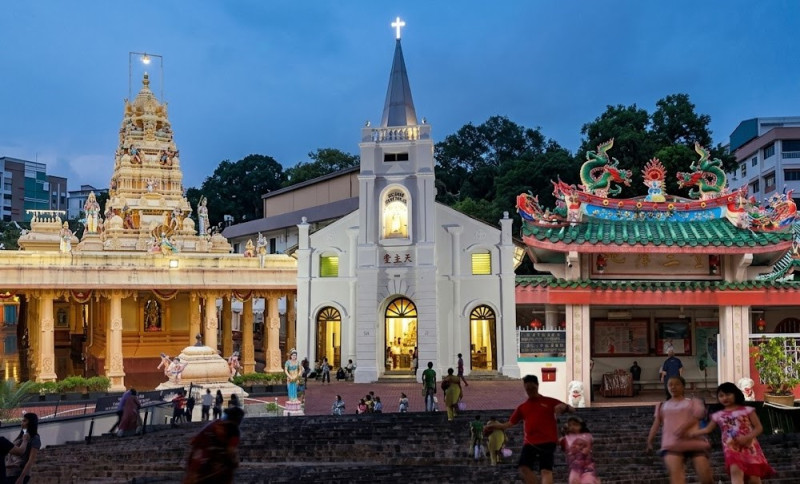
According to Bersama, several provisions within the guidelines have generated unease among Buddhist, Christian, Hindu, Sikh and other non-Muslim communities.
Among the measures drawing scrutiny are restrictions on establishing non-Muslim houses of worship within commercial zones, limitations on the height of religious structures, requirements preventing direct access to major roads, and a population ratio stipulating one non-Muslim house of worship for every 5,000 residents, the group said in a statement today signed by former Economy minister Datuk Seri Rafizi Ramli and former Natural Resources And Environmental Sustainability minister Nik Nazmi Nik Ahmad who took over Parti Bersama Malaysia (Bersama) in May.
Although the Selangor government has since stated that the guidelines have not yet been enforced, Bersama argued that the fact they have already been approved means they are likely to influence decision-making at local authority level, where applications for houses of worship are assessed and regulated.
The organisation stressed that policies concerning places of worship are inherently sensitive and should not be developed solely through administrative processes driven by technical planning considerations.
It warned that even regulations designed with sound planning objectives could become contentious if communities directly affected by them feel excluded from the decision-making process.
Bersama further argued that local councillors serving within local authorities should play a more active role in representing the concerns and needs of residents in their respective communities.
The group said local government mechanisms should be utilised to allow greater flexibility and accommodation of local circumstances when considering applications for non-Muslim houses of worship, rather than relying exclusively on state-level guidelines.
In its statement, Bersama urged political parties across the spectrum to publicly address the issue so that the Selangor government recognises that the matter extends beyond administrative concerns and touches on broader questions of community representation, religious access and public confidence.
The organisation also called on the state administration to return the guidelines to the Executive Council and revoke the version approved in November 2025 before commencing a new consultation process involving all relevant stakeholders.
Bersama proposed that any review should include open, transparent and inclusive engagement with religious leaders, community representatives, local leaders, non-governmental organisations and other interested parties.
It argued that feedback gathered through such consultations should form the basis of a new draft framework, which should then undergo a final round of discussions with stakeholders before being resubmitted to the State Executive Council for consideration and approval.
The group maintained that only a broad-based consultative approach would ensure future guidelines enjoy public legitimacy while balancing planning requirements with the religious needs of Selangor's diverse communities. - June 12, 2026