MALAYSIA is completely overhauling its foreign policy apparatus by systematically linking state-level diplomacy with the economic capacity of its premier multinational corporations, a move aimed at establishing a commanding presence in highly competitive global energy markets and trading networks.
At the center of this newly coordinated national doctrine is a deep-seated partnership with Turkmenistan, where decades of incremental diplomatic engagement have paved the way for expansive commercial opportunities in oil and gas exploration.
Speaking before an audience of over 300 Malaysian expatriates and diplomatic partners during his official visit to the Central Asian nation, Prime Minister Datuk Seri Anwar Ibrahim made it clear that future foreign policy victories will depend entirely on this unified front.
“First, we must work together as a team. Second, we must remain focused and ensure that we succeed as a nation. Although the development of our bilateral relationship progressed gradually, we recognised its potential, and Turkmenistan now also acknowledges Malaysia's importance,” Anwar explained.
In a recent Facebook post, the Prime Minister indicated that the momentum generated by the visit of the Turkmen Head of State to Malaysia two years ago is now being fully capitalised upon through his own retaliatory visit to Ashgabat, signalling Malaysia's long-term commitment to the region.
High-level negotiations with the Turkmen presidency are projected to yield immediate, practical dividends, with Petronas expected to assume a leading role in major new exploration contracts and infrastructure development.
This aggressive bilateral focus mirrors an equally ambitious stance within Southeast Asian regional politics, where Malaysia has forcefully argued that ASEAN must pivot away from purely symbolic diplomacy.
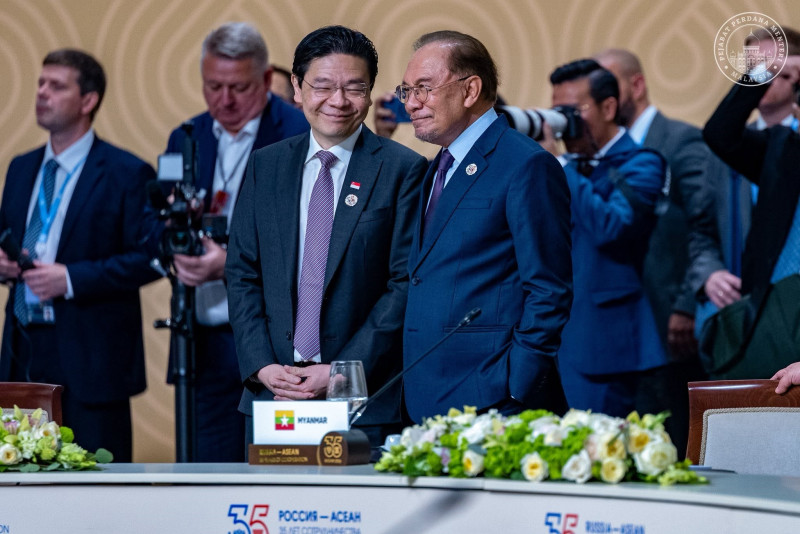
Earlier, during a strategic working lunch involving ASEAN leaders and the Russian Federation, the Prime Minister insisted that any future integration across the continent must translate directly into measurable wealth and market opportunities for local businesses and communities.
According to the Malaysia’s leader, growing alignment between ASEAN, the Shanghai Cooperation Organisation, and the Eurasian Economic Union must be strictly conditional upon satisfying the core socio-economic priorities of Southeast Asian states.
To turn this vision into reality, Malaysia has selected transnational crime prevention and energy infrastructure development as the foundational pillars of future ASEAN-SCO operational agreements.
Regarding interactions with the Eurasian Economic Union, the Prime Minister called for unprecedented levels of private sector integration, specifically designed to grant small and medium-sized enterprises immediate access to new consumer bases and advanced operational technologies.
The broader Malaysian diplomatic agenda will focus intensely on securing regional dominance in emerging high-growth fields, with artificial intelligence, the digital economy, cybersecurity, and food security designated as the primary drivers of sustainable macroeconomic stability across Eurasia. - June 19, 2026
.jpg)