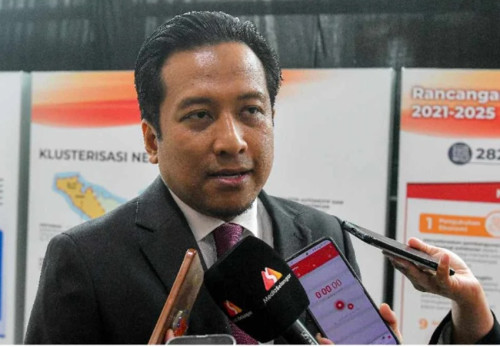
DEPUTY Inspector-General of Police Datuk Seri Ayob Khan Mydin Pitchay has called for the reinstatement of the Internal Security Act (ISA), arguing that the repeal of the preventive detention law has weakened Malaysia's ability to respond swiftly to deviant religious teachings, extremist ideologies and threats to national security and social cohesion.
Speaking at the 2026 Seminar on the Sustainability of Nusantara Islamic Thought at the Hikmah Exchange & Event Centre in Kuching today, Ayob Khan said the former legislation allowed enforcement agencies to intervene immediately when teachings were found to threaten national security, racial harmony or religious stability, without having to await action by State Islamic Religious Departments (JAIN).
He said the current legal framework requires greater reliance on inter-agency processes and existing statutory provisions, making enforcement against deviant teachings more complex and reducing opportunities for early intervention.
"Any deviant teaching that could threaten security, threaten racial unity and contradict fatwas, we could take immediate action and implement rehabilitation programmes for the individuals involved," BH quoted him saying.
Ayob Khan, who was among the speakers at the seminar officiated by Deputy Prime Minister Datuk Seri Fadillah Yusof, said those detained under the ISA had previously undergone rehabilitation programmes during their detention, a mechanism he said was effective in preventing the spread of extremist beliefs.
Based on his experience, he said the ISA had proven to be one of the country's most effective laws for addressing national security threats, including issues involving race, religion and the institution of the monarchy (3R), as well as religious extremism and deviant teachings.
"In my view.... this is not a proposal, the ISA needs to be reinstated, that is what is important because the law has proven effective in dealing with threats to national security and harmony," he said.
Describing the characteristics of groups promoting deviant teachings, Ayob Khan said they often rejected the opinions of recognised Islamic scholars, interpreted Quranic verses according to their own beliefs and refused to accept fatwas issued by state mufti departments.
He said State Islamic Religious Departments should intensify public education and awareness initiatives to ensure Muslims are not easily influenced by teachings that contradict the principles of Ahli Sunnah Wal Jamaah.
Ayob Khan added that police, working closely with the Malaysian Communications and Multimedia Commission (MCMC), had stepped up surveillance of extremist content and deviant teachings circulating through social media, blogs and other digital platforms.
He said authorities would continue taking preventive measures whenever intelligence or evidence pointed to recruitment activities or the dissemination of dangerous ideologies. However, he acknowledged that existing legislation does not empower authorities to compel followers of deviant teachings to undergo structured rehabilitation programmes comparable to those previously available under the ISA. - July 11, 2026