THE number of Malaysians detained overseas for drug-related offences reached 1,588 as of September this year, surpassing the 1,303 recorded throughout 2025, the Dewan Rakyat was told today.
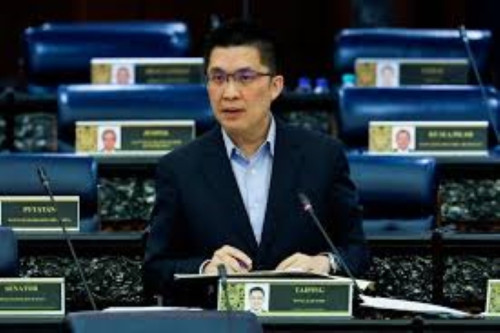
Deputy Foreign Minister Datuk Lukanisman Awang Sauni said the number of Malaysians detained abroad for drug-related offences had risen over the past three years.
As of September 2026, a total of 3,322 Malaysians had been detained overseas for various offences, with drug-related cases accounting for 1,588, he said.
Indonesia recorded the highest number of Malaysians detained over drug-related offences at 381, followed by China with 380, Singapore (310), Thailand (102) and Japan (72).
Lukanisman said the Foreign Ministry, through Malaysia’s diplomatic missions, provided consular assistance to safeguard the rights and welfare of Malaysians detained abroad, including helping notify their families.
He urged Malaysians to be wary of fraudulent job offers and requests to carry luggage on behalf of others, warning that such schemes could entrap them in drug-mule syndicates.
Separately, Malaysia’s trade with BRICS member countries increased 20% to RM481.02 billion in the January-June period this year, from RM400.73 billion in the corresponding period of 2025.
Lukanisman said exports rose 17.4% to RM181.40 billion from RM154.57 billion, while imports increased 21.7% to RM299.62 billion from RM246.15 billion.
China, Indonesia and India remained Malaysia’s largest trading partners within BRICS, accounting for about 90% of total trade with the grouping.
He was responding to Datuk Seri Dr Ronald Kiandee (PN-Beluran), who asked about Malaysia’s objectives in becoming a BRICS partner country, the added value of the arrangement and how it complemented existing bilateral cooperation and trade agreements.
Lukanisman said Malaysia was prioritising market expansion and strategic sectors under the BRICS framework, in line with the goals of the MADANI Economy, the New Industrial Master Plan 2030 and the National Energy Transition Roadmap.
The focus includes expanding exports of electrical and electronic products, semiconductors and palm oil, while attracting investment in emerging technologies such as green technology and cybersecurity.
He said Malaysia was also seeking to strengthen food and energy supply chain resilience through agricultural cooperation and renewable energy transition projects.
Other priorities include expanding markets for higher-value services such as tourism, education and healthcare, as well as promoting Malaysia’s expertise in Islamic finance across BRICS countries. - October 29, 2026