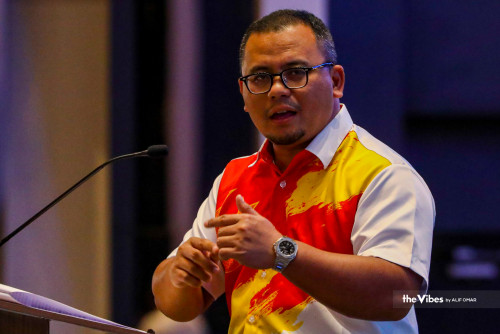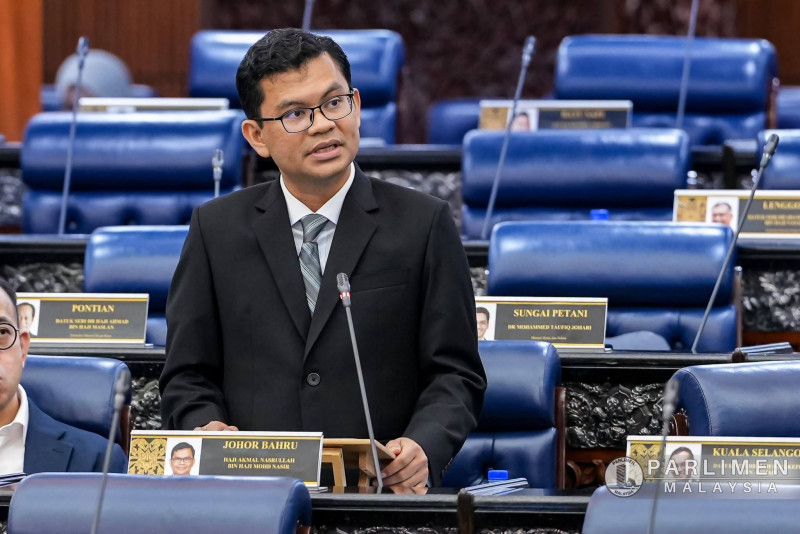
FEDERAL development funding for the four states under the State Government 4 (SG4) grouping is 6.8 times higher than their requests, Economy Minister Akmal Nasrullah Mohd Nasir said, dismissing allegations that the Federal Government was marginalising states governed by Perikatan Nasional.
He said Kelantan alone had been allocated 509 projects for 2027, with a total value of RM31.21 billion.
Akmal said comparisons of development allocations should take into account each state's level of development and the need to address regional disparities, rather than simply comparing the amounts allocated.
He said more developed states might be able to finance infrastructure for industrial areas themselves, while federal assistance remained necessary for projects requiring substantial investment, including land acquisition for Tok Bali in Kelantan and the Kulim Hi-Tech Park.
He urged the opposition to assess federal funding more fairly, saying the government had no reason to marginalise any state.
The four states — Kedah, Kelantan, Terengganu and Perlis — have set a target of reaching a combined gross domestic product of RM723.75 billion by 2050.
Separately, Malaysia must balance its position as the world’s fifth-largest liquefied natural gas (LNG) exporter with the need to secure energy supplies for domestic consumers and industry amid global geopolitical uncertainty, Akmal said.
The Economy Minister said stronger international cooperation in the natural gas sector was necessary to protect the country’s energy security as geopolitical developments continued to create uncertainty in global markets.
“Whatever the circumstances, we must continue to balance the interests of export markets with domestic supply needs, including for household and industrial use,” he said in a social media post.
Akmal led Malaysia’s delegation to the 28th Ministerial Meeting of the Gas Exporting Countries Forum (GECF) at the World Trade Center in Moscow, Russia, representing Prime Minister Datuk Seri Anwar Ibrahim.
The meeting was also attended by Russian President Vladimir Putin, Qatar’s Emir Sheikh Tamim bin Hamad Al Thani, Iranian President Masoud Pezeshkian and leaders from Algeria, Mozambique, Libya and Equatorial Guinea.
Akmal said Malaysia remained committed to its energy transition through the National Energy Transition Roadmap, which targets renewable energy accounting for 70 per cent of installed electricity generation capacity by 2050.
He said expanding renewable energy use must go hand in hand with maintaining a stable energy supply as the world navigates geopolitical uncertainty.
“We will continue to prepare to safeguard the country’s energy security, explore opportunities for sustainable strategic cooperation globally and drive a greener and more stable energy future amid global geopolitical uncertainty,” he said. - October 29, 2026