DATUK Seri Azalina Othman Said has taken issue with PAS president Tan Sri Abdul Hadi Awang’s description of the government’s confidence-and-supply agreement (CSA) with opposition MPs as a “Dajjal’s approach in the end times”, calling the remark extreme.
The Minister in the Prime Minister’s Department (Law and Institutional Reform) said Hadi, the Marang MP, should explain why he resorted to such a religious reference to express his opposition to the agreement.
“If he calls it Dajjal, I think he is the one who must give the reasons. I cannot comment because I am not a religious expert.
“If I do not like something, there are many other words I can use to express my displeasure. But it should not go as far as that.
“My understanding is that Dajjal is associated with the signs preceding the Day of Judgement. Does he know when the Day of Judgement will come?” she told reporters today.
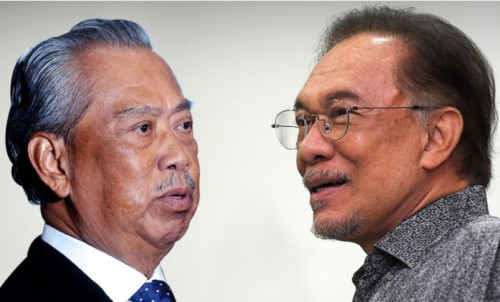
Hadi made the remarks in his latest Minda Presiden article, titled Tempias Dajjal Sudah Tiba, in which he accused the government of using the CSA to retain power rather than treating political authority as a trust to be exercised for all citizens.
“CSA is a Dajjal’s approach in the end times, turning power from a trust that must be fulfilled for everyone into a means of forcing oneself to remain in power,” he wrote.
He added that those involved might not claim to be God like the great Dajjal, but were still displaying characteristics associated with him.
Hadi also criticised politicians who sought leadership positions for personal and worldly interests, arguing that the responsibility of governing should not be entrusted to those unqualified to lead.
Separately, commentator Muhammad Fairul Al Qasas challenged Hadi’s characterisation of the agreement, drawing a comparison with the historic Pledges of Aqabah.
Fairul argued that the CSA was intended to prevent political instability and allow the government to carry out its policies without being constantly distracted by political manoeuvring.
He also pointed out that the arrangement was not new, noting that a similar agreement was introduced in 2021 when Perikatan Nasional and Umno were in government.
According to Fairul, PAS had not objected to the arrangement at the time and had instead issued several statements in support of it.
Drawing a parallel with the First Pledge of Aqabah, he said both agreements involved commitments to pursue what he considered beneficial objectives, although the CSA also included parliamentary allocations for opposition MPs.
Fairul said the agreement remained relevant despite the current parliamentary term approaching its end, as it would allow the government to implement commitments under Budget 2027.
“A budget is not merely a promise. It is a carefully prepared plan for the country’s development, and it is important that it is implemented for the benefit of the country and its people,” he said.
He also invoked the Second Pledge of Aqabah, referring to an account in the Seerah in which a figure identified as the leader of the devils shouted warnings after the pledge was made between Prophet Muhammad and the people of Madinah.
Fairul likened the account to the criticism being directed at the CSA, which he maintained was intended to serve a beneficial purpose.
To support his argument, he cited Budget 2027’s RM3.1 billion allocation for the Malaysian Islamic Development Department (Jakim), free Social Security Organisation (PERKESO) coverage for imams, bilals and mosque caretakers, as well as plans to build a bus station in Kelantan.
He argued that the agreement would help ensure these allocations and programmes could be carried out.
Fairul concluded his commentary by citing a hadith attributed to Prophet Muhammad, narrated by Abu Zar and recorded by Imam Ahmad, warning against leaders who lead others astray. - November 4, 2026