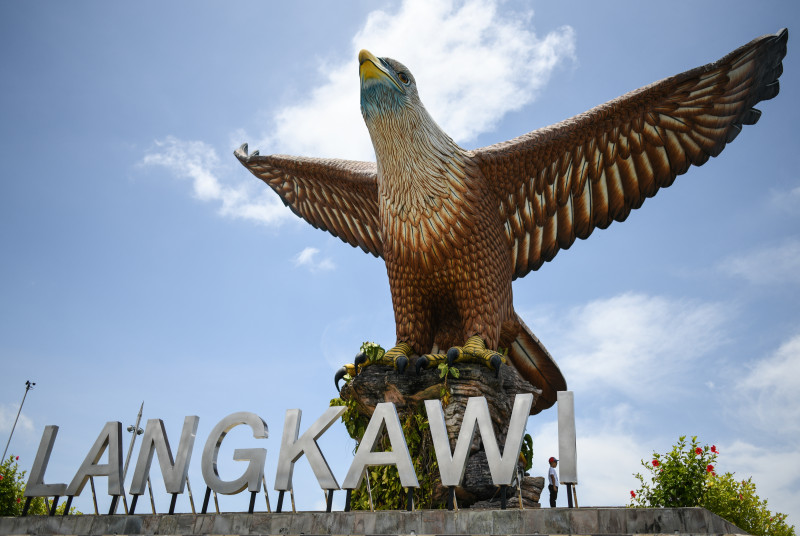

LANGKAWI – Famed holiday destination Langkawi is keen to make a name for itself in farming and aquaculture after the movement control order brought its primary money-spinner to a screeching halt in March.
Domestic visitors began returning to the Jewel of Kedah in June after Covid-19 restrictions were relaxed, but their numbers fall far short from last year’s.
Langkawi welcomed 3.92 million tourists in 2019, but this year, it would be lucky to breach a million.
Given this, said Langkawi Development Authority (Lada) chief executive Hezri Adnan, residents are encouraged to tap into farming, healthcare and education, among others, to keep the local economy going.
Tourism will continue to be its main economic pillar, however, having raked in billions since 1987, when Langkawi was declared a duty-free island.
Hezri said 70% of Langkawi’s economic activities are dependent on tourism, with the remainder comprising cottage industries like marble, wood carving, traditional medicine and fisheries.
“The virus has taught us the value of diversity. So, we need to provide fresh avenues, apart from tourism-related ones, to develop the economy.”
Under a Lada action plan, interested parties can pursue farming and deep-sea fishing.
“We hope to expand our port to allow fishing vessels to dock and unload their catch,” said Hezri.
He said 580 single mothers will get the opportunity to grow cash crops to supplement their income, and that an aquaculture scheme is being planned along Kuala Sg Melaka and the Chemor Bay area.
Langkawi’s small population of 99,000 makes it unattractive to investors, he said, and Lada aims to change this.
The agency is looking to lure investments in the hopes of growing the island’s population, which will, in turn, drive domestic consumption.
Hezri said there are plans to set up a “medical village” where patients can seek treatment and recuperate in Langkawi’s stress-free surroundings, as well as designate areas for pharmaceutical and cosmetics companies’ research and development laboratories.
Meanwhile, education institutions are urged to set up campuses on the island, taking advantage of its greenery and laid-back lifestyle that are said to stimulate learning.
During this relatively quiet period, said Hezri, tourism players should come up with new attractions, retrain employees and craft quality promotional blitzes for when the market rebounds. – The Vibes, September 21, 2020