
GEORGE TOWN – The Penang Hill cable car project will proceed despite yet unsuccessful efforts of the Penang Hill Corporation (PHC), a state agency, to have the island’s famous forested hill certified as a Unesco site.
PHC general manager Datuk Cheok Lay Leng said the project should continue due to its importance for connectivity and tourism, even though the federal government mid-last year withdrew the RM100 million allocated for it.
“It will not contradict PHC’s application for the hill to be named as a Unesco Biosphere Reserve,” he said in an interview with The Vibes.
Cheok said that the document was submitted for review on September 20, last year, but there might be a delay in getting the recognition due to the global pandemic.
He noted that the last meeting of the Unesco evaluation authority was held in October 2020.
“If we had submitted (the application) earlier, we would have gotten it,” he said, adding that the next meeting should be in the middle of this year.
“I really hope that Penang Hill will get the recognition. We are quite confident as we don’t see any reason why we won’t get it.”
He said the hill is worth studying for its natural treasures.
In 2018, 117 biologists had come to Penang Hill, in a visit organised by The Habitat, a nature centre on the hill.
“Within that short period, they were able to discover many new species. That means a lot of things are yet to be discovered,” Cheok said.
“This 12,481ha land, one of the smallest biospheres submitted (to Unesco), is worth continuously studying so that we can help preserve the place better.”
The request for proposal for the Penang Hill cable car project was opened last week, on January 13. The project is estimated to take three to four years to complete and be operational.
In the meantime, Cheok has conducted two discussions with Penang Forum, a network of local NGOs, regarding the project. He expressed hope that civil society groups will support the project.
‘Balance with economic activity’
Cheok emphasised that efforts to preserve the hill do not mean nothing is done to it, or that they were only hoping that it would regrow to what it was a million years before as an ancient tropical jungle.
He said they included looking at how to balance environmental conservation with economic activities, carried out sustainably.
Cheok said Penang Hill presents a good case as it has many economic activities surrounding the hill and is close to the city.

He said he also hopes that Unesco recognition will spur farming activities around the hill to introduce better methodologies to protect the environment and prevent natural disasters like landslides.
When asked if the cable car project is in line with PHC’s preservation and conservation efforts, Cheok said that it is the only way to both protect natural biodiversity and accommodate the influx of visitors.
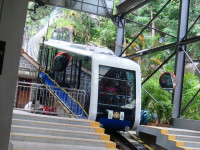
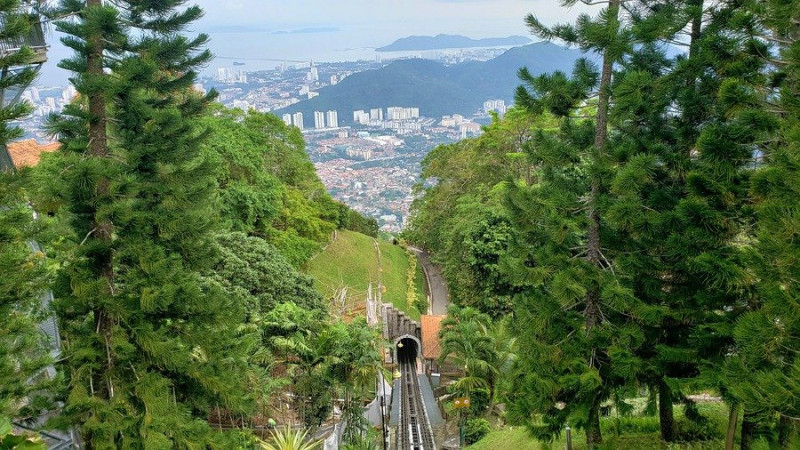
“We still need the cable car. The funicular design (of the present hill railway) is more than a century old, and maintaining it is a huge challenge.
“Hence, I won’t advocate increasing the funicular’s capacity. It will include strengthening the structure, stopping services with construction costs that are similar or more than having the cable car.
“There are many variables and factors that we must put into consideration. There is a lot of work that has been done through study,” Cheok said.
He said 1.86 million visitors took the funicular to Penang Hill in 2019.
This number easily increases to more than two million that year if those who hiked or used the jeep are considered.
Environmentally friendly methods
The sheer amount of people has caused a huge bottleneck and congestion at Ayer Itam town.
“I think it is high time to deploy the latest environmentally friendly technology to bring people up the hill. It is unfair to stop people from going up the hill.
“We’d love to own the hill, but the fact is the hill is to be shared,” he said.
“The hill and the cable car are tourism products, but they also create jobs and help economic activities. Penang is going to decline if we do nothing and only do things for the present moment.
“Every other country is developing. PHC is committed to being stewards of the environment, but work also needs to be done.”
Cheok said that three feasibility studies have been done, with ideas proposed 20 to 30 years ago opened again for review.
He also claimed that only a small group of people are against the cable car project but 95% are all for it.
“Many of the world heritage parks have cable cars. If cable cars are so bad, they would have been rejected by the experts,” he said.
He added that cable cars are also the most environmentally friendly transportation system up the hill.
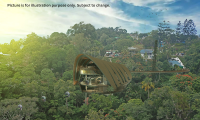
“People get to appreciate nature from the top viewing from the cable car gondolas. With cable cars, we must find the most suitable location and the most suitable way to put the pylons.
“Currently, we are looking at the Rifle Club outside Penang’s Botanical Gardens. It will ensure minimum damage and cutting of trees. The pylons also have a very small footprint, usually 3m by 3m.”
He said the jeep track can be utilised to carry heavy equipment, while ensuring new paths or spaces do not need to be opened. – The Vibes, January 23, 2021
.jpeg)
.jpeg)