
KOTA KINABALU – The strong push by Gabungan Rakyat Sabah allies on Thursday and Friday has made a difference in the outcome of the state election, said Asia Studies professor James Chin.
“They concentrated all their resources in the Kadazan Dusun area where Warisan was at its most vulnerable. Warisan always had this problem.
“Even in 2018, when they were fighting to bring down the Barisan Nasional government, in the interiors of Sabah, Warisan would always tagged as PTI (undocumented migrant) party. Part of it has to do with the fact that Shafie himself has always been a question mark whether he is a real Sabahan.
“This again came out in this election clearly and he was forced not only to deny it, he has to say where his grandmother came from, where his grandfather came from, he showed his ancestral home in Sabah,” Chin said.
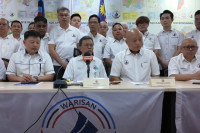
Led by Datuk Seri Mohd Shafie Apdal, Warisan Plus secured more seats this time around but it still fell short at 32. PKR contributed two seats while Upko had one.
The GRS coalition claimed victory by winning 38 out of 73 seats contested. It comprises Perikatan Nasional (PN), Barisan Nasional (BN) and PBS.
Chin said he had a different opinion that the survey reports from Iman Research, SEEDS and Ilham Centre.
“I thought Warisan had better chances in winning because the reports I received point to Warisan holding on to the east coast states, Shafie’s strongholds.
“He was holding onto all the Chinese and urban areas. He only needed to win about one third to about a half of all the Kadazan-Dusun seats and that will bring him past the so-called magic figure of 38 or 39 seats,” said Chin, who is with the Asia Institute of University of Tasmania.
Casting doubt on Shafie’s heritage worked
Chin said the tactic appears to be quite effective in the interiors of the Kadazan Dusun Murut (KDM) areas and in this election, he believed that the spending in the selective KDM areas was quite high.
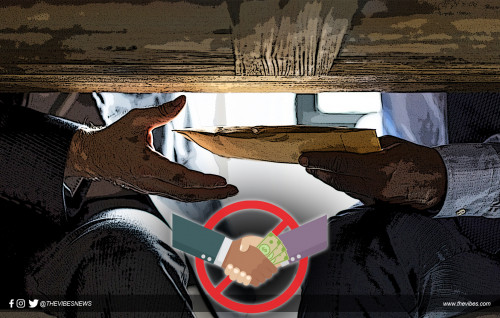
“This is more or less a permanent feature of campaigning in the interiors, not only in Sabah but also Sarawak. You have to remember the money is not an outright bribe, in some ways, it is also to pay for expenses
“It is very expensive to campaign in the rural areas and sometimes, for many voters in the rural area, they don’t see politicians that often, probably just before elections.
“Therefore, they expect something for politicians. You can call it vote-buying if you want but essentially, there was a much stronger than normal push at the last minute.
“I suspect this time was much more targeted, much more sophisticated and that’s the reason why some Twitter users were able to tweet pictures out and I think there was done in quite a very targeted area. Although they were careful, they were doing it in those areas where they knew Warisan was vulnerable.”
The rejection particularly from the marginal seats in the KDM areas as well as the low turnout at 66.6% amid the Covid-19 pandemic were among the factors that led to Warisan’s fall in this election.
“I think what is very obvious that people from Peninsula Malaysia, the so-called young voters who tend to be supporters of Warisan didn’t come back. If you live in the interiors, you have to take two days off from work to make your way home to vote.
“Part of it has to do with difficulties in getting transport. Also, there were limited flights and secondly, some of them were worried about the Covid-19 outbreak.” – The Vibes, September 28, 2020










_-_ABDUL_RAZAK_LATIF_07.JPG)