
KUALA LUMPUR – Orang Asli history was made when Ramli Mohd Nor won the Cameron Highlands by-election last year, and the community is eyeing greater representation moving forward.
Shahar Koyok, a well-known activist from the Temuan tribe, said it is too much for a lone MP to speak out and act for the entire community.
“The Orang Asli need more leaders. Having only one MP does not help the community. One person cannot go everywhere or cover all the issues faced by the Orang Asli.
“Obviously, he will focus more on certain parts of Pahang, particularly his constituency.”
The community urgently needs more youth leaders, he said.
“There are some of them (Orang Asli youth) who have started organising and attending training camps. Some of these camps feature activists from various walks of life who groom the youth to become leaders.”
He added that such training moulded him into the activist he is today.
“I am all for Orang Asli youth joining political activism because the time has come for us to move forward and take charge.”
So far, there are only three notable Orang Asli in Malaysia, namely activist Amani Williams Hunt Abdullah; Prof Bahari Belaton, who was the first Orang Asli to be appointed a university dean and hold two department head positions simultaneously; and, Cameron Highlands lawmaker Ramli.
A close-knit community
Asked whether Orang Asli elders discourage youth from venturing into the “outside” world for studies or work, Shahar cited the fear of a “communication breakdown”.
“It is not so much that the elders want to tie us (youth) down, but they are afraid that once we are ‘out in the world’, there will be a communication breakdown and they cannot get through to us right away, like how it is in the village.”
He said there is also the concern that Orang Asli youth will lose their identity and be out of touch with their culture if they leave for the city.
However, he said, more and more Orang Asli elders have come to understand the importance of education to uplift the community.
“There have been many changes within our community lately. There are many more young, educated tok batin (village heads) now,” he said, adding that in this day and age, a village head must be well informed and up to date when it comes to education, health, politics and technology, among others.
Shahar pointed out that Orang Asli youth are not compelled to return to their villages upon completing their education in urban areas.
“My siblings are well educated. They went to university, but still live in our village. I choose to live in the city, but I’m fortunate that my village is nearby, and I go back often to visit my parents.”
The Covid-19 pandemic has reinforced many Orang Asli’s belief that “home” is the best and safest place to be, he added.
“The pandemic spurred many Orang Asli to return to their kampung, and you could see their happiness being back home.
“They are happy because they are back in a familiar place, with a familiar culture. It is back to basics, like planting vegetables at the back of the house.
“When they were in the city, they would be busy working and wouldn’t have time for themselves.”
Endless harassment by developers
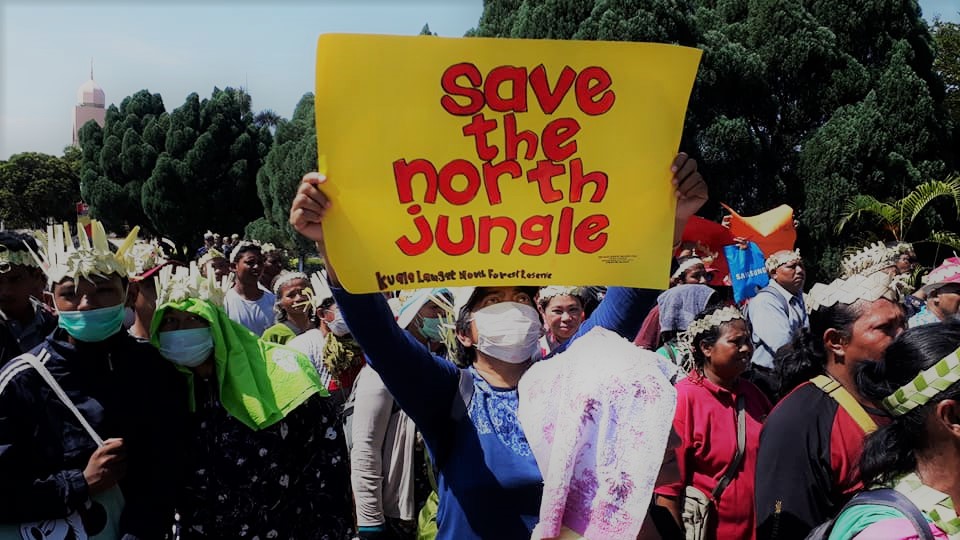
The Orang Asli have lived in the country’s jungles for more than 60,000 years. Comprising at least 18 ethnic groups, they make up only 0.5% – 148,000 people – of Malaysia’s total population.
Although they are categorised as Bumiputera, a status that carries certain protected rights, the Orang Asli have been robbed of their ancestral land through the decades.
Land grabs to make way for modern development have erased their culture and uprooted them, destroying their lives and livelihood.
“Each time our land is taken away, we are forced into a new area.” said Shahar.
“When this happens, we have no connection to the land anymore. Our sense of comfort is gone.
“This is why depression is a problem among the Orang Asli. They (developers) are destroying our community.”
It is also a reason for the serious issue of drug and alcohol abuse among the community, he said.
“We are relocated to an unfamiliar area, and yes, we are given compensation, but compensation is just money. When money is spent, it’s finished.
“But our culture? Culturally, we are destroyed.”
He concurred when asked whether he believes the government wants to wash away the community’s identity, even if indirectly, by developing their land.
“Yes, I totally agree. Everything and anything that has to do with the Orang Asli, the authorities try to erase completely.”
Clarifying that the Orang Asli are not against development, he said the community should have a say in the matter instead of being bulldozed.
“It is not right to force us out or do something we don’t agree to... forcing someone into believing that it is good for them and that they need the changes is wrong.” – The Vibes pic, October 7, 2020