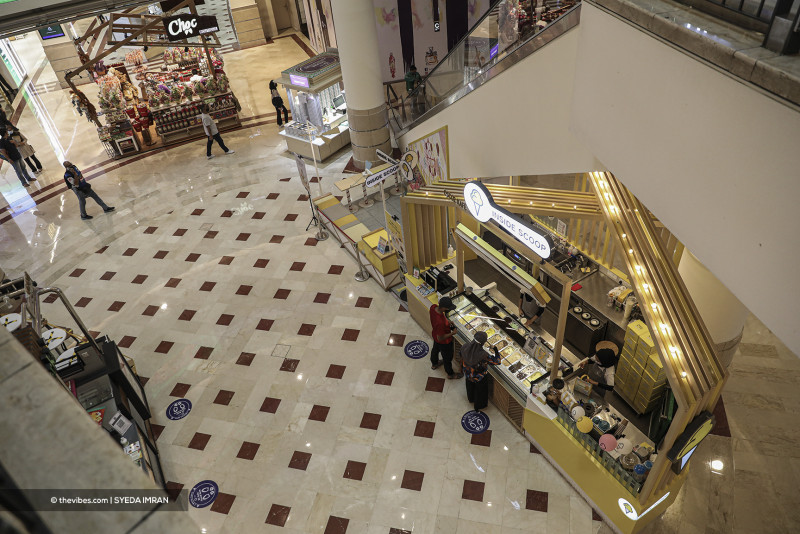

KUALA LUMPUR – Millions of small businesses will be left in the “intensive care unit” when the full lockdown against Covid-19 takes effect on June 1, and thousands more “casualties” can be expected in the coming months even with government support.
Speaking to The Vibes, experts said the majority of small and medium enterprises do not have the financial capability to see through the lockdown.
Most have exhausted their reserves following the year-long implementation of various iterations of the movement control order (MCO), they said.
SME Association of Malaysia president Datuk Michael Kang said some 2.8 million micro businesses and workers in the informal sector will be the worst hit, and may face serious problems putting food on the table.
Additionally, a huge number of SMEs surveyed recently claimed they are having issues paying staff salaries even before the imposition of the total lockdown, he said.
“When the first MCO was imposed in March last year, these businesses still had reserves. Now, there is no cash in hand.
Micro businesses and SMEs are in the ‘ICU’, and require ‘breathing support’. It’s critical and serious. I understand the rationale behind the lockdown, but the government has to do something about this.”
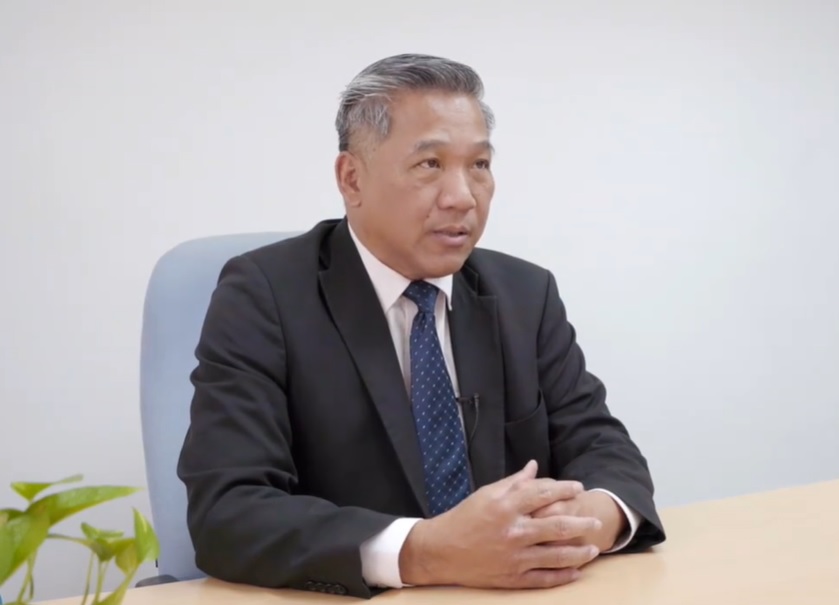
Among others, said Kang, a blanket loan moratorium should be introduced from next month until year-end, regardless of whether the lockdown is lifted earlier.
Additionally, he said, a financial aid of at least RM1,000 per month is required for SMEs and those in the informal sector, while wage subsidies should be provided for a minimum of three months.
At present, SMEs alone account for some seven million people in the workforce, not inclusive of the 2.8 million micro traders and individuals who are self-employed.
In a statement yesterday, Prime Minister Tan Sri Muhyiddin Yassin announced that Malaysia will be placed under a total lockdown from June 1 to 14, with all sectors ordered closed except for essential economic activities and services.
If Phase 1 of the lockdown is successful, he said, the country will enter Phase 2 for four weeks with the reopening of some economic sectors, followed by Phase 3, which will be similar to the current MCO.
The announcement came hours after the nation recorded its highest-ever daily Covid-19 tally of 8,290.

Impact will be worse than first MCO
Malaysia SME group chief executive Wayne Lim said the impact of the upcoming lockdown on businesses is expected to be far worse than MCO 1.0 last year.
“We know that since last year, the economy never truly recovered to its original, pre-pandemic level. SMEs are suffering big time as a result. For the past many months, they have just been trying to make ends meet.”
Considering the current situation, he said, previous and existing assistance must continue, including a loan moratorium, cash handouts, provision of business loans and grants, and the Wage Subsidy Programme.
On top of that, the country’s coronavirus immunisation programme needs to be relooked to prioritise those who are actively involved in the economy, he said.
I understand that senior citizens, for example, are considered high-risk. But I feel that priority must be given to the workforce. These are the individuals who are actually most likely to be the ones spreading the virus to others in the family.
“Perhaps, we can get senior citizens to stay home temporarily since they are not actively involved in developing the economy.”

Allow manufacturing, services sectors to operate
Sunway University Business School’s Prof Yeah Kim Leng said the latest lockdown is projected to lead to a higher number of “casualties” in terms of business closures and bankruptcies.
What is more concerning is the impact it will have on the economy if restrictions similar to MCO 1.0 are imposed, he said.
We all know that during each day of the MCO then, Malaysia lost RM2.4 billion. I don’t think we can afford that, especially given that the two-week lockdown could be extended.”
To soften the blow, he said, the government should consider allowing the manufacturing sector, especially firms involved in global supply chains, as well as the services industry, to continue operations.
“If we look at Malaysia’s export structure, electrical and electronics, for instance, underpin our growth. Others include the export of medical and industrial equipment, chemical products, and commodities.
“Then, of course, we have the services sector, which I feel can continue operating remotely to minimise the economic impact.
“If we allow production activities and services to continue, then we will lose less than half of the RM2.4 billion we lost each day under MCO 1.0,” he said, adding that forcing these sectors to shut will see both Malaysia’s domestic and external demand suffering.
Lockdown will hurt businesses, but necessary
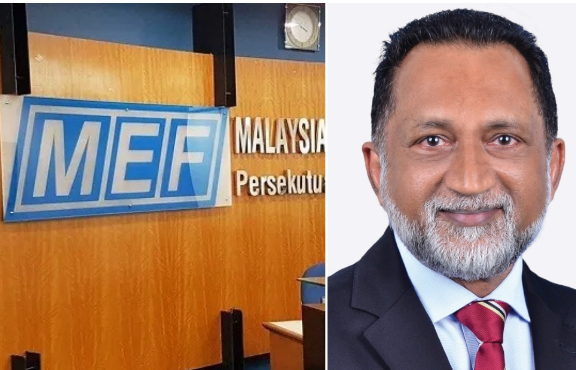
Malaysian Employers’ Federation president Datuk Syed Hussain Syed Husman said the imposition of a full-scale lockdown is a bitter pill to swallow for employers, but conceded that the move is necessary to arrest rising Covid-19 infections.
In a statement, he said the move will hurt micro enterprises in particular, and that without revenue coming in, it will be extremely challenging for them to stay afloat.
In view of this, more stimulus packages must be announced by the government, including wage subsidies, a loan moratorium, and financial aid for both businesses and individuals, he said.
Syed Hussain said there is also a need to intensify the national vaccination drive by mobilising all government agencies and the private sector. – The Vibes, May 29, 2021