
Malaysia

Paperwork dogs Penang South Islands plan, revised EMP to be submitted

Without the documents, works cannot take place as scheduled on Island B, followed by A and C

Updated 5 years ago · Published on 02 Jun 2021 8:00PM

Paperwork dogs Penang South Islands plan, revised EMP to be submitted
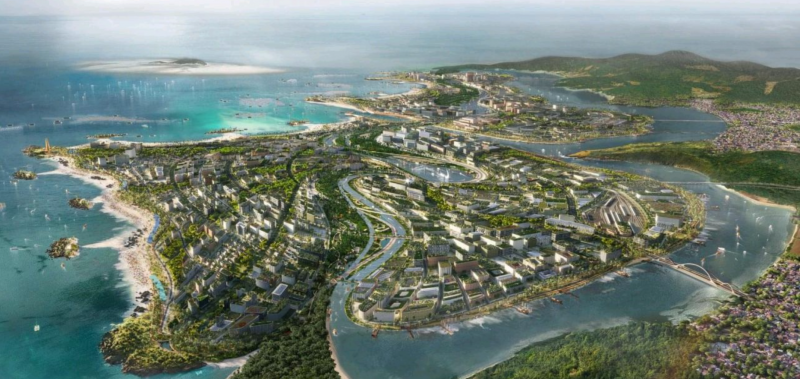
The EMP is part of the EIA’s approval requirements for the Penang South Islands project that requires the appointed contractor to comply with prescribed environmental control measures and programmes. – Unstudio.com pic, June 2, 2021

by Sofia Nasir

GEORGE TOWN – The biggest hurdle for the Penang South Islands project (formerly Penang South Reclamation) has turned out to be mismatched paperwork, amid the tug-of-war between the state government and activists over the massive development plan.

The snag here is the Environmental Impact Assessment (EIA), which states that the plan is to start work on Island B, followed by Islands A and C. However, the Environmental Management Plan (EMP) submitted to the federal Department of Environment (DoE) on January 6 had an error.

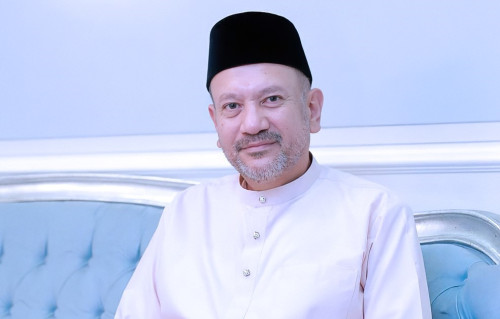
Now, Deputy Chief Minister 1 Datuk Ahmad Zakiyuddin Abd Rahman told The Vibes that a revised EMP will be submitted to the DoE later this month.

Without the EIA and EMP, works cannot take place. It is learnt that the EMP approval takes around 90 days.

While the EIA is set to expire this month, the DoE has already extended the approval until April 10, 2022.

The EMP is part of the EIA’s approval requirements for the PSI project that requires the appointed contractor to comply with prescribed environmental control measures and programmes.

Zakiyuddin also said the state government will revert to its EIA plan, which is to start work on Island B, and the revised EMP should reflect that.

“Yes, we will build Island B first. Regarding the agreement with the developer, I understand it has not been finalised and is still at the level of mutual understanding.

“However, the distance between Island A and B is not far, so we will probably first build part of Island B which is close to Island A. Whatever it is, we’ll wait.”
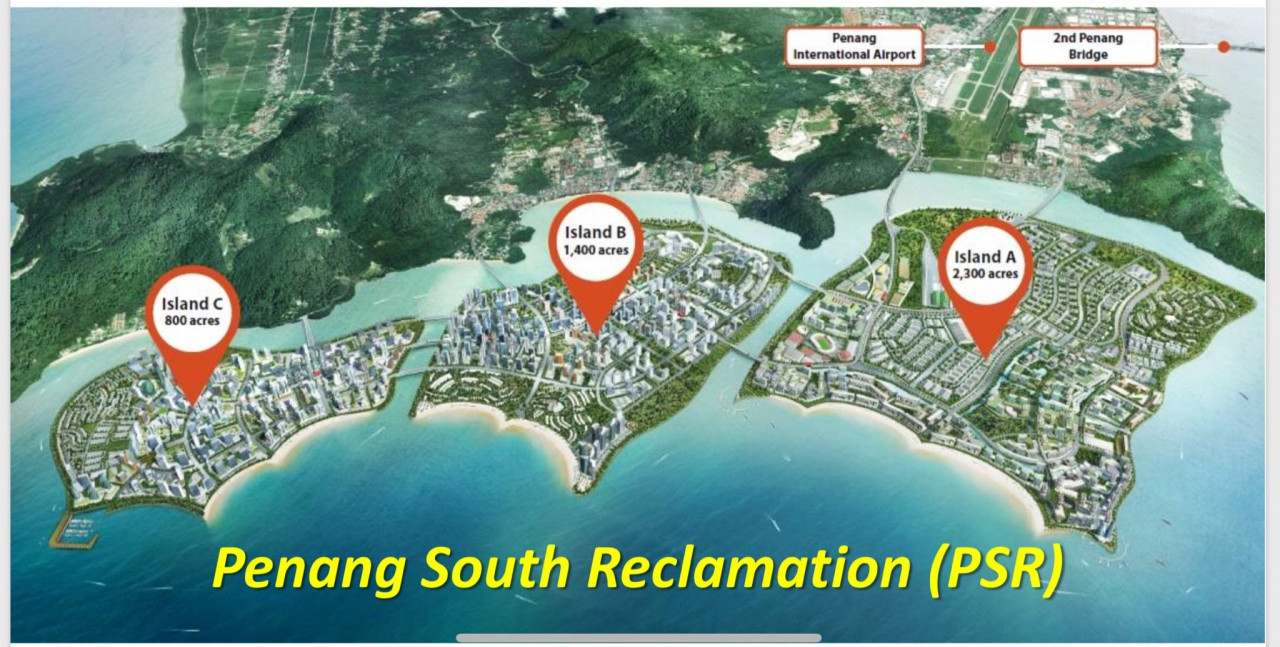
The PSI project will start with building the 4.45 sq km Island B first, to take up to seven years, followed by the 9.3 sq km Island A, which will take about eight years, followed by the 3.23 sq km Island C to be completed in seven years. – Twitter pic, June 2, 2021

The DoE had, in a statement in May, denied it was considering an EMP for the Penang mega reclamation project.

Its director-general, Norlin Jaafar, had said this was because the Penang DoE had not received the EMP, which is in line with the concept of the project.

It is understood that the EMP report submitted to the DoE previously did not follow the original sequence of works as submitted in the EIA report that was approved by the DoE on June 25, 2019.

Through the public presentation of the the EIA report in April 2019, it said that the PSI project would start with building the 4.45 sq km Island B first, which is estimated to take up to seven years.

During this period, the developer will also build the 9.3 sq km Island A that will take about eight years, followed by the 3.23 sq km Island C that is expected to be completed in seven years.

However, in March, the Penang government announced changes to the financing plan for Island A that would be made through a private financing initiative without involving state funds, in a 30:70 stake with SRS Consortium.

Chow had said that preliminary works or Phase 1 of the reclamation works would be on Island A, and expected to take five years and cost RM3.8 billion.

The implementation of the PSI with an area of ​​almost 17 sq km involves the development of three artificial islands with an area of ​​1,700ha in the waters of Permatang Damar Laut, near Bayan Lepas.

It is part of the Penang Transport Master Plan (PTMP) worth RM46 billion. – The Vibes, June 2, 2021


Related News

Tech / 1d

Penang’s Tech Dome celebrates 10th anniversary with opening of new space gallery

Malaysia / 4d

No further delays for water tariff hike in Penang - CM

People / 5d

Penang: Greater efforts needed to record historical events, says nonagenarian

People / 5d

Penang: Eurasian association mourns sudden loss of its president

Malaysia / 5d

Penang signs landmark Perak water deal to secure 40-year supply from 2032

Malaysia / 6d

Penang: Sandbags as temporary measure to curb erosion at Batu Ferringhi

Spotlight

Malaysia

After Johor, the uncomfortable question for Anwar’s critics: Were we too impatient?

By The Vibes Says

Malaysia

Network School's business licences revoked, to cease operations tomorrow

Opinion

Orang Asli in Pahang: Token gestures or genuine recognition?

Malaysia

Tuition teacher sentenced to 105 years in prison and 70 lashes for raping daughter

Malaysia

Azam Baki denies involvement in RM178.29 million contract linked to brother’s company

Malaysia

Aminuddin urges NS voters to weigh manifesto promising benefits for M40 and B40 groups

Malaysia

No need to resign, PM has absolute power if there is doubt – Ahmad Zahid

World

Gaza’s water crisis deepens as families face thirst, disease and collapsing sanitation systems

You may be interested

Malaysia

AGC orders inquest into deaths of three men in Durian Tunggal police shooting

Malaysia

AI Governance Bill to be tabled in Parliament after ministry, agency consultations

Malaysia

PH pledges 30,000 high-paying jobs, 20,000 affordable homes in Negeri manifesto

Malaysia

Bung’s widow cleared of abetting late husband in RM2.8m corruption case

Malaysia

Activist charged over alleged desecration of Hindu sacred object at Langkawi temple site

Malaysia

Police station chief suspended for allegedly accepting RM500 bribe

Malaysia

Good governance and political stability are essential for national prosperity, says Perak Ruler

Malaysia

Sabah seeks additional RM1.61b allocation to fund state operations and development needs