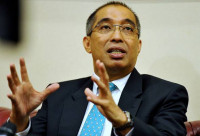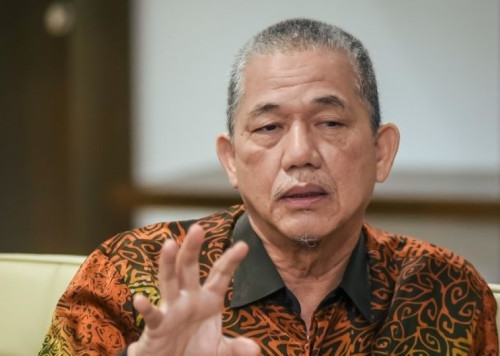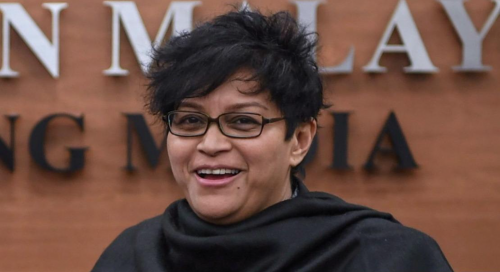
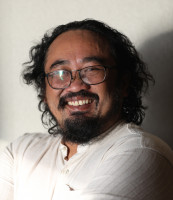
KOTA KINABALU - Putrajaya’s failure to pay Sabah its due 40% revenue entitlement is not the only breach of the Malaysia Agreement 1963 (MA63); its delaying tactics are also denying the Borneo state’s rights to self-determination, an activist has claimed.
Zainnal Ajamain, who served as MA63 adviser to the previous state government, said the basis of Malaysia’s founding 57 years ago had included the promise to North Borneo, as Sabah was then known, to be self-reliant.
He said the terms for 60:40 revenue-sharing of Sabah’s wealth (to the federal government and the state respectively) as stated in the Federal Constitution, was not supposed to last forever.
“We only give them 60% of the revenue until a point when Sabah can stand on her own,” Zainnal said in an interview with The Vibes.
The 60:40 arrangement was the deal breaker that led to Sabah agreeing to join the Federation of Malaysia in 1963. It was also inscribed in Part IV of the Tenth Schedule of the constitution.
Under the terms, the federal government was given the right to collect revenue from Sabah, taking 60% of the cut and returning 40% to Sabah. This is referred to as an “annual revenue entitlement”.
The federal government was in turn required to help develop Sabah in several main areas, including infrastructure, education, health and defence services.
Borneo states are ‘independent entities’
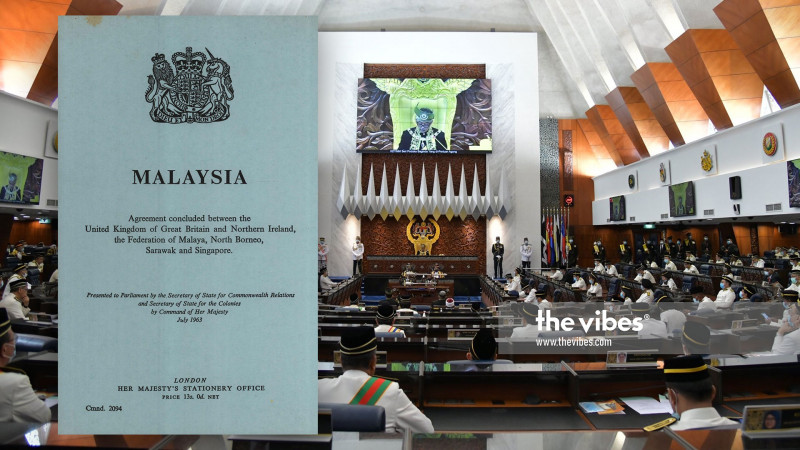
Zainnal said the process of self- determination can be traced to the Malaysia Act 1963. Under Section 1, Chapter 35, Sabah (then known as North Borneo), Sarawak and Singapore are referred to as “the new states”.
He also explained that they were independent entities as per the Montevideo Convention 1933 which states that only independent entities can enter into an international agreement.
He referred to a line in the Malaysia Act 1963 on Britain ceding Sabah and Sarawak: “Her Majesty’s sovereignty and jurisdiction in respect of the new states shall be relinquished so as to vest in the manner agreed between …”
He said the word “vest” means “entrusted to”. Therefore, the act refers to the transfer from Britain to Malaysia as the new “trustee”.
“The transfer is not to the Federation of Malaya. Malaysia is a federation based on trust. Now the federal government has become a trustee. Now as trustee, the federal government, therefore, must be obligated to implement what has been entrusted to it by the British,” Zainnal said.
This is the reason Putrajaya is obligated to assist Sabah to build up its resources until it becomes self-sufficient.
“Being self-reliant does not mean seceding from the federation. It means that Sabah was supposed to no longer depend on Putrajaya for help,” Zainnal said.
“This is what the process should be. This is what the state government should be struggling for.
“With all of this in mind, Putrajaya’s share of the 60:40 sharing of Sabah’s wealth would also see reduced,” he said.
Key ministries omitted by new state government
Glaringly, the new Sabah government has dropped two key ministries that are important in this regard - the Health and Wellbeing Ministry and the Education and Innovation Ministry.
Zainnal said if the Health and Wellbeing Ministry was retained, Sabah is entitled to 30% of the taxes collected from the customs department.
The matter has become complicated as all tax collections are now done in Peninsular Malaysia despite many peninsular companies operating and making profits in Sabah.
When the collection is done on the peninsula it means that the wealth that these companies make does not, on paper, come from Sabah.
“Whatever (information on) taxes the central government collected are not shared with the state government. This leaves room for the central government to declare the amount collected as they wish,” he said.
On revenue entitlement, Putrajaya has failed to pay Sabah what had been promised since 1974 and the amount has come to only RM26 million, said Zainnal.
The number was doubled only under the previous Pakatan Harapan (PH) federal government. However, that too was in breach of MA63.
Payment to Sabah far too short
Unlike the fixed revenue entitlement for Sarawak, the payment of Sabah’s entitlement was to be staggered, depending on how much revenue the federal government collected from the state annually.
After the formation of Malaysia in 1963, the federal government waited for five years before paying Sabah its entitlement, with the first payment being RM20 million.
The grants were paid each year until 1973 at RM26.7 million. Following an effort by former Sabah Chief Minister Tun Fuad Stephens to call for a review of the grants, a committee was set up by the then prime minister Tun Abdul Razak Hussein.
The review is stated under Article 112D of the Federal Constitution which provides for a government-to-government negotiation for the purpose of agreeing how much Sabah is entitled to under the Special Grant i.e. revenue entitlement.
Even if the federal government does not have the funds to review Sabah’s entitlement, the grant can be “modified, substituted, varied or abolished” with the consent of both parties.
Sadly, Tun Dr Ismail Abdul Rahman who was appointed to chair the review committee passed away and the whole effort was shelved.
A follow-up on the matter by Fuad was greeted by a lame federal response that the “The federal government has no money to carry out a review”. And the matter ended there. – The Vibes, October 23, 2020