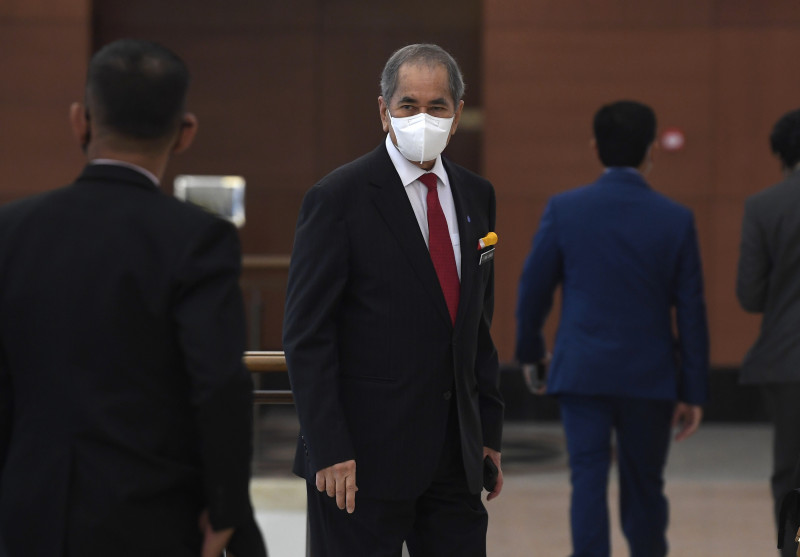

KUALA LUMPUR – Facing huge expectations, new Law Minister Datuk Seri Wan Junaidi Tuanku Jaafar must now deliver on what many others before him had failed: parliamentary reforms.
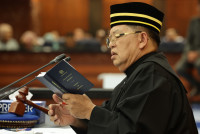
A lawyer by practice, the 75-year-old nondescript veteran politician was appointed by Prime Minister Datuk Seri Ismail Sabri Yaakob to oversee one of the key portfolios in the new cabinet.
Wan Junaidi succeeds Datuk Seri Takiyuddin Hassan, who is perhaps most remembered for his faux pas when announcing in July the revocation of emergency ordinances without first securing royal assent.
Among Wan Junaidi’s first actions following his swearing in on August 30 was to make known plans for a major revamp of Parliament.
This includes reintroducing the Parliamentary Services Act 1963 (PSA), enacting a new law to replace the obsolete Houses of Parliament Privileges and Powers Act 1952, and making more amendments to the Standing Orders and Rules of the Dewan Rakyat and Dewan Negara.
A report on the parliamentary transformation will be submitted to the cabinet for endorsement soon, said Wan Junaidi, with a special committee involving Parliament and his ministry to be formed to ensure the proposals are executed swiftly.
While time may not be in his favour – the 15th general election is due in less than two years, and could even come next year – civil society groups are optimistic about the progress that can be made under the Santubong MP.
Slim govt majority may force faster reforms
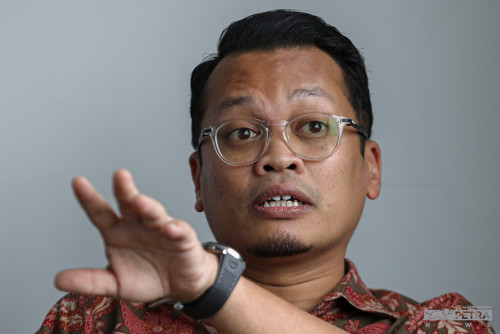
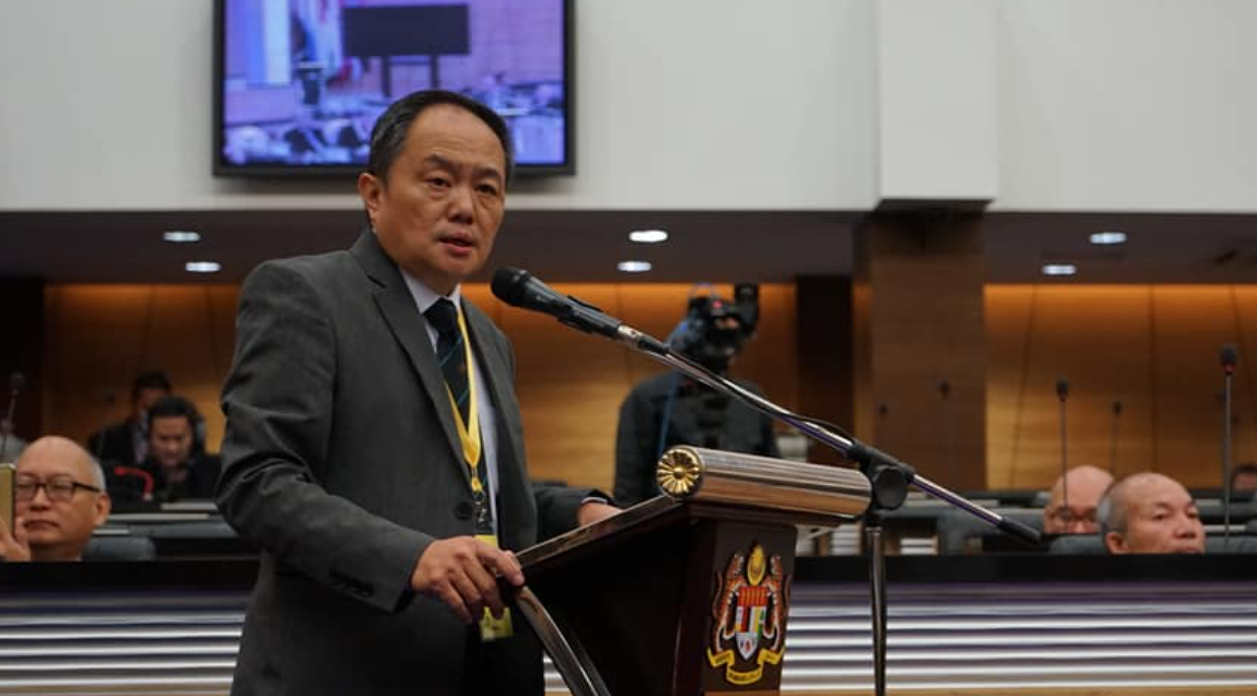
Polls watchdog Bersih 2.0 chairman Thomas Fann said with the present political reality of no single party having a strong majority, the government will need to concede to institutional reforms so as to secure support from the opposition through a confidence and supply agreement.
On the opposition’s part, he said, it may push for and back these reforms to level the playing field with an empowered Parliament.
With bipartisan support all but guaranteed, Fann said he is hopeful that most of Wan Junaidi’s proposed reforms will be implemented before GE15.
Also key to ensuring the swift revamp of Parliament is for the minister to hold sincere consultations with all stakeholders, especially the opposition and civil groups, he told The Vibes.
“I would urge the minister to also include representatives from among these stakeholders in the joint committee that he is forming.”
This should be done before any bill or amendment is tabled in Parliament for debate and voting, said Fann.
He said some of Wan Junaidi’s proposals are “low-hanging fruits” and can be tabled when Parliament sits beginning September 13.
These include amendments to the Standing Orders and Rules of the Dewan Rakyat and Dewan Negara.
“One of the important changes is to allow for hybrid or virtual meetings, especially for special parliamentary special select committees,” said Fann.
“MPs who are Covid-19-positive or under quarantine due to being a close contact should be allowed to attend virtually in a hybrid environment.”

Strong foundation despite time constraints
Time could be a determining factor in whether Wan Junaidi is able to deliver on his reform pledges, especially with GE15 due by September 2023.
Institute for Democracy and Economic Affairs external relations director Zokhri Idris said the minister should focus on laying out the foundation in the system for his successor.
Wan Junaidi should also draw up a timeline on what the public can expect to see in terms of progress and implementation, he said.
“If he shows significant progress and a reasonable timeline, that would be excellent.
“Reforms should not be done in such a speedy manner. Rather, they are meant to be sustainable and consistent throughout.”
In line with Ismail Sabri’s campaign for all ministries to achieve their short-term targets within 100 days, said Zokhri, priority should be given to three important areas: establishing a parliamentary select committee to construct an action plan towards the proposed reforms; engaging with the relevant stakeholders, including all MPs and senators, to gather input; and, conducting a feasibility study on carrying out reforms in the context of the present year.
Only when these are done should Wan Junaidi’s ministry propose a bill, particularly for PSA, to be tabled and debated in Parliament, he said.
He added that the ministry should continuously document these processes, with the information disseminated to the public so that every citizen appreciates the reforms initiated. – The Vibes, September 5, 2021