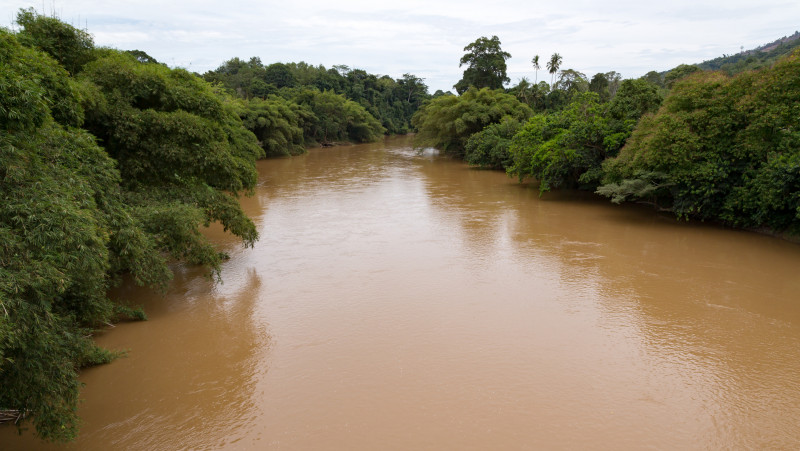
KUALA LUMPUR – The Consumers’ Association of Penang (CAP) has sounded the alarm over Malaysian rivers dying due to human activities, which not only threatens the natural ecology but also water supply for millions of people.
Its president, Mohideen Abdul Kader, said that, despite millions of ringgit spent on reports by experts, the water supply in Selangor still faces intermittent disruption.
He cited the last water cut caused by pollution in Sg Semenyih in urging the government to implement recommendations related to the restoration, protection and conservation of water resources across the country.
“Parliament must, without any delay, enact a federal law for water resource use, conservation and protection,” he said.
Mohideen lamented that Parliament has yet to enact a national water resources law, despite recommendations in a 2011 report from the Review of the National Water Resources Study (2000–2050) and Formulation of National Water Resources Policy.
“In the meantime, our rivers are being poisoned, aquatic life destroyed, ecological balance fractured, and water supply to millions of consumers disrupted,” he said in a statement today.
The proposed law should give the National Water Resources Council (NRWC) legal status and allow it to provide an avenue for consultation and coordination among stakeholders, he added.
“Our rivers are seriously degraded and, therefore, there should be strategic planning spanning over 20 years with stated targets to rehabilitate them,” Mohideen said, adding that law enforcement officials must also undergo proper training.
“There must be no interference by politicians in the prosecution of offenders, while institutional safeguards must be put in place to prevent corruption and abuse of power.”
The need for an independent body such as the NRWC with civil society representation is dire, the CAP chief said in calling for the authorities to take immediate action.
Mohideen also noted that a study on river water quality before and during the movement control order (MCO) revealed that reduced human activity during the Covid-19 pandemic lockdown led to improvement in quality.
Besides that, the recurring problem of illegal waste dumping in the Klang River last year and in 2019 has affected more than a million consumers, all of whom experienced water supply disruption.
“It was a shame to see people queuing up with buckets to collect water from a water tanker in the capital city of a nation that was to have achieved developed-country status by 2020,” Mohideen said, noting that this points to serious weaknesses in water resource governance.
Other recommendations by CAP include for state governments to crack down on illegal logging and replant logged forests, and for the Malaysian Anti-Corruption Commission to launch investigations and prosecute those involved in illegal waste dumping. – The Vibes, September 16, 2021

.jpeg)