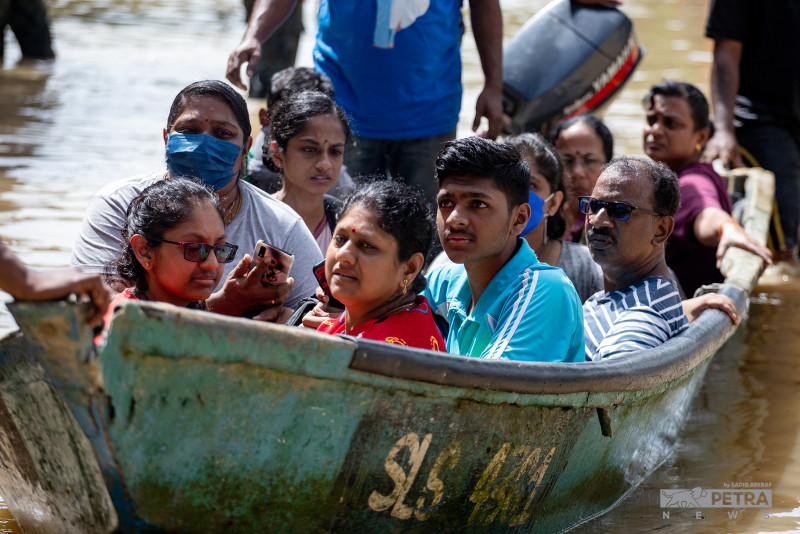

KUALA LUMPUR – Flood victims who have to deal with losing their homes, valuables, and even loved ones can undergo trauma – leading to severe psychological effects.
Health psychologist Dr Shazli Ezzat Ghazali said those who have lost their pets are also at risk of suffering from mental health problems.
He noted lost kin, animals, and belongings had brought “beautiful memories” to the victims, but were destroyed or vanished in the blink of an eye due to the floods.
“They will experience stress because in difficult times like this, they lost their loved ones, valuables, and pets.
“They had a bond, so it is tough on them to accept the sudden losses,” he said in an interview published by Getaran, the Malay language sister portal of The Vibes.
Dr Shazli said initial efforts to mitigate such emotions are important, and this can be aided with the offer of a helping hand.
He said the community needs to work hand in hand to provide basic needs – food, drinks, shelter, and clothes – to the victims to enable them to continue living in safer conditions.
Despite relentless efforts by volunteers, non-governmental organisations, and the community to rescue victims, such initiatives should be further intensified, he stressed.
“What is most important right now is for local and foreign communities to work together as volunteers in disaster-hit areas to rescue victims.

“The aid missions by volunteers at this time are commendable, but these are still not sufficient because it is difficult to reach certain places. So, we have to get into those (inaccessible) areas and provide basic necessities to the victims there to ensure their psychological well-being is taken care of,” he said.
Asked on whether mentally-affected victims should be offered psychological assistance immediately, Dr Shazli said it would be reasonable to do so after all their basic needs are met.
“Psychological help is not appropriate to be given to them when they are going through the initial phases,” he said.
“Soon after the floods, which saw chaos, incoherence, unstable emotions, confusion, and worries about the future, it is not the right time for psychological assistance to be given.
“What worries victims more at the moment is how they will continue with their daily lives in a situation where their belongings are lost or damaged – especially important documents and certificates,” he said.
However, he said after they have secured their basic needs, psychological assistance needs to be given to prop them back on their feet.
Based on his experience as an expert in the field, while some victims are able to accept the fate that befalls them, others may find it tough.
“When psychological assistance is given later, we will be able to identify whether they can manage well or otherwise.
“If they can handle it well, within a week or two, they will start to be rational by considering that the disaster is fated to happen,” he said.
“As for those who cannot cope well with the situation, they will experience denial – where they will ask questions like ‘why am I affected by this disaster’ or ‘why are we in this place’. And some would even say ‘if only I were outside’ or ‘if only I could have moved elsewhere’.
He said at the same time, they would develop angry feelings toward themselves and those around them, besides putting the blame on others over the situation they are in.
Vital to prevent feelings of depression, isolation
According to Dr Shazli, what is most worrying – and must be prevented – is the victim reaching the stage of depression, to the point where they start to lose joy in life and prefer to be alone.
“People (victims) like this will need assistance and must be given emotional strength, so that they are able to function in the community and manage themselves well,” he said.
He said the situation experienced by victims deeply affected by the disaster is burdensome because it’s as though they have to start a new life.
“Imagine if they are victims who make a living in the pottery and crockery business, but all their equipment are lost and damaged. There are some who have lost their jewelleries and valuables.
“There are some who are able to accept the situation as a trial, like in the scenario of the senior citizen whose home was swept away by floodwaters.
“But there are victims who are not strong enough to face the test.”
He said those who suffer from grief would usually recover after a month, which is known as the “calming down” period.
“If it exceeds that period, they need to seek help from psychologists so that their emotions are not continuously affected and eventually worsen,” he said. – The Vibes, December 24, 2021
















.jpeg)