
MIRI – The rampant poaching activities in Sarawak are actually being carried out by those residing in villages and squatter settlements throughout the state, as well as workers in industrial zones or estates, including in the outskirts of Miri, a source alleges.
An active member of a nature society in Sarawak told The Vibes on condition of anonymity that workers in logging zones, oil palm estates and industrial sites, as well as squatters, residents of resettlement schemes, and villagers are the ones who usually trap wildlife.
Despite the Sarawak Forestry Corporation (SFC) enforcement teams’ efforts in tackling such illicit activities – seeing that the poachers are everywhere – the rangers are utterly overwhelmed by the sheer number of such cases.
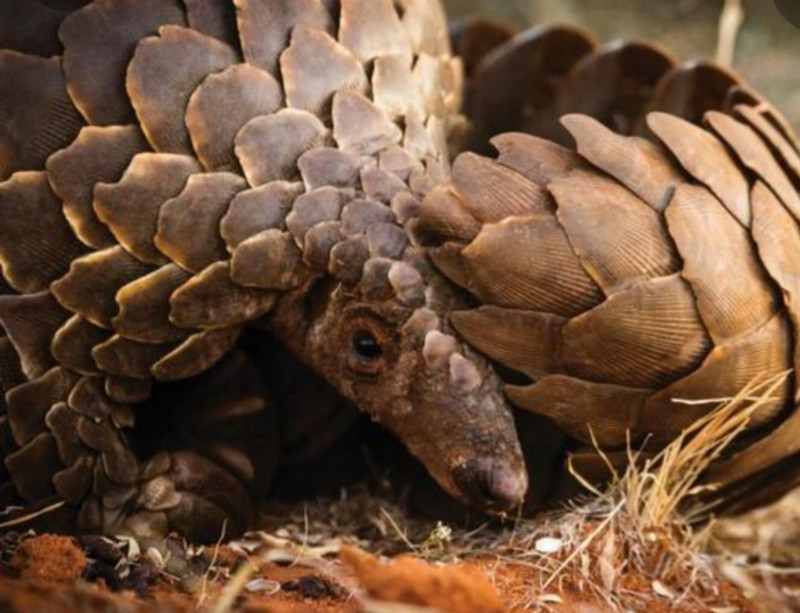
“Pangolins are among the most popular animals being trapped, other than songbirds, colourful birds, monkeys, squirrels, slow loris and other mammals – even wildcats.
“Often, they are sold as pets. But many mammals are often slaughtered and eaten, and their parts are sold, such as pangolin scales,” he said.
SFC is the custodian of national parks and wildlife in Sarawak.
It seems that many of these poachers have successfully bypassed the SFC’s gaze as they only hunt in Miri and Kuala Baram during night time or pre-dawn hours, complicating the work of enforcement agencies.
In response to the widespread trappings of the endangered pangolin, the Worldwide Fund for Nature (WWF) had urged the Sarawak authorities to categorise pangolins as “totally protected animals” to curb the trade of the animal’s meat and scales in the state.
Dr Jason Hon, head of the WWF Sarawak Conservation Project, recently said the population of pangolins in Sarawak is depleting fast due to the illicit capturing and killing of the animals.
“Pangolins should be included in the list of totally protected animals under the Sarawak Wildlife Protection Ordinance.
“The enforcement side can then exert more authority to curb the killing, capturing, and trade of these pangolins. The strict enforcement, plus harsher penalties, can help to protect these animals.
“The population of pangolins in the state is being depleted through the capture and killing of these animals, especially for their scales,” he said in a statement.
Dr Hon said WWF applauded the heavy fine imposed by the Miri Sessions Court against a culprit involved in the pangolin trade recently.
He also praised SFC for its enforcement efforts on the ground.
On January 14, an Indonesian man was sentenced to one year in jail and fined RM27.8 million in default of 12 months’ imprisonment for possessing three live pangolins and 2,782 pangolin scales.
Judge Mohd Taufik Mohd Yusoff meted out the sentence after the accused, Rajiman, 44, pleaded guilty to the charge.
He was charged under Section 29(2) of the Wildlife Protection Ordinance 1998 for possessing three pangolins and 2.95kg of pangolin scales in Kuala Baram, Miri at 5.40pm on January 6, 2022 without any valid licence or permission from the SFC Wildlife Controller.
Members of the public who are seeking to volunteer information on individuals or entities who are capturing, hunting, trading, or keeping protected wildlife can call SFC’s hotlines at 019-8859996 (Kuching), 019-8883561 (Sibu), 019-8332737 (Bintulu), or 019-8290994 (Miri). – The Vibes, January 21, 2022