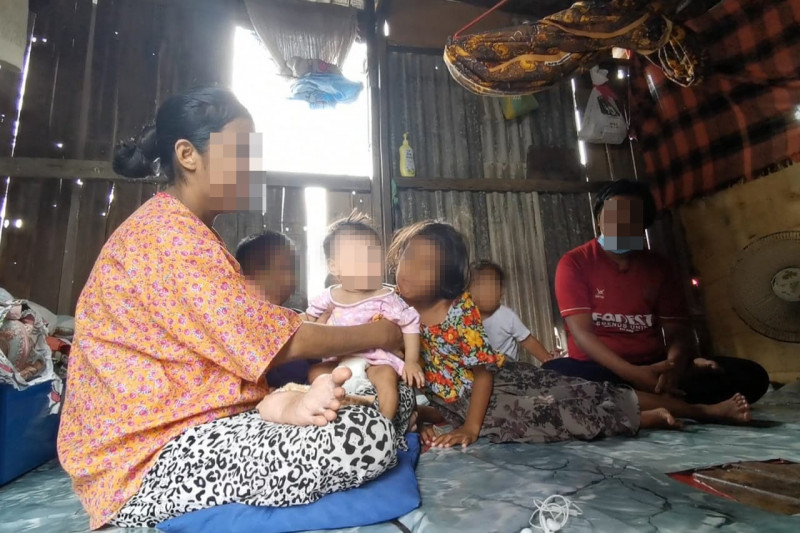

SANDAKAN – There are approximately over 200 midwives in Sandakan – a district on the east coast of Sabah with over half a million population – but only about 10% of them are formally trained and certified.
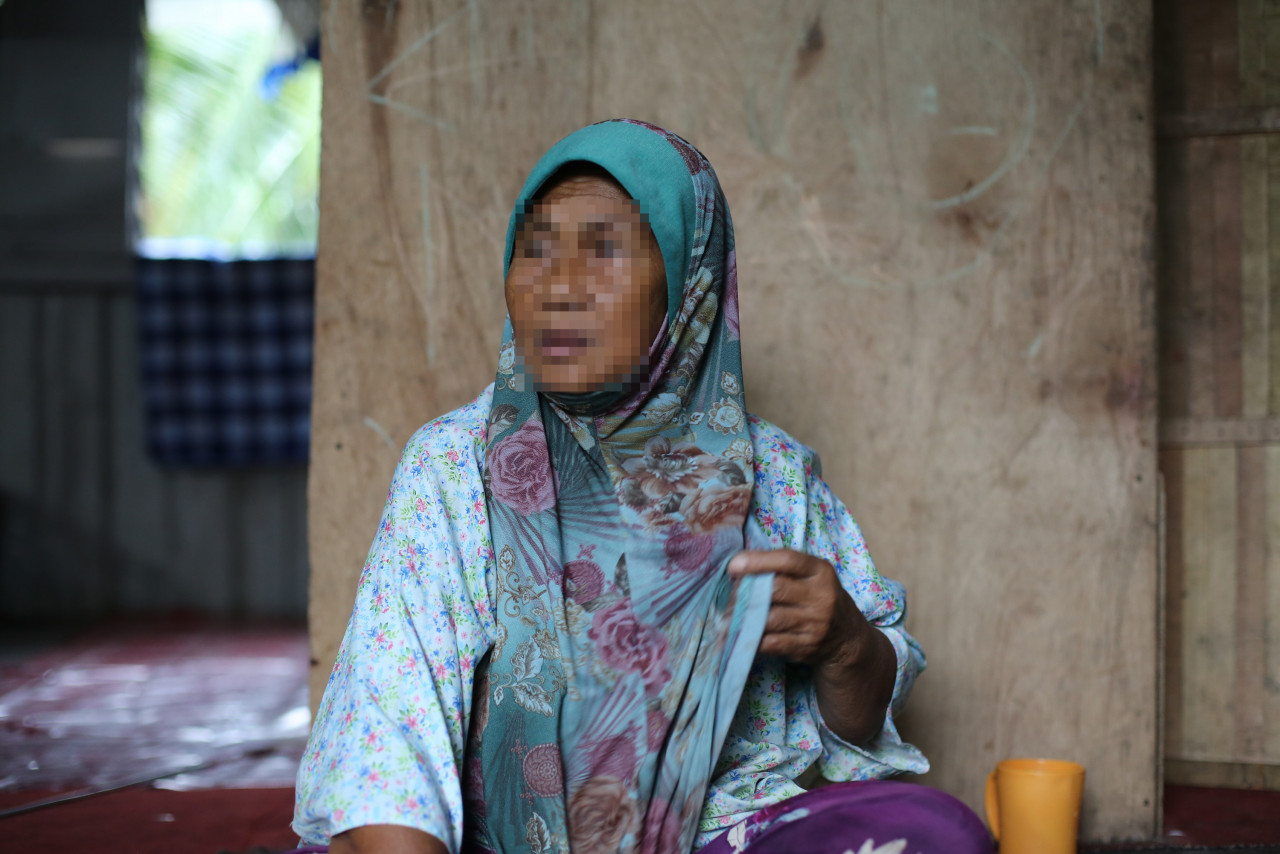
This estimate is based on the experience of Salmah Dugasar, one of about a dozen midwives who received training from the Duchess of Kent Hospital (HDOK) through the Health Ministry.
Salmah, a Philippine national, said that she attended such courses for about three years.
Prior to that, she had been helping women deliver at home since she was 20 years old.
The 64-year-old vividly remembers coming to Sandakan after she escaped from a village named Tampul on Jolo Island, which was threatened by conflict and violence some 40 years back.
She later acquired a valid passport and has since spent her years in Sabah as a midwife, providing services to migrants who cannot afford to pay hospital fees, and who live in looming fear of being arrested by the authorities for staying in Sabah without documentation.
“There are about a dozen of us (who underwent training). Only those with valid documentation (MyKad and valid permits) can join,” she said.
I believe that there are many midwives out there who are irregular migrants and are providing their services to migrant mothers here without proper training.”
Despite her familiarity with the techniques and knowledge needed to perform the service even before receiving training, Salmah said the training was still necessary, as “they teach us to look out for danger signs”.
“When we see the signs, we must immediately send the mother in labour to the hospital. It is a matter of life and death, and I wish all midwives, regardless of nationality, would learn this,” she said.
The midwife courses conducted by the government aims to prepare midwives to provide their services to mothers living in rural areas situated far from the hospital in case of emergencies.
HDOK director Dr Francis Paul, however, strongly advises mothers in Sandakan, regardless of nationality, to go to the hospital to give birth where proper medical equipment and healthcare professionals are available.
Midwives: financially struggling migrant mothers’ sole hope
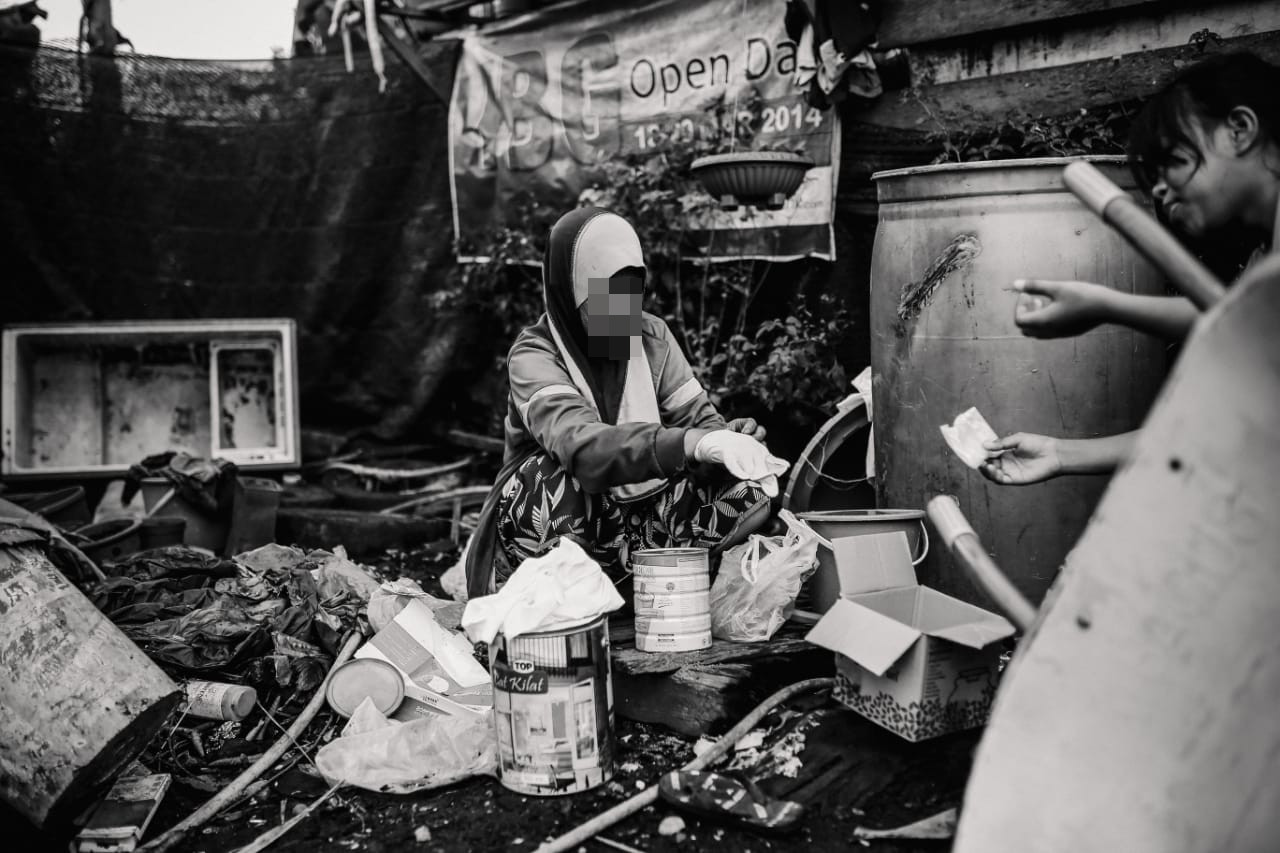
Salmah said that all her patients are migrants. In a month, she helps around 20 women give birth.
“I don’t set my charges, because I feel bad doing so when these mothers are mostly migrants who are not working and are financially struggling.
“I tell them, just give me how much you think I deserve and how much you can afford. I usually receive about RM20 to RM50 from each mother.
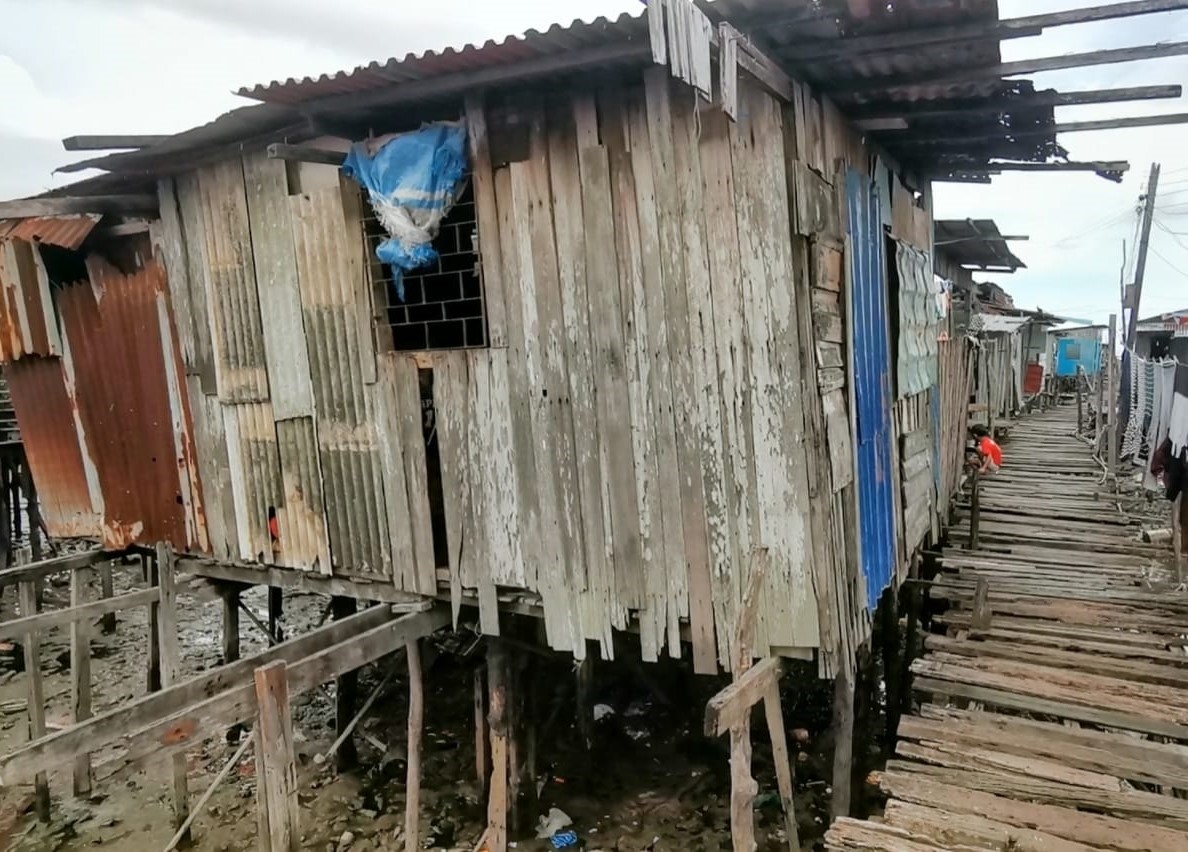
“I know that I am poor and also living in a squatter home myself. However, I am old and do not need a lot of money to survive.
“I am just collecting my pahala (good deeds) and hope that Allah is keeping a record of my good deeds that I have done sincerely. I hope I will have a good place with Allah after I die,” she said.
They simply do not have a choice. I am glad that midwives like myself are around to help them. Otherwise, I could not imagine what would happen to these pregnant women.”
Salmah said that with God’s grace, all the mothers and infants she has provided her service to turned out healthy and well after the labour process, except for two mothers who met her only after their infants had already died in their wombs.
Long waiting time, failure to deliver at home behind many neonatal deaths
According to findings published on Statista from research by expert Raudhah Hirschmann, the maternal mortality ratio in Malaysia in 2020 was at 24.9 maternal deaths per one hundred thousand live births, while the neonatal mortality rate in Malaysia was approximately 3.9 deaths per one thousand live births.
As the research was conducted based on hospital records, the figures most likely showed the percentage of pregnant women who died during pregnancy or when giving birth in the hospitals, excluding unreported home birthing cases.
However, we were unable to acquire statistics on maternal mortality rates among migrants or in Sandakan or in Sabah, as HDOK was unable to provide the figures.
Based on information gathered from a total of ten migrant mothers, two squatter villagers and three uncertified midwives, there has only been one case of maternal death among the migrant community in Sandakan.
However, there have been many neonatal deaths involving infants who have died in their mother’s wombs – stillborn – or infants that have died during the labour process.
A doctor from the Obstetrics and Gynaecology Department of HDOK, who has chosen to go by the pseudonym Andrew, said that there have been cases in which migrants have tried to deliver their babies at home but failed, and only went to the hospital several hours after the labour process started.
Sadly, in some of these cases, the infants have died inside the womb as the waiting time was too long. There have been many successful cases as well.”
“Usually, when these cases come to the hospital, we would prepare for an operation immediately. It is the complications after the operations that are worrying – such as post-partum haemorrhage, problems with the placenta, and so on,” he said.
Dr Andrew said that the government is aware of the home birthing practice, and has been providing training to the midwives so that they are able to provide safe birthing services to people in rural areas. This would be similar to the training Salmah received.
Problems with placenta ejection among ‘danger signs’
One of the danger signs to look out for before sending a mother to the hospital, according to Salmah, is when the placenta does not exit the mother’s womb even after the baby is out.
“We would wait for one hour, and that is the longest time we should wait. If we wait any longer, the mother’s life will be in danger.
“We midwives see the labour process in two parts. The first part is easier – getting the baby out. The second part is the harder part – getting the placenta out.
I have heard cases from other midwives of mothers passing away as they failed to get the placenta out of the womb in time. This is very dangerous and I hope that all midwives are aware of this danger sign.”
Salmah said she also practises traditional methods when trying to get the placenta out of the womb, one of which entails the mother eating her own hair so that she would gag and naturally push the placenta out.
Dr Andrew said that in hospitals, medical staff would wait for an hour for the placenta to exit the body of a first-time mother, and 30 minutes for mothers who had given birth before.
He opined that the process is a riskier part of labour when it comes to home birthing.
Relying on traditional tips and tricks for a healthy baby
Eight months pregnant with her sixth child at the point of the interview, Liana, who lives in a squatter home about two hours away from Sandakan town, said that she relies on tips passed down for generations to ensure that the baby in her womb is safe.
The 27-year-old undocumented housewife said that she could not leave the village to go to the clinic for a monthly pregnancy check-up, as she could not afford to pay for the bus and medical fees. Also, she feared exposing herself to the risk of getting caught by the authorities.
Liana said that the advice she adheres to is practised by most of the Suluk people, who hail from southern Philippines. One example is for the mother to become more physically active before labour.
It is all about avoiding an oversized infant in the womb, as that would result in the need for an operation, which means that we would have no choice but to give birth in the hospital.”
“The closer we are to the due date (of pregnancy), the more physically active we should get. We should be carrying heavy items and walking a lot.
“That way, the baby will stay at a normal size, and it will stimulate labour so that we could give birth earlier.
“Giving birth to a smaller baby is easier than a big one. Hence, we must not overeat when we are approaching nine months in pregnancy,” she shared.
.png)
Liana said that none of her friends and neighbours in the squatter village has ever needed to go to the hospital. They would hire a midwife during their labour process, and a midwife is easily available in their village.
“All of us turned out to be fine. There is no need to go to the hospital or conduct a monthly check-up.
We just have to be confident. I believe people like us (undocumented migrants) are not allowed to open the pink book.
“Going out to the clinic alone will expose us to the risk of getting arrested, so most of us do not dare to go to the clinic for a check-up,” she explained.
We visited Liana two weeks after she had given birth to her sixth child. Both Liana and her newborn baby boy are healthy.
Liana said she had undergone yet another smooth delivery and had paid the midwife RM30 for her service.
‘He has to accept that I am no longer able to walk’
Two weeks after giving birth to her third child with the help of an uncertified midwife last year, Emma Almando, 33, began feeling back pain, until she was unable to walk a month later.
With RM100 that she had accumulated with her blood and sweat from work, the Philippine national went to the hospital to seek treatment.
However, a thorough medical check-up is needed to determine the cause of her illness, which would cost her RM999 – the price set for a non-citizen in Malaysia.
“As soon as I learned the price of the check-up, I told my husband that he has to accept the fact that I am now a disabled person and am no longer able to walk.
I knew that I could never afford RM999. That is only for check-ups. Treatment would entail another figure (cost).”
Before she lost her ability to walk, Emma was working with a seafood company, where she would earn from RM10 to RM17 per day cleaning prawns.
“I do not blame the midwife for my condition. I think this condition is unrelated to the labour process.
“I think I became like this because I did not take good care of myself after giving birth. I was constantly working around the house, taking care of my children. I did not rest well,” she said.
I think giving birth at the hospital would not make any difference, but I do feel that I would be able to enjoy cheaper hospital fees if I was a local. I might be able to walk again if I had a MyKad.”
One out of three people in Sabah a migrant?
The exact number of migrants in Sabah cannot be confirmed, with several factors affecting the data collection exercise, including migrants not cooperating in the census process out of fear of deportation, and the fluctuating and constantly moving migrant population in the state, among others.
On January 24, this year, state Deputy Chief Minister Datuk Seri Bung Moktar Radin, who is also the chairman of the Sabah Technical Migrant Management Committee, said that the committee could not get the exact figure of migrants in Sabah.
According to him, there were different figures from different departments, including the Immigration Department and the Statistics Department.
Hence, for the time being, Sabah only has a rough estimation of the size of migrant population in the state.
In December 2020, Minister in the Prime Minister’s Department Datuk Seri Mustapa Mohamed, in a written answer in Parliament, confirmed that there are 1.09 million non-Malaysians present in Sabah.
This would mean that currently one in every three persons is a migrant in Sabah’s estimated population of nearly 4 million.
.png)
In 2018, Sabah Immigration director Musa Sulaiman said that about 70% of non-citizens in the state are irregular migrants from Indonesia and the Philippines.
There are three types of migrants in Sabah: those with valid permits, those with undocumented status, and those under the purview of the Sabah Foreigners Management Committee.
Those with valid status include non-citizens with permanent resident status, visitors, expatriates, migrant workers, and IMM13 holders.
Those considered irregular are migrants who do not have self-identification documents, passports, or permits.
Those whose status comes under the management of the Sabah Foreigners Management Committee include those with temporary resident status, refugee children without IMM13, those having valid non-immigration-related documents, children born from marriage with irregular migrants, and the pa’lauh.
However, migrant workers are prohibited by law from having children in Sabah.
Unsubsidised healthcare: what’s next for poor migrants in Sabah?
Regardless of a non-citizen’s status, they are unable to enjoy subsidised treatments in Malaysia’s government healthcare facilities and hospitals.
While some may justify the government’s hesitation in using the nation’s resources to partially fund healthcare costs for non-nationals, especially those with undocumented status, how far should the government go in keeping its hands tied?
With most migrants in Sabah earning just enough to get by every day, should someone have to die outside of the hospital only because they are unable to afford unsubsidised medical fees?
Should a pregnant mother face the great risk of giving birth without trained medical personnel, only because she is not Malaysian? – The Vibes, February 2, 2022
This is the second part of an article series produced under the Investigative Journalism Grant by Internews. The first part can be viewed here.
Internews is an international non-profit organisation with 30 offices around the world, including headquarters in California, Washington DC, London and Paris, and regional hubs in Bangkok, Kyiv, and Nairobi.
This publication/story was produced with the financial support of the European Commission. Its contents are the sole responsibility of Internews and do not necessarily reflect the views of the European Commission