KUALA LUMPUR – The frequency of water supply disruptions in the Klang Valley has been like a "monthly event" to more than one million consumers in the area.
Nightmarish river pollution incidents affect residents who have been seeking for more concrete action to be taken as 90% of the country's source of raw water is river water or surface water.
With the river basin exposed to the risk of pollution, especially at the water intake points, many quarters have suggested for the government to use high technology to treat raw water from other sources as being done by Middle Eastern countries and Singapore.
In the Middle East, for example, seawater is used as a source of raw water, which is then processed into drinking water and for daily use, while Singapore also processes sewage water into drinking water.
Malaysia Water Engineers Action Committee (MyWAC) chairman Ishak Hasnan said it is time for water treatment plants (LRA) to be equipped with alternative raw water sources that are guaranteed to be more pollution-free and can reduce dependence on river water.
Groundwater is the best choice, he said, adding that the quality of groundwater in the country has the potential to be exploited and used as a source of raw water.
“Kelantan has used 53% of groundwater as a source of raw water for its LRA. A study on the quantity, quality and appropriate treatment method for groundwater should be sought,” he said.
The reason being that groundwater usually contains higher substances, such as Ferrous and Manganese, than river water, besides other minerals. These materials require specific methods to reduce them to a level that is safe to use.
According to Ishak, there is a technology to treat groundwater, but the cost is quite high and to reduce the cost, local technology and expertise would have to be developed.
“In western countries, they take good care of their rivers, but they use a lot of groundwater as a source of raw water. Denmark uses 99% of groundwater as its source of water and Switzerland, as much as 83%. This makes them less dependent on surface water as a source of raw water," he added.
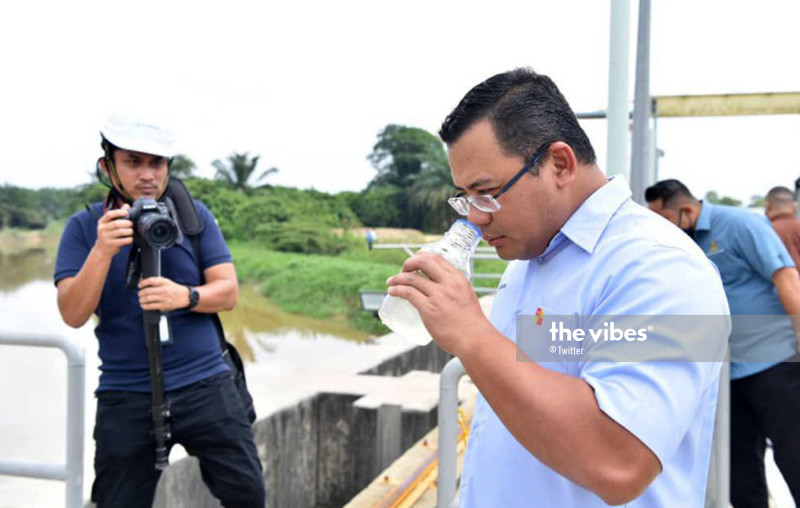
Since September this year, three water supply disruptions have occurred due to river pollution with the latest last Tuesday when the Sungai Selangor Phase 1, 2, 3 and Rantau Panjang water treatment plants were forced to stop operation after odour pollution was detected in Sungai Selangor, allegedly due to an illegal discharge from a premise in Taman Velox, Rawang.
The country should have high water reserves, which included raw and clean water reserves, he said, adding that the clean water reserves in some states is less than five percent or less than one day’s need.
“This is why when the LRA is forced to stop operation, there’ll be water supply disruption. The water storage should be increased to at least 20%, the highest will be the better for consumers,” he added.
Meanwhile, an expert in water quality and water quality modelling, Dr Zaki Zainudin said cost is among the key issues in the use of high technology to treat water, with the amount reaching four-folds compared with the existing method.
The Selangor government can consider using advanced technology targeted water treatment by focusing on plants that are at high risk of being affected due to pollution.
Among the water treatment plants in Sungai Selangor are the LRA Rantau Panjang, while in Sungai Langat, there are the LRA Semenyih and LRA Tampoi.
However, for Zaki, prevention is better than cure, where the authorities should take action to prevent pollution by strengthening the river basin and ensuring no high-risk industry upstream of the water intake points.
“As long as there is an industry upstream, there will be risk of pollution and water supply disruption will continue to happen," he added. – Bernama, November 12, 2020