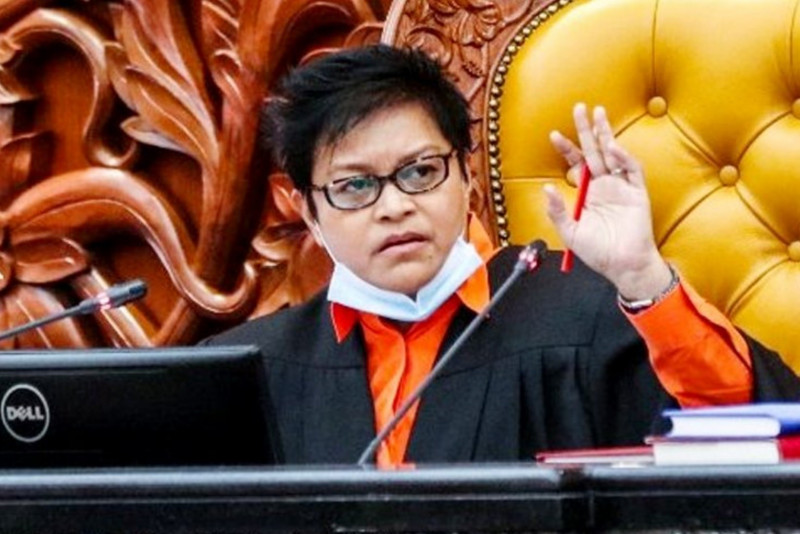

KUALA LUMPUR – Recall elections are a fairer way to manage rampant political defections compared with the government’s planned anti-party hopping law, provided sufficient safeguards are put in place to prevent abuse, said former Dewan Rakyat deputy speaker Datuk Seri Azalina Othman Said.
The veteran Umno politician has for months pushed for the government and Parliament to adopt recall elections instead of the much-anticipated anti-party hopping law, warning that the planned legislation may end up giving the government overly broad powers to disqualify MPs for leaving their parties for whatever reason.
Azalina said the government could instead consider legislating recall elections, which she argued would give the power back to voters to decide on whether an elected representative deserves the boot.
To deter abuse of process, she said, the process should mandate that petitioners place a financial deposit before a petition can be initiated to call for an elected representative to vacate their seat.
“To safeguard the recall action from abuse, the initiator (of the action) is required to put down a deposit when submitting the petition to the Election Commission,” the Pengerang MP told The Vibes.
This measure ensures that the initiators are serious in calling for the recall action and deters mischievous initiators from initiating a recall because it costs money.”
A recall system will allow voters to recall their elected representatives by way of a petition, with a by-election only being held if the petition manages to secure a certain number of signatures.
The government, with the support of the opposition, is currently proposing an anti-party hopping law which will automatically disqualify a lawmaker if they defect or are expelled from their party.
Azalina said the recall system can be further refined to only allow petitions that fulfil certain prescribed grounds or reasons, such as MPs quitting a party, a political outfit leaving a coalition, or a lawmaker getting expelled.
This would address concerns of abuse by well-heeled politicians or even the public, who could leverage on the law by sponsoring petitions to remove elected representatives for any reason, she said.
An example of this was during the 1980s, when the-then mayor of Ashland, Lincoln in the United States, Sherilyn Moore, reportedly faced a recall drive sponsored by the former mayor Max D. Barnes, who did not divulge his reasons for the petition.
Although the petition initially garnered enough signatures to overthrow the sitting mayor, a handful of them were later found to be invalid, essentially resulting in the failure of the recall.
If recall elections are adopted by Malaysia without the necessary safeguards, it could allow political parties that lose a general election by a slim majority to initiate a recall action on some seats lost to trigger by-elections.
Recall action will ensure culture of political integrity
The four-term MP said a recall system that employs the safeguards she proposed would make it a more democratic process that affords fairness to both voters and politicians.
“In a democracy, voters are the main stakeholders, and an anti-hopping measure should reflect their position,” she said.
“Through the recall action, decision-making power is returned to voters and Malaysian politics will see a culture of politics with integrity.”
Azalina, who is the law and human rights adviser to Prime Minister Datuk Seri Ismail Sabri Yaakob, acknowledged that recall elections will be more expensive to implement compared to an anti-hopping law, but stressed that it is a fair price to pay to ensure political and national stability.
We have to bear in mind that party-hopping too comes at a cost to Malaysia – political instability, economic instability, a deterioration in voters’ confidence,” she said.
“This, in turn, affects voter turnout in elections, as well as the absence of a political culture that upholds dignity of politicians, integrity, and trust between voters and their elected representatives.”
The government was initially scheduled to table its anti-party hopping bill to Parliament on April 11, but put it on the backburner after getting pushback from parties from both sides of the divide.
The bill has since been sent to a parliamentary special select committee for fine-tuning. Parliament will reconvene for a special sitting on June 7 to debate the proposed law. – The Vibes, April 25, 2022







.JPG)