KOTA KINABALU – The town hall session to resolve Sabah’s undocumented migrant crisis passed its first obstacle after a majority of its participants voted in favour of establishing a digital database for migrants in the state.
The first session aimed to get a consensus from political leaders, community leaders, and non-govermental organisations to vote for two resolutions proposed by the Special Committee on Undocumented Foreign Workers and Foreign Nationals in Sabah.
The first is to establish a database, including the biometric profiles of all migrants, while the second one is to decide whether an identification card is to be issued to them.
These resolutions would then be presented to the state cabinet to deliberate on the matter before subsequently being proposed to the federal government to resolve Sabah migrant woes.
The first resolution was supported by 99% of 144 respondents following a three-hour deliberation during the town hall session.
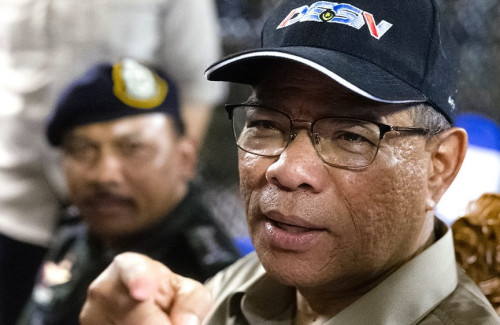
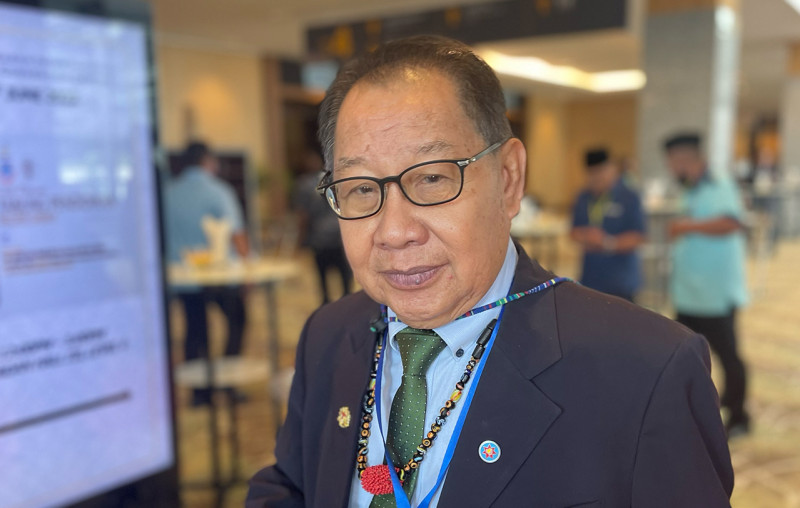
Sabah Deputy Chief Minister Datuk Seri Jeffrey Kitingan told The Vibes that the details of the first resolution includes capturing the data of the migrants, including building their biometric profiles.
“Building their biometric profiles will make it impossible for migrants or the authorities to alter or manipulate the data.
“Even if they change their names, the authorities will still know the identity of the person,” he said after voting for the first resolution during the town hall session held at the Sabah International Convention Centre here today.
Among federal and state agencies present during the town hall session include the Immigration Department, police, Human Rights Commission, Sabah Chief Minister’s Department, and Sabah’s Attorney-General Chambers.
Also present were several elected representatives from both the ruling and opposition camp in Sabah, namely Tanjong Papat assemblyman Frankie Poon, Anwar Ayub (Liawan), Kota Kinabalu MP Chan Foong Hin, Calvin Chong (Elopura), Christina Liew (Api-Api), Julita Mojungki (Matuggong), Datuk Joniston Bangkuai (Kiulu), former Melalap assemblyman Radin Malleh, Shahelmy Yahya (Tanjung Keramat), Limus Jury (Kuala Penyu), Putatan MP Awang Husaini Sahari, Tan Lee Fatt (Likas), Datuk Juil Nuatim (Limbahau), state-appointed assemblyman Datuk Amisah Yassin and Norazlinah Arif (Kunak).
During the question-and-answer session, questions were raised over the absence of National Registration Department (NRD) representatives during the town hall session.
According to the former Petagas assemblyman, Datuk James Ligunjang said NRD representatives should have been present as they were directly involved in this matter.
“I feel the town hall is without any force if the NRD is not present. They are the ones who would be directly involved in building the database and collection of profiles,” he said.
The Vibes had reliably learnt that the NRD had been invited to participate in the town hall session but decided not to be present.
Meanwhile, Sabah DAP chairman Datuk Frankie Poon said they are not entirely committed to supporting both proposals but had no qualms with the first proposal to establish the digital data for migrants.
“We don’t know how the details will work out, but we hope the government will work things out. Such as the procedures, whether there is a cut-off point or otherwise.
“A lot of details are still fuzzy. We hope these will be clarified in part two. We are not saying we are 100% agreeable to both proposals, but we need to move forward into solving the problems,” he added.
Several parties have earlier claimed that the move to resolve the migrant woes in Sabah is similar to issuing an identity card for migrants like the Sabah Temporary Card (PSS) mooted in the past by the Warisan-led Sabah government.
The PSS proposal was cancelled following objections from opposition leaders during the Warisan-led government era.
These leaders are now part of the current Gabungan Rakyat Sabah-led government, which is trying to find the solution to the migrant woes in Sabah.
The second session of today's town hall is set to vote on whether they are agreeable to issue an identity card to the migrants in Sabah.
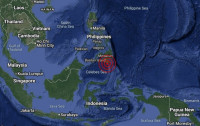
Earlier, town hall participants were also briefed that there are 136,055 Filipino refugees in Sabah comprising first and second generation migrants.
The records comprising 36,892 refugees are being kept by the Chief Minister’s Department, while 51,645 refugees possess IMM13 papers and data on 47,518 refugees held by the National Security Council.
There is no data on the third and fourth generations of refugees in the state. – The Vibes, June 2, 2022