KUALA LUMPUR – Malaysian Anti-Corruption Commission (MACC) chief Tan Sri Azam Baki has been rebuked for apparently discrediting the country’s ranking on Transparency International’s Corruption Perception Index (CPI).
The Centre to Combat Corruption and Cronyism (C4) lambasted Azam for taking a dig at the index, calling on the nation’s top anti-graft buster to better explain the CPI’s value rather than downplay it.
“This is an extremely shallow take on corruption that belies a lack of understanding on the subject, and a shocking one coming from a top graft buster,” C4 said.
“Azam’s notion of ‘evidence’ versus ‘perception’ is a false dichotomy that Malaysians cannot be misled to internalise, as both aspects are necessary measures of assessing and fighting corruption.
“As chief commissioner, Azam Baki should know that the ‘perception’ of corruption that arises from a lack of government transparency or conflict of interest are problems in themselves that do not and should not necessitate ‘evidence’ to substantiate its problematic nature.”
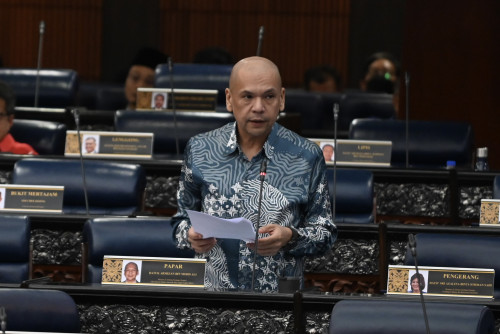
Yesterday, Azam had proposed that Malaysia should adopt “evidence-based” surveys as negative perception erodes public trust and does not take into account all the facts.
Azam had said that perception-based surveys, such as the CPI, are limited in their scope.
“Malaysia is ranked second in CPI behind Singapore in this region, ahead of Thailand, Indonesia and Vietnam.
“Yet, our CPI ranking is often used as a benchmark of how bad corruption is in Malaysia,” he said.
“We are not proud of our CPI ranking and we should do better. I’m only giving an example of how perception doesn’t always mirror facts and reality.”
The nation’s top graft buster had also pointed to “evidence-based” surveys on corruption and integrity by the United Nations Office on Drugs and Crime (UNODC).
“The MACC is looking into implementing such surveys, not just to look into public perception, but to gather information on graft happening in our society.
“We hope to collaborate with the UNODC on this, to survey public servants as well as the private sector and the public.”
He added that this is not to “one-up” neighbouring countries but would serve as input for policymakers.
Today, an MACC spokesman said that the agency has secured the assistance of the Malaysian Statistics Department to work with UNODC in Vienna to develop experience and evidence-based corruption surveys.
According to the spokesman, the main objective of the research is to develop better intervention methods, and not necessarily to serve as a ranking for comparison with other countries, as that is highly subjective.
Calling Azam out on his “lapse of judgement”, C4 questioned his delinking of corruption and business interests as a consequence of his own alleged corporate scandal, adding that it was possibly an attempt to minimise his own culpability.
“The revelation in late 2021 that Azam Baki owned millions of shares in two publicly listed companies comes to mind,” the NGO said.
“Or is it merely an attempt on his part at discrediting the CPI as a whole to save face, in the event Malaysia’s CPI score continues its descent?”
“Notwithstanding the guilt or innocence of any individual in relation to offences regarding corruption, Azam Baki’s insistence on the need for ‘evidence’ in relation to assessing corruption is additionally puzzling.”
The NGO also reminded Azam that his duty as the chief commissioner of the anti-graft body is to the public first and foremost, and that his interest and the interests of protecting a “national image” are secondary to the fight against corruption.
In addition, it said, MACC must not only be transparent and accountable in value, but also carry the “perception” of a body that upholds these values. – The Vibes, July 23, 2022