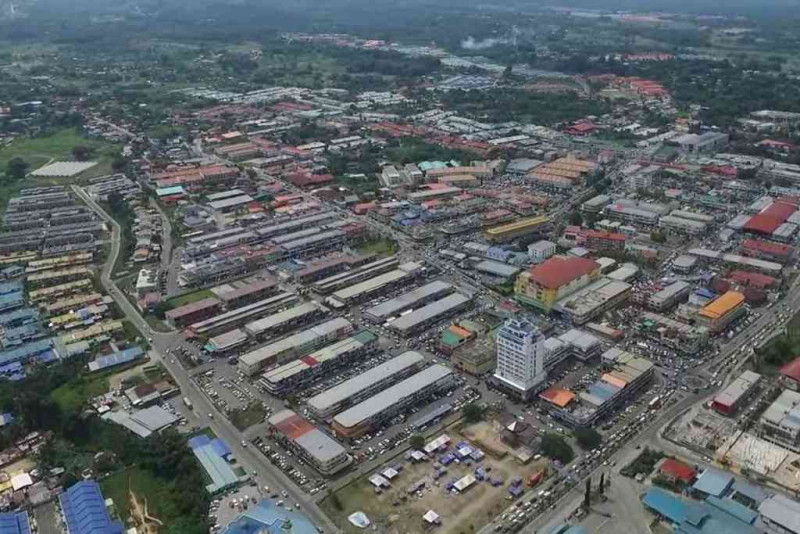
KOTA KINABALU – Voters in Keningau, Sabah, have only ever supported the Kitingan family in elections but whether this will be the trend again in the 15th general election remains to be seen.
The Keningau parliamentary seat, created in 1974, has been a stronghold of one of Sabah’s most prominent political families since the mid-80s.
Tan Sri Joseph Pairin Kitingan was its MP from 1986 to 2018 and was Sabah chief minister and deputy chief minister during this period. He is a local boy, having grown up in Tambunan, which is within the Keningau constituency.
After he retired, his younger brother Datuk Seri Jeffrey Kitingan won the seat in the 14th general election in 2018.
However, Jeffrey, who leads the Sabah Star party, won Keningau by a razor-thin majority with just 45 votes over Warisan’s Datuk Jake Jikulin Nointin.
In 2018, the electorate in Keningau was 82% Sabah Bumiputera, 6% Malay, 10% Chinese and 2% other races. The Bumiputeras here are from the Kadazan, Dusun and Murut (KDM) ethic groups that hold the Kitingans in high regard.
But as Jeffrey’s thin margin in the 2018 election showed, the Kitingan name will be tested as voters, especially younger ones, speak up against their parents’ grinding poverty.
Personal loyalty vs parties
Civil servant Reuben James said he is expecting Jeffrey to retain the seat, but not without a challenge.
He said Jeffrey has strong support but heads an unpopular party, while Nointin, who despite being a party-hopper, is well-liked.
“Keningau is not like some Sabah seats where the voters will vote for the party.
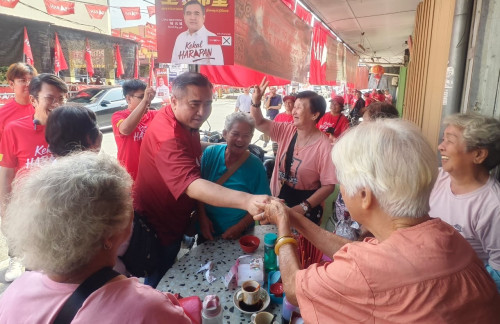
“Even though many of the local folk here are poor, they still root for leaders who constantly come to the ground, listen to their problems and help them.
“Nointin is one of the leaders who has been doing this in Keningau,” James said.
Nointin was with Parti Bersatu Sabah before he stood in Keningau in 2018 on a Warisan ticket and lost.
In Warisan, he was Keningau division chief but was sacked in 2020 when he ran against the party by standing as an independent candidate in the Liawan seat in state polls that September.
Nointin joined Parti Bersatu Rakyat Sabah (PBRS) in October last year, and speculation is that he will be fielded in Keningau in GE15.
PBRS is a component of Barisan Nasional while Sabah Star is part of Perikatan Nasional. The two coalitions are expected to go against each other in the general election, even though they are cooperating as far as being in government goes.
However, James said the Kitingan factor should not be taken lightly, as he has strong ground support, being the state assemblyman for Tambunan. His party Sabah Star also has the Liawan and Bingkor state seats.
If Jeffrey wins again, it will be the tribal sentiments of the KDM communities at play, rejecting candidates and parties they consider “foreigners”, James said. This explains why Pakatan Harapan has been unsuccessful in trying to penetrate the seat.
Cycle of hardship
Locals like Priscilla Justin, a research officer, feel Jeffrey can win again if he pushes for agricultural initiatives like reopening the local agriculture products collection centre.
Jeffrey is also state agriculture and fisheries minister.
“Reopening the centre means farmers no longer need to go far away to sell their produce or sell them to distributors at a lower price,” said Justin, adding that farmers are key voters in the constituency.
It could be different for younger voters, however, as many of them are unhappy with the lack of progress in Keningau, said a local man, Brandon Michael.
Many villages in the constituency still lack proper roads, electricity and treated water supply.
“Many of us cannot find jobs here. We have to go to the city, or places like Kuala Lumpur or Singapore to find good paying jobs.”
He said many youths here have access to land their parents own and could start farming to make a living. But many are reluctant as agricultural work takes time, energy and resources.
“How can we start when we don’t have the funds and when our parents are also poor?” Michael said.
The 39-year-old said many of his schoolmates left Keningau in the late 1990s. A few stayed back to work in farming while he joined the public sector.
Those who have left are doing well, owning a few cars and a big house, he added.
Another local, Rebecca Michelle, said there are locals still leaving Keningau in search of jobs elsewhere.
“For them, even just RM1,500 a month is better than farming on their own land,” she said.
Things don’t change much in Keningau as people here lead a simple life and don’t know much about politics or political parties, she added.
“If they have heard this guy’s name and are told that this guy has been to their village, they will vote for him,” said Michelle.
The cycle of hardship and under-development has continued, as until the present generation, people here do not strive to pursue higher education, and are content with passing their Form 5 examinations and getting a job locally, or continuing the work of their parents to farm or tap rubber.
“I am not talking bad about my folk, but just stating the facts,” Michelle said.
However, she said there is more awareness among the local youth now about the importance of getting higher education. – The Vibes, September 17, 2022









.JPG)