KUALA LUMPUR – The proposed targeted subsidies for eligible Malaysians have to be implemented along with providing a suitable cost of living aid (BSH) for them, according to a lecturer in accounting and governance, at the Putra Business School, Assoc Prof Ahmed Razman Abdul Latiff.
He said if the subsidy plan is implemented without other mechanisms, like providing BSH, it would result in a higher inflation rate.
When this happens, the public will likely spend less and, this will indirectly slow down business, hence resulting in lesser investment activities, he added.
He said by implementing targeted subsidies along with providing the BSH, it would enable the B40 group to continue with their usual spending, but may cause the M40 group to reduce their daily expenditure.
In an interview, Razman said Budget 2023 would have to be tabled again by taking into account all the initiatives in the manifesto of the unity government, which comprises various parties, each with its own manifesto.
A senior lecturer at the Business and Economics Faculty, Universiti Malaya, Roza Hazli Zakaria said if the given subsidies were to be withdrawn drastically and comprehensively, it would affect the ability of consumers to spend, as well as the chain reaction that would also include an increase in prices of goods and services.
“We have experienced this situation several years ago when the subsidy for petrol was withdrawn, and this caused the price of petrol to rise to RM2.70 per litre, and also of other goods. Hence, affecting the ability of consumers to spend,” she said.
Roza, however, said, if the subsidies were to be withdrawn in stages, beginning with basic items like rice, cooking oil, flour and sugar, the effect on the consumer’s purchasing power would not be significant.
The reason is that such items only take a small share of the consumer’s daily expenses, she added.
As such, she said, Budget 2023 needs to be modified and tabled again.
“This is because, in the last budget, the government allocated a large amount for subsidies, amounting to RM55 billion or 11.3% of the total operating expenditure,” she added.
Meanwhile, a political analyst from Universiti Utara Malaysia, Prof Mohd Azizuddin Mohd Sani said that despite the concerns among the M40 and T20 groups on the consequences of targetted subsidies, he believes they would still benefit through other incentives that would be “tailored” for them.
“They will be worried initially but will later support the effort after knowing the benefits of the implementation of the targetted subsidies,” he added.
Therefore, he said, the government would have to draw up a holistic or comprehensive policy to implement it.
“This is not an easy task, but it has to be done to protect the country’s finances and to enable the nation’s funds to be used for the benefit of all the people,” he said.
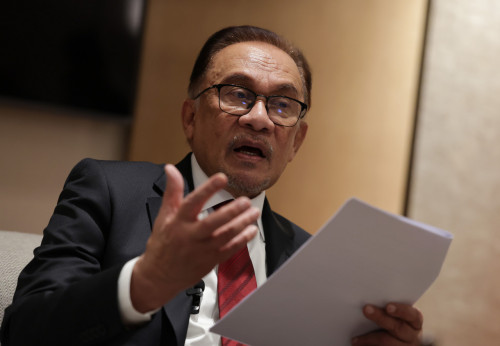
Yesterday, Prime Minister Datuk Seri Anwar Ibrahim said the government would analyse and re-examine the subsidy distribution method for targeted subsidies and also gave the assurance that the interest of industries would continue to be given attention.
He said this is to ensure that the subsidies, which had significant financial implications for the government, would only be enjoyed by those who really deserve it. – Bernama, November 29, 2022