NIBONG TEBAL – With the Ponggal harvest festival just around the corner, demand for clay pots has increased dramatically.
The proprietor of K. Devaraja Pottery, D. Reguraj, 48, said his factory had produced 10,000 clay pots to meet the demand for this year’s celebration.
“It is a drastic increase compared to the last two years when we only got orders for less than 5,000 clay pots because of the Covid-19 pandemic,” he said when met at his factory in Parit Buntar, here, recently.
Reguraj, who is the fifth generation to run the family business established over 125 years ago, said the process of making a clay pot takes about 10 days, and the clay used has to be processed first to ensure it is free of foreign matter and of the right colour.
He said the process of kneading the clay plays an important part in producing quality pots.
“The clay is kneaded four times using a special machine to ensure the pots are of quality, durable, and have a smooth surface. If the clay is not kneaded enough, the pot will easily crack and break.
“After that, the clay dough is shaped and then dried, preferably under the scorching sun, for a week before it is baked for 12 hours using an environmentally friendly oven,” he added.
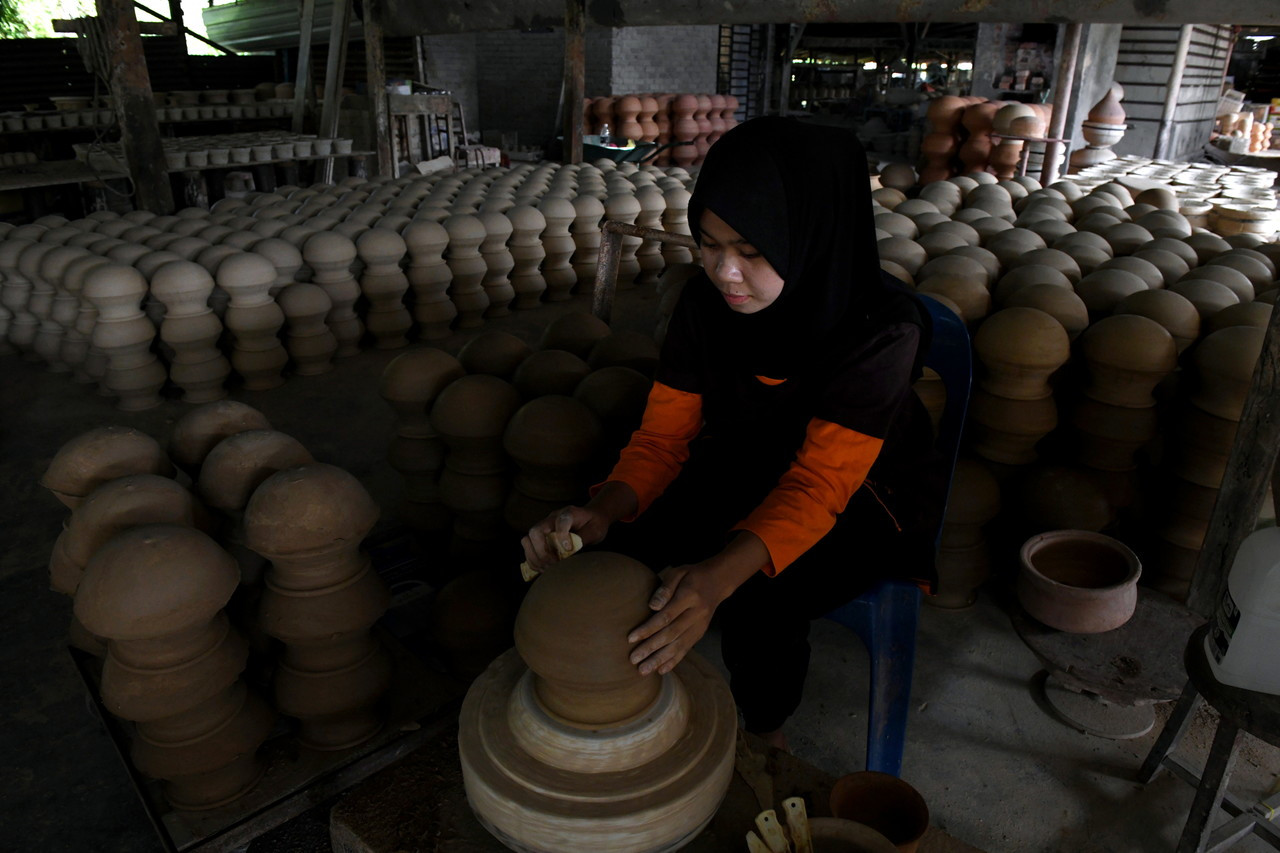
Reguraj, who has been helping in the family business since he was 9-years-old, said the increase in orders for clay pots this year had been overwhelming.
“To meet the orders, my workers have to work for 12 hours every day to be able to produce 300 clay pots daily, and we have been working to meet the orders since last month,” he added.
He said the pots produced at his factory are sold for between RM5 and RM40 a piece depending on the size and pattern.
Ponggal is a Hindu harvest festival celebrated by the Tamil community. It is considered a thanksgiving festival to thank God for helping farmers harvest better-yielding crops. It is celebrated on the first day of the Tamil month called Thai, which is considered an auspicious month and usually falls in January every year.
The Ponggal festival is celebrated over three days.
On the first day, which is also referred to as Thai Ponggal, family members usually gather around a clay pot used to cook the sweet rice to watch it boil and overflow. The overflow signifies abundance and prosperity.
The second day, Mattu Ponggal, is celebrated in honour of animals considered sacred – cows and bulls – which are bathed and decorated with garlands and their horns painted.
Kanni Ponggal, which is on the third day, is dedicated to unmarried women who dress up in fine clothes and offer prayers in the hope of getting a good husband. – Bernama, January 6, 2023








.JPG)