KUALA LUMPUR – Malaysia is capable of producing almost all the basic foodstuffs it currently needs, the Dewan Rakyat was told today.
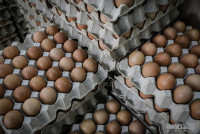
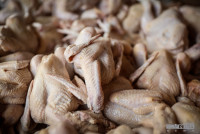
Agriculture and Food Industry Deputy Minister Datuk Seri Ahmad Hamzah said that based on the national food production rate, the subsistence level for chicken and duck, chicken eggs, and fish was more than 90%.
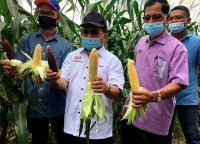
He said the country had reached a self-sufficiency level of more than 100% for local fruits and vegetables except for mangoes, coconuts, cabbage, chillies, and ginger.
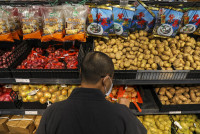
“However, Malaysia still depends on imports for some other food items such as beef, rice and vegetables and fruits from temperate climates such as cabbage, onions, apples, and oranges to meet domestic needs,” he said.
He was answering a question from Datuk Ahmad Nazlan Idris (BN-Jerantut) who wanted to know the country’s capability to ensure the country’s food supply would not be curtailed, to protect food security.
Ahmad said the ministry had identified several new directions in the agriculture sector, including the rice, crop and livestock, and fisheries industries for the next five years.
He said the new directions included optimising land use and increasing the application of modern technology in developing quality varieties for the rice industry, as well as developing high-value vegetable and fruit commodities for domestic and export purposes.
He also said increasing meat and milk production through the establishment of the National Ruminant Board for the livestock industry and increasing milk production through dairy pilot projects in five dairy valleys.
Ahmad said his ministry was now in the final stages of preparing the National Agrofood Policy 2.0 towards developing a sustainable agrofood sector from 2021 to 2030.
Answering a question from Sim Tze Tzin (PH-Bayan Baru) on the remarks of the National Audit Report 2018 Series 3 Agricultural Consignment Import Control Activities Management, Ahmad said the ministry had made some improvements based on the report.
They included requiring that import conditions for plants, plant products, and controlled articles be determined based on detailed pest risk analysis to ensure imported goods were free from plant diseases and pests.
“Digitalisation and inspection through the use of the i-Maqis system for consignment inspection reports at the entrance will also be implemented,” he said.
In his question, Sim wanted to know the ministry’s action over the report, which showed weaknesses in ensuring that imported agricultural consignments were free from pests, diseases, and contaminants, and that they were safe and of quality; besides the ministry’s achievements to date.
Ahmad said entrance enforcement would also be strengthened in an integrated manner with all relevant enforcement departments and agencies.
“As of October 2020, the number of cases detained for offences is 1,105, with a trade value of RM134 million. 913 cases have been compounded with a collection value of RM3 million involving offences which included lacking import or export permits,” he said. – Bernama, December 3, 2020