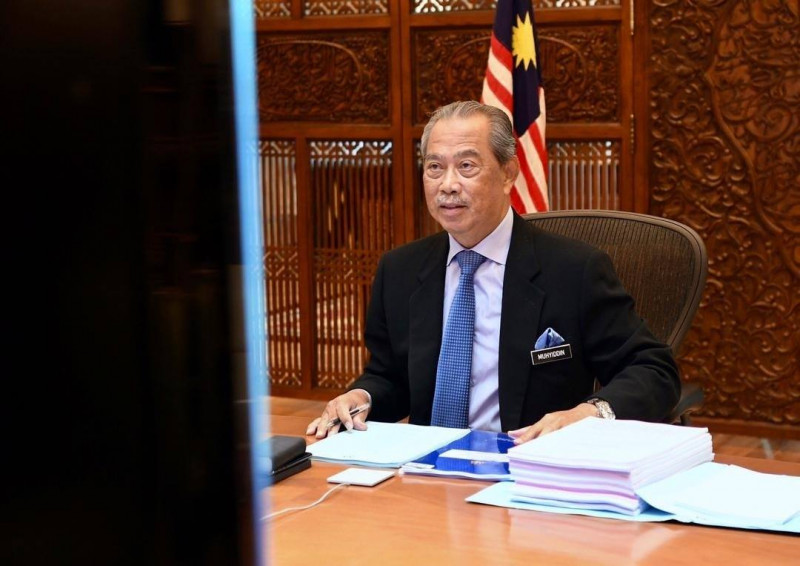
KUALA LUMPUR – Natural gas will continue to help bridge the inevitable energy transition and tackle the issue of climate change the world faces, said Prime Minister Tan Sri Muhyiddin Yassin.
He said Malaysia's energy mix was underpinned by natural gas for decades now, adding that that would be the case for the foreseeable future.
He said, however, that the country still had a long way to go in its journey towards a sustainable future.
However, he expressed confidence in the collective minds and abilities to realise the energy transition, ensuring that today’s needs were met while addressing tomorrow’s challenges.
“We look forward towards natural gas to play a pivotal bridging role for this energy transition, providing a secure, affordable and sustainable baseload energy source in synergy with the growing, but often intermittent, renewable energy sources.
“This synergy gives rise to significant investment opportunities, not only in upstream but across the value chain,” he said at the 7th International Energy Forum – International Gas Union Ministerial Gas Forum Virtual Roundtable which was held virtually today.
The Prime Minister said the long-term outlook for gas was brighter than that of other fossil fuels because of its comparatively lower cost and lower emissions.
To find a true competitive advantage amid a volatile market, gas players must re-focus their efforts in capital efficiency, supply-chain optimisation, downstream market development, de-carbonisation as well as digital and advanced analytics, he said.
“If done successfully, I believe gas could ride out an unpredictable market and find opportunities for faster growth not only in Malaysia, but the global market as a whole,” he said.
Muhyiddin said technology would play a critical role, urging producers to apply digital and advanced analytic techniques to realise potential for significant hidden value, which he claimed could strengthen the role of natural gas in de-carbonisation.
Muhyiddin said governments were crucial, so that investors could provide new solutions and navigate risks.
“To this end, governments may provide incentives to key stakeholders to accelerate development, commercialisation and production of new technologies for energy transition,” he said.
The Prime Minister said regulatory incentives might play a more effective role in encouraging energy innovation such as “regulatory sandboxes” that could create safe spaces for stakeholders to test solutions.
He added that any further financial assistance needed to be used wisely, as some prior experience with renewable subsidies in advanced markets showed it could lead to a high taxpayer burden, over-capacity and eventual unsustainable costs for consumers..
Giving an update on Malaysia's efforts in the energy sector, Muhyiddin said a Natural Gas Roadmap (NGR) was currently being developed that would form a key part of the overall National Energy Policy (NEP), which would be announced under the 12th Malaysia Plan 2021-2025, in the first quarter of next year.
He also said that Malaysia’s second floating liquefied natural gas facility was expected to go into commercial operations next year.
The first facility was completed in 2016 with the capacity to produce 1.2 million tonnes of liquefied natural gas per year. – Bernama, December 3, 2020.